
Every founder reaches a point where they can no longer be the only person sending outbound emails. You’re building the product, managing the existing customers, and trying to raise your next round. Your calendar is a disaster, and your pipeline is starting to look like a ghost town.
So, you look at the "standard" playbook: hire a Sales Development Rep (SDR).
But here is the truth nobody tells you at the pre-seed or seed stage: hiring your first sales development rep for startup growth is a coin flip. It is a high-risk, high-cost gamble that usually ends in one of two ways: they burn out because your messaging isn't perfect yet, or they quit for a bigger base salary at a Series B company just as they finish their three-month ramp-up period.
You’re looking at a $80k–$100k fully loaded cost for a junior employee who has never sold your product before. If they fail, you’ve wasted six months and $50k of your runway. If they succeed, you have to hire three more just to keep the momentum.
There is a better way to bridge the gap between founder-led sales and a full-scale sales team. You can skip the hiring risk entirely with an AI-powered sales development rep that researches every lead and integrates with your CRM for $499/mo.
Why traditional SDR hiring is broken for seed-stage companies
The traditional SDR model was built for a world that doesn’t exist anymore. Ten years ago, you could hire a hungry recent grad, give them a list from ZoomInfo, and tell them to send 100 emails a day. If they hit their numbers, they’d book 5-10 meetings a month.
Today, that model is dead. Inboxes are crowded, spam filters are aggressive, and prospects can smell a template from a mile away.
When you hire a human SDR today, you aren't just paying for their time. You are paying for:
- The Ramp-Up: It takes at least 60–90 days for a human to understand your ICP (Ideal Customer Profile) and your product’s nuances.
- The Management Overhead: You are now a sales manager. You have to do weekly 1:1s, check their activity levels, and keep them motivated when they get rejected 99 times a day.
- The Tech Stack: You still have to pay for the seats in Apollo, LinkedIn Sales Navigator, and your CRM. The human is just the person clicking the buttons.
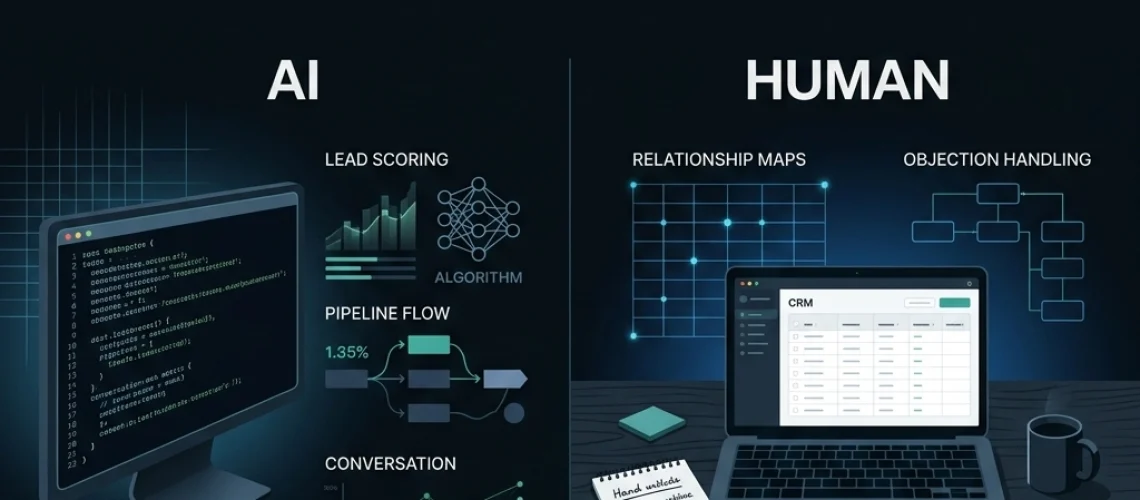
For a startup, this is a massive drain on resources. You need a pipeline yesterday, but you’re spending your time interviewing candidates and teaching someone how to use a dialer. The AI SDR vs. human SDR debate isn't just about cost; it’s about the speed of execution and the margin for error.

Scaling your pipeline from day one with AI agents
Imagine if you could hire an SDR who already knew your product, never needed a pep talk, and spent four hours researching a single prospect before ever hitting "send."
That is what an AI agent does. Unlike a human SDR who might get bored and start "spraying and praying" after their twentieth email of the day, an AI agent treats every single lead with the same level of obsessive detail.
At Ramen, we built our AI SDR to solve the "Founder’s Dilemma." You need outbound volume to grow, but you can’t sacrifice quality. Our agents don't just pull a name from a list; they visit the prospect’s website, read their latest LinkedIn posts, check their company’s recent funding news, and then draft an email that actually makes sense.
Instead of spending $8,000 a month on a salary, you’re spending $499. Instead of waiting three months for results, you’re sending your first batch of researched emails in thirty minutes.
This allows you to scale outbound without agencies or expensive hires. You keep the control, you keep the data, and you keep your runway.
Objection handling: "I need someone who can learn our unique product"
The most common pushback we hear from founders is: "AI can't possibly understand my niche product. It’s too complex."
I get it. Your product isn't a generic CRM or an HR tool. It requires a specific tone and a deep understanding of a technical problem.
But here is the reality: a junior SDR is also going to struggle with your "unique" product. In fact, they’ll probably struggle more because they are trying to learn sales and your industry at the same time.
The beauty of a research-first outbound AI SDR is that it is highly configurable. You aren't just turning a bot loose on your LinkedIn connections. You are "programming" it with your best sales decks, your case studies, and your founder's voice.
The "Human-in-the-Loop" Security Blanket
We don't believe in total automation. Total automation is how you get your domain blacklisted and your brand's reputation trashed.
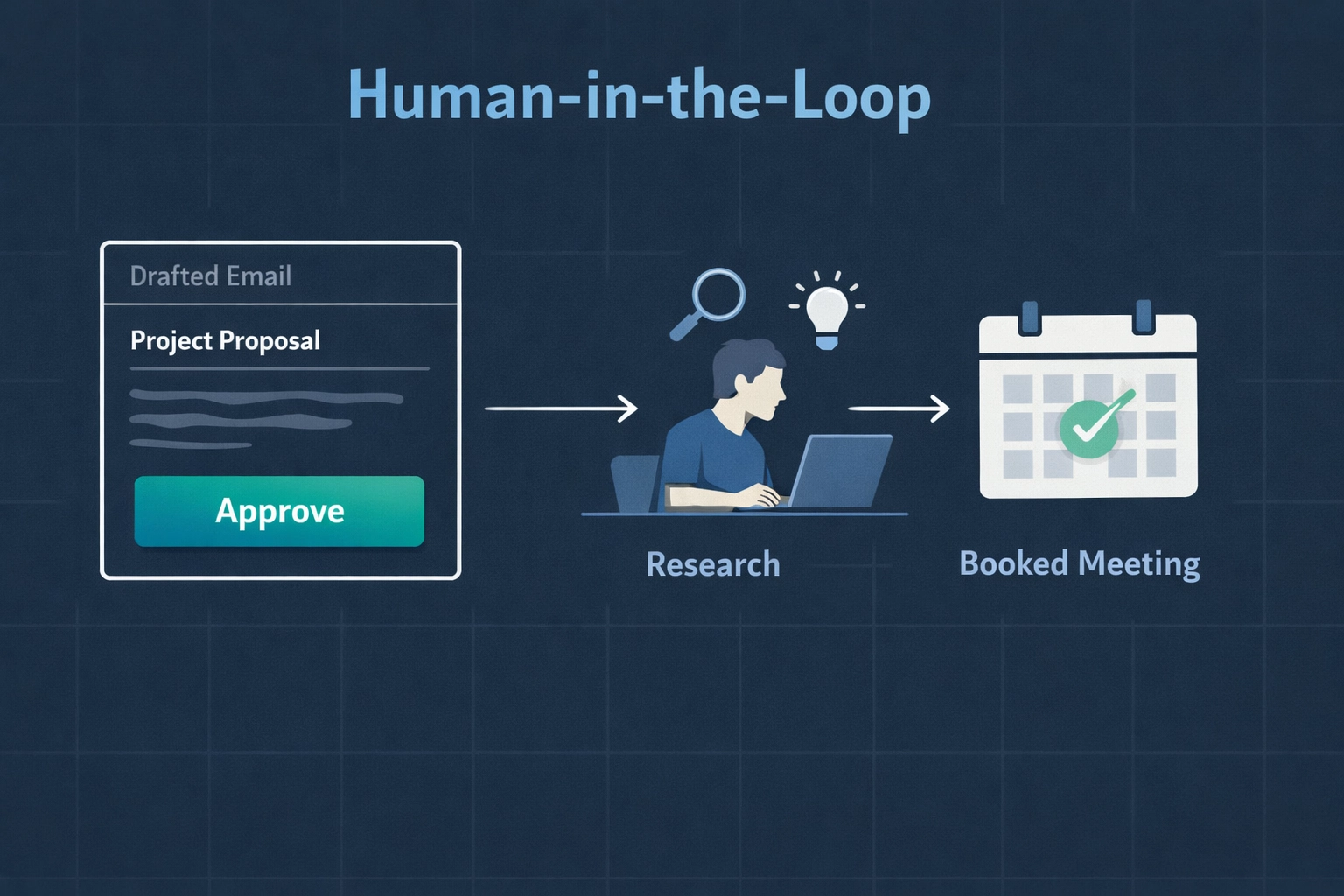
Ramen uses a human-in-the-loop model. The AI does the heavy lifting: the data scraping, the prospect filtering, the draft writing: but you (the founder) have the final say. You can log in, review the queue, and hit "Approve" on the emails that look great.
If an email needs a tweak, you tweak it. The AI learns from your edits. Over time, you’re hitting "Approve" on 95% of the drafts because the agent has learned exactly how you like to communicate. You get the AI SDR agents booking demos while you sleep, but you never lose the "human touch" that is required for high-ticket B2B sales.
The math: $499 vs. $8,000
Let's look at the numbers because as a founder, the numbers are all that matter when it comes to survival.
The Human SDR Monthly Cost:
- Base Salary: $5,000 – $6,500
- Taxes & Benefits: $1,000
- Software Tools (LinkedIn, CRM, Data): $500
- Total: ~$7,500 – $8,000 / month
The Ramen AI SDR Monthly Cost:
- Platform Subscription: $499
- Your API Keys (OpenAI/Claude): ~$20 – $50 (based on usage)
- Total: ~$550 / month
You can run an AI SDR for an entire year for less than the cost of one month of a human SDR. If the AI SDR only books half as many meetings as a human would, it is still 7x more cost-effective. But in our experience, because the AI can research prospects at a scale no human can match, the reply rates are often higher.
Why agencies aren't the answer either
Some founders try to split the difference by hiring a lead gen agency. They think, "I'll just pay $3k a month and someone else will handle it."
Most agencies are just running the same tired playbooks that stop working the second they sign you. They use junior VAs to send templated messages, and when the campaign fails, they tell you your "offer" is the problem. They don't care about your brand; they care about their retainer.
When you replace your SDR with an AI agent, you are bringing that capability in-house. You own the prompts, you own the lead lists, and you own the results. You aren't paying for someone else's office space and profit margins; you're paying for software that works for you 24/7.

When should you actually hire a human?
I’m not saying you should never hire a salesperson. I’m saying you shouldn't hire one to do the grunt work of prospecting at the Seed stage.
The right time to hire a human is when you have a proven outbound motion. When you know that for every 100 emails sent, you get 3 meetings, and for every 5 meetings, you close 1 deal.
At that point, you don't hire an SDR to find leads; you hire an Account Executive (AE) to close the deals the AI is already booking for you. Let the AI handle the top-of-funnel rejection and the data entry. Let the humans handle the high-level strategy, the relationship building, and the complex negotiations.
Stop the "Sunday Night Scramble"
You know the feeling. It’s Sunday night, and you realize you haven’t added any new leads to your sequence all week. You spend three hours manually looking through LinkedIn, copy-pasting names into a spreadsheet, and trying to write "personalized" openers that don't sound like everyone else's.
It’s a waste of your time. You should be thinking about product-market fit, not data cleaning.
The sales development rep for startup growth isn't a person anymore: it’s a process. By using Ramen, you can automate the most painful part of your job while maintaining the quality your brand deserves.
Check out our AI-driven outbound playbook to see exactly how we set up these systems for founders. We focus on the "Research First" approach because we know that in 2026, personalization is the only thing that gets a response.
Ready to build your pipeline without the $80k price tag?
The "hiring risk" is a choice. You can gamble a significant portion of your funding on a human hire who might not work out, or you can deploy an AI agent that starts working immediately for a fraction of the cost.
Ramen was built for the trenches of early-stage growth. We don't do fluff, we don't do "magic" one-click solutions that spam the world, and we don't hide our pricing. It’s $499 a month to get an AI agent that acts as your dedicated researcher and outbound engine.
If you’re tired of the empty pipeline and the endless SDR recruiting cycle, it’s time to try something that actually scales.