
Your Sunday night email sessions are killing you. You're cranking out cold emails at 11 PM because you can't afford an $80K SDR who takes three months to ramp. Meanwhile, every founder in your Slack groups is either getting burned by agencies or debating whether AI SDRs actually work. The math is brutal: you need pipeline to raise, but you need money to build pipeline.
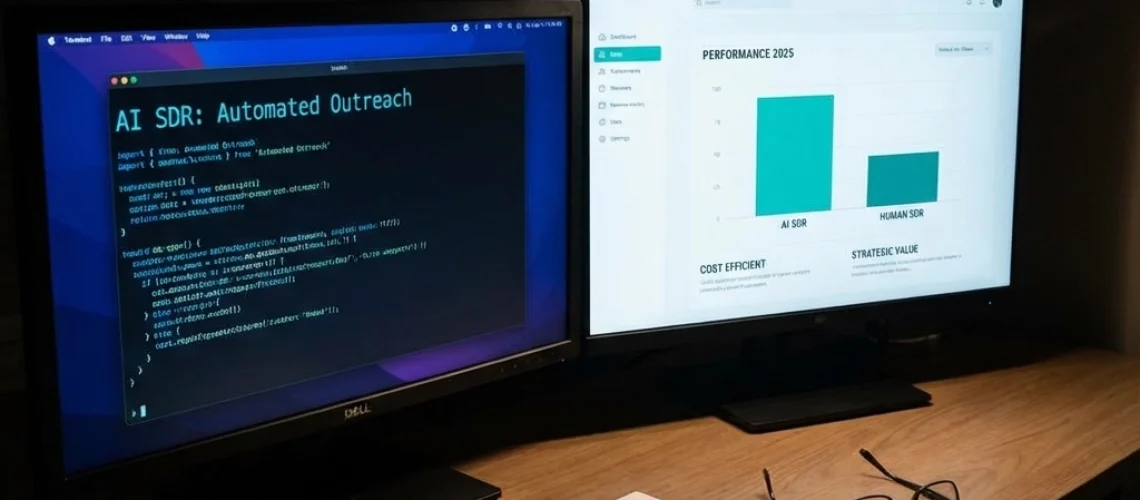
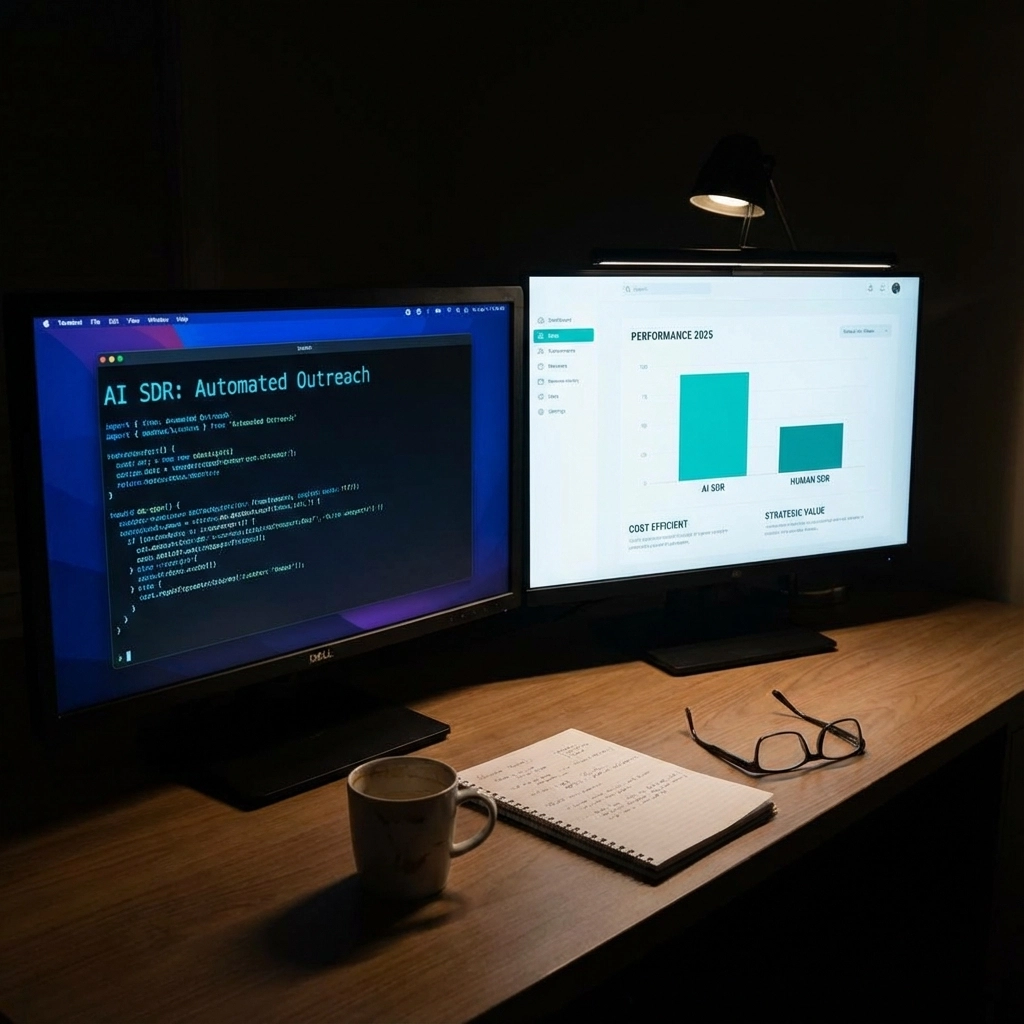
Here's what the data actually shows about AI SDR vs human SDR performance in 2025: and when each makes sense for founders bootstrapping their first sales motion.
The Real Cost Breakdown
A human SDR costs way more than the salary. You're looking at $80-120K loaded cost when you factor in benefits, training, tools, and the 35% annual turnover rate. Most founders underestimate the ramp time: 3-6 months before they're productive, and that's if you hire well.
AI SDRs start at $500/month for subscription-based models, representing up to 83% cost savings compared to full-time human hires. But here's what matters more: the opportunity cost. A human SDR who takes four months to ramp means four months of zero pipeline while your runway burns.
The hidden costs hit different too. Human SDRs need Salesforce licenses, prospecting tools, email infrastructure, and management overhead. AI SDRs typically bundle most tools into their platform cost.
Performance: Where Each Actually Wins
Volume and Speed
AI SDRs handle 200-500 personalized touchpoints daily versus 50-100 for humans. An AI agent can engage over 1,000 leads daily while a human manages 30-50 contacts. AI maintains 100% follow-up rates versus 65-75% for humans.
But volume without quality is just expensive spam.
Response and Conversion Rates
The data gets interesting here. AI SDRs achieve 12.5% lead conversion rates compared to human SDRs' 9.3%, and show 15-20% higher booking rates through optimized follow-up sequences.
However, humans achieve 15-25% response rates compared to AI's 5-15%, particularly in complex B2B sales. Human SDRs convert meetings to qualified leads at 25% versus AI's 15%.

Technical Accuracy vs Relationship Building
AI SDRs handle technical questions at 87% accuracy compared to humans at 15%. They excel at processing data for personalized outreach at scale and managing multi-channel campaigns simultaneously.
Humans excel at emotional intelligence: reading tone, navigating sensitive situations, and building authentic trust through shared understanding. They adapt to unpredictable situations and use creativity to overcome resistance.
When AI SDRs Make Sense
High-Volume Lead Generation
If you're targeting SMBs with clear buying signals and straightforward value props, AI SDRs crush it. They can work your entire TAM while you sleep, qualifying leads based on behavior and firmographic data.
Tech-Savvy Audiences
SaaS founders selling to other founders often see strong AI SDR performance. Technical buyers expect quick, data-driven interactions. They're less put off by obviously automated outreach if it's relevant and well-researched.
Cost-Efficient Scaling
Pre-seed founders burning $10K/month can't justify an SDR salary. AI lets you test market segments and messaging without betting your runway on hiring decisions.
Routine Qualification and Follow-Up
AI excels at lead scoring, data analysis, and systematic follow-up sequences. It never forgets to follow up and can simultaneously manage multiple touchpoints across email, LinkedIn, and other channels.
When Human SDRs Are Worth the Cost
Complex or High-Value Sales Cycles
Enterprise deals, custom implementations, or anything requiring discovery calls benefit from human intuition. Humans read between the lines and ask follow-up questions AI misses.
Relationship-Critical Industries
B2B services, consulting, or high-end offerings where trust determines deals need human relationship building. Buyers want to feel understood, not processed.
Strategic Account Development
If your average deal size is $50K+ and sales cycles run 6+ months, invest in human relationship building. One well-managed enterprise account beats 100 automated SMB touches.
Final Qualification and Deal Advancement
Even if AI handles top-of-funnel, humans should own qualified lead conversations. They can navigate complex stakeholder dynamics and handle objections that kill deals.
The Hybrid Approach That Actually Works
Most successful early-stage companies use AI for volume and humans for value. AI SDRs absorb the grunt work: research, initial outreach, basic qualification, and systematic follow-up. Humans focus on qualified prospects, complex objections, and relationship advancement.
A manufacturing equipment supplier used AI SDRs to absorb technical specifications and initial interest qualification, then routed qualified leads to human SDRs for key decision-maker conversations. They achieved overnight market entry while maintaining relationship quality for high-value accounts.
Organizations using AI tools for sales development typically see conversion rates improve by 25-30%. But the key is proper handoff protocols: clear triggers for when AI passes leads to humans, and humans who understand the prospect's journey through automated touchpoints.
Avoiding the AI SDR Pitfalls
Domain and Reputation Risk
AI SDRs can burn your domain faster than humans if they're not properly configured. Bad personalization, high send volumes, and poor list hygiene destroy deliverability. Always start with lower volumes and monitor reputation metrics closely.
Quality Control
AI excels at scale but struggles with edge cases. Set up approval workflows for unusual prospects, monitor email quality regularly, and have humans review AI-generated content before major campaigns.
Integration Overhead
Most AI SDR platforms require significant setup time and technical integration. Budget 2-4 weeks for proper configuration, not the "15 minutes to launch" promised in demos.
Making the Decision for Your Stage
If you're pre-seed with limited runway, start with AI SDRs to test market fit and generate initial pipeline. The cost efficiency lets you experiment without betting the company on hiring decisions.
If you're post-product-market-fit with $50K+ average deal sizes, hire human SDRs for relationship building and complex qualification. The investment pays off through higher deal quality and faster close rates.
If you're somewhere in between, consider the hybrid model: AI for volume qualification and humans for relationship advancement.
The goal isn't choosing AI versus human SDRs. It's building a predictable pipeline that doesn't eat your entire runway or require you to work Sundays forever.
Book a demo to see how founders are using human-in-the-loop AI SDRs to build pipeline without burning domains or sacrificing relationship quality.