
It’s 10:00 AM on a Tuesday. You open Slack to check in on your remote SDR. You see the "active" green dot, but the CRM hasn't been updated in three days. You sent a message an hour ago asking about the follow-ups for that big enterprise lead. Silence.
Then comes the notification. "Hey, sorry, my internet was down," or the classic "family emergency."
As a founder, you aren't just building a product anymore. You’ve become a part-time babysitter, a full-time activity monitor, and a reluctant therapist. You hired a remote SDR to take outbound off your plate, but now you spend four hours a week "managing" them just to ensure they aren't ghosting your prospects: or you.
The promise of the remote-first sales era was simple: access to global talent and lower overhead. The reality in 2026? It’s a management nightmare that drains your mental energy and your bank account.
Managing a remote SDR team often leads to inconsistent outreach and the constant stress of tracking activity metrics. You didn't start a company to spend your Sundays auditing call logs and checking if a human actually sent those five personalized emails they promised.
There is a better way. Ramen acts as your 24/7 remote SDR, delivering 100% research-based personalization without the management overhead.
The hidden costs of the "remote-first" SDR model
When you hire a remote SDR, you usually look at the base salary: maybe it’s $4,000 a month for someone overseas or $6,000 for a domestic remote hire. But the sticker price is a lie.
First, there is the ramp-up time. It takes three to four months for a human SDR to truly understand your ICP, your product-market fit, and the nuance of your messaging. During those 90+ days, you are paying full price for zero results. If they quit or you have to fire them in month five, you’ve just lit $20,000 on fire.
Then there is the "Management Tax." To keep a remote hire accountable, you need a stack of tools: Hubstaff for time tracking, Slack for "presence," and expensive CRM seats. You end up spending more time managing the person than the person spends actually talking to prospects.
The biggest hidden cost, however, is the quality decay. When a remote SDR feels unobserved, they default to the path of least resistance. They stop doing deep research. They start using templates. They blast 100 people with the same generic "I saw you're the CEO of [Company]" line.
This doesn't just fail to book meetings; it burns your domain and ruins your brand reputation. In 2026, prospects have zero patience for lazy outbound. If it looks like a template, it goes to spam. If you want to see how the math actually breaks down, check out our ai-sdr-pricing-breakdown-2025.
Why AI is the ultimate remote teammate for busy founders
Founders are increasingly realizing that the "human" element of early-stage outbound is actually the bottleneck. You don't need a human to copy-paste data from LinkedIn into an email. You need the intelligence of a human applied at the scale of software.
This is where AI steps in. Unlike a remote SDR, an AI agent doesn't have "off days." It doesn't get burnt out after the 50th rejection. It doesn't need a 1:1 meeting to stay motivated.
AI agents are built for the "research-first" era of outbound. While a human SDR might spend 15 minutes skimming a prospect's profile to find one relevant hook, an AI can ingest their last three podcast appearances, their recent LinkedIn posts, and their company’s 10-K filing in seconds.
For a busy founder, AI is the dream teammate because it provides:
- Total Consistency: It works 24/7, 365 days a year. No "internet is down" excuses.
- Zero Ramp Time: You can feed your playbooks and ICP data into the system, and it's ready to go on day one.
- Predictable Costs: Instead of a $60,000+ loaded cost for an SDR, you pay for what you use. With Ramen’s BYOK (Bring Your Own Key) model, you control your own costs by using your own API keys.
The transition from a human-led model to an AI-led model isn't just about saving money; it's about reclaiming your time. You can stop being a manager and go back to being a founder.
"But will it sound robotic?"
This is the number one objection we hear. Founders are terrified of sending "AI-slop" to their hard-earned leads. And they should be. Most "AI" tools on the market are just fancy mail-merge wrappers that generate generic, cringe-worthy sentences.
The difference lies in research-first outbound.
A "robotic" email is an email that says nothing specific. "I noticed you're in the AI space and thought we could help." That’s robotic, whether a human or a bot wrote it.
A personalized email: the kind Ramen drafts: looks like this:
"I just listened to your interview on the 'SaaS Founders' podcast where you mentioned that your biggest hurdle in Q3 is scaling your outbound without hiring a massive team. I noticed your team at [Company] is still doing manual lead scraping. We built something that automates that specific workflow…"
That isn't robotic. That's a research-first outbound AI SDR doing the work that a human simply doesn't have the time to do for every single lead.
Human-in-the-loop: The best of both worlds
At Ramen, we don't believe in "set it and forget it." We know that as a founder, you want total control over what goes out under your name.
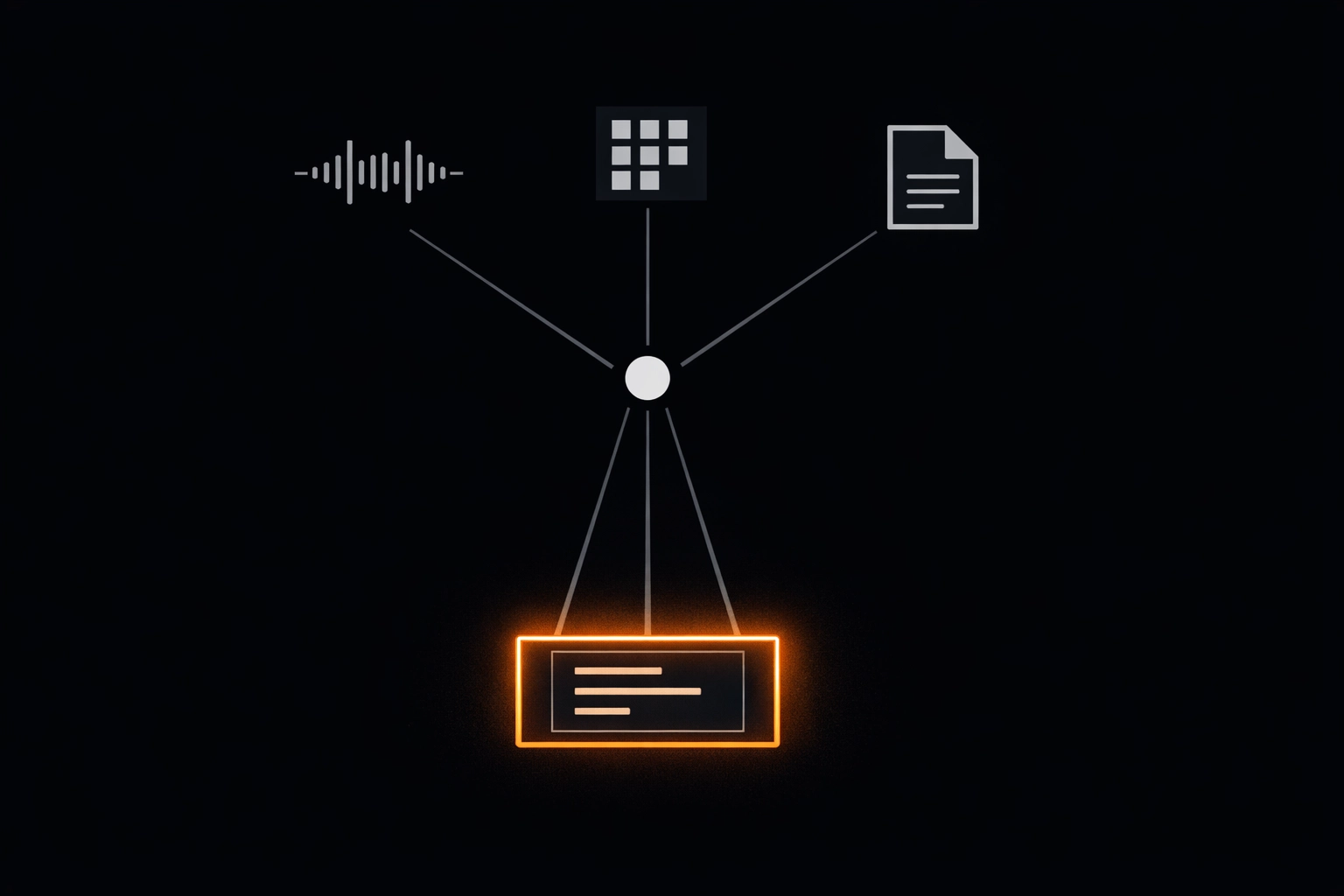
Our platform is built on a "Human-in-the-loop" philosophy. The AI does the heavy lifting: the scraping, the deep research, the drafting of the perfect, personalized hook. But you (or someone on your team) get the final say.
You can log in, review the drafted emails, and hit "Approve" with a single click. You get the quality of a founder-led email with the volume of an automated system.
This approach solves the "management nightmare" because you aren't managing a person’s behavior; you are simply curating high-quality output. It takes 10 minutes a day instead of 10 hours a week. If you're wondering how this compares to your current setup, we wrote a guide on AI SDR vs. Human SDR.
Scaling without the drama
If you are at the pre-seed or seed stage, your biggest risk is running out of cash before you find a repeatable sales motion. Hiring a remote SDR is a high-risk bet. If they fail, you've lost months of runway.
AI allows you to experiment with different niches, different hooks, and different markets without the drama of hiring and firing. You can scale your outbound without agencies or expensive headcount.
The "Remote SDR" role as we knew it in 2022 is dying. The future is lean, AI-driven, and founder-controlled.
Stop checking Slack to see if your SDR is awake. Stop worrying if they are actually doing the research. Start building a pipeline that doesn't require a manager.
If you’re ready to see how an AI agent can book demos for you while you sleep, it’s time to replace your SDR with an AI agent.

Ready to get your Sundays back? See how Ramen works.