
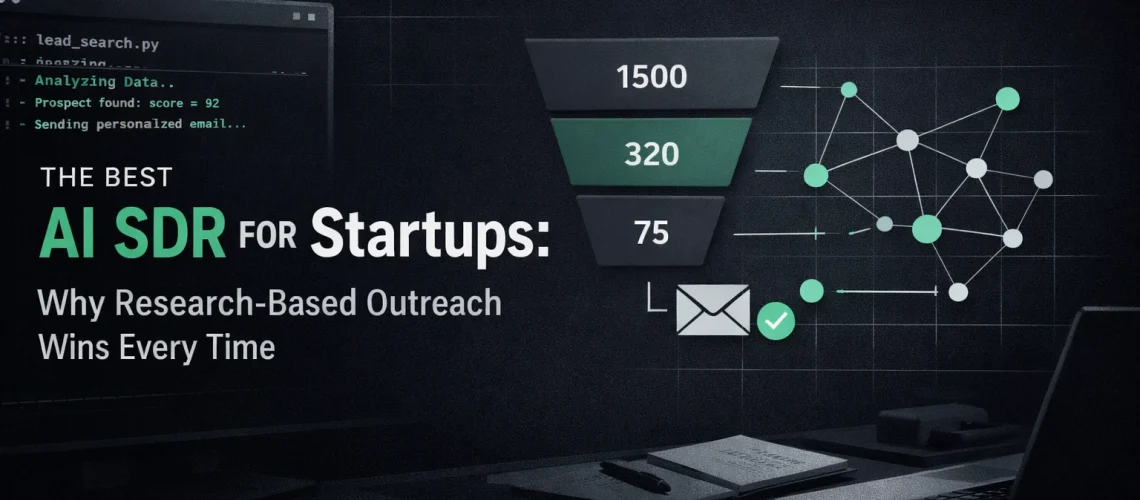
It’s 11:00 PM on a Sunday. You’ve got a board deck to prep, a feature that’s still buggy, and your calendar for next week looks like a ghost town. You know you need to do outbound, but the thought of spending the next three hours scouring LinkedIn and drafting "personalized" emails makes you want to quit and go work for a bank.
This is the founder’s trap. You can’t raise your next round without a pipeline, but you can’t build a pipeline because you’re busy building the product. You look at the cost of a human SDR, roughly $80,000 to $120,000 once you factor in salary, benefits, and the tech stack, and you realize that’s not an option.
So you turn to AI. But most "AI SDRs" are just fancy mail-merge tools that blast 5,000 people with the same generic "I saw you work at [Company Name]" template. They don't book demos; they just burn your domain and make you look like a spammer.
If you want to actually fill your calendar without spending $10k a month, you need the best AI SDR, one that doesn't just send emails, but actually does the research first.
The Buyer’s Guide: What Makes an AI SDR "The Best"?
The market is currently flooded with tools claiming to be AI SDRs. Most of them are lying. They are sequences with a sprinkle of LLM text at the top. To find a tool that actually works for a pre-seed or seed-stage startup, you need to look at three specific pillars: research depth, control, and cost-to-value.
1. Research Depth vs. Template Blasting
Most tools scrape a LinkedIn profile and grab the job title. That’s not research. A high-quality AI SDR should look at:
- Recent news articles about the company.
- The prospect’s specific posts or comments on social media.
- Company job boards (to see what problems they are hiring to solve).
- Funding rounds or product launches.
If the tool can't tell you why it’s reaching out beyond "you are a VP of Sales," it’s going to fail.
2. Human-in-the-Loop vs. Full Autopilot
There is a dangerous trend of "set it and forget it" AI. For a founder, your brand is everything. One hallucinated email sent to a high-value prospect can close a door forever. The best AI SDRs allow you to review and approve the research and the drafts before they hit "send." You want a partner, not a rogue bot.
3. The "Founder-Friendly" Price Point
Enterprise tools like Artisan or AiSDR are impressive, but they often come with price tags that don't make sense for a solo founder or a three-person team. You shouldn't have to raise a Series A just to afford the tool that helps you get to a Series A.

Why Research-Based Outreach is the Only Way to Win in 2026
The "spray and pray" era of outbound is dead. Google and Yahoo’s inbox protections have made it so that if you send low-quality, high-volume junk, your domain will be blacklisted within weeks.
But it’s not just about technical deliverability. It’s about human psychology. In 2026, everyone knows what a generic AI email looks like. We’ve all seen them: "I was impressed by [Company]'s commitment to innovation in the [Industry] space." It’s boring, it’s transparent, and it goes straight to the trash.
Research-based outreach wins because it mimics a high-performing human. When an AI can say, "I saw your interview on that podcast where you mentioned that your dev team is struggling with legacy code migration," the prospect stops scrolling. They feel seen.
Research creates relevance. Relevance creates replies.
The Problem with Traditional SDR Hiring
For years, the advice for startups was: "Hire an SDR as soon as you have PMF." But the math has changed.
- The Cost: A human SDR costs $6k–$10k per month.
- The Ramp: It takes 3–4 months for a human to understand your ICP and start booking quality meetings.
- The Churn: The average tenure for an SDR is about 14 months. By the time they are good, they leave.
For a startup, this is a massive risk. If you hire the wrong person, you’ve wasted $30k and four months of runway. Comparing an AI SDR vs. a human SDR in 2025 shows that for early-stage teams, the AI wins on speed and cost every single time, provided it’s the right AI.
How Ramen Approaches the "Best AI SDR" Problem
We built Ramen because we were tired of tools that over-promised and under-delivered. We didn't want a "revolutionary" platform; we wanted a tool that did the grunt work so we could focus on the demos.
Here is how we handle outbound differently:
100% Research-Based Personalization
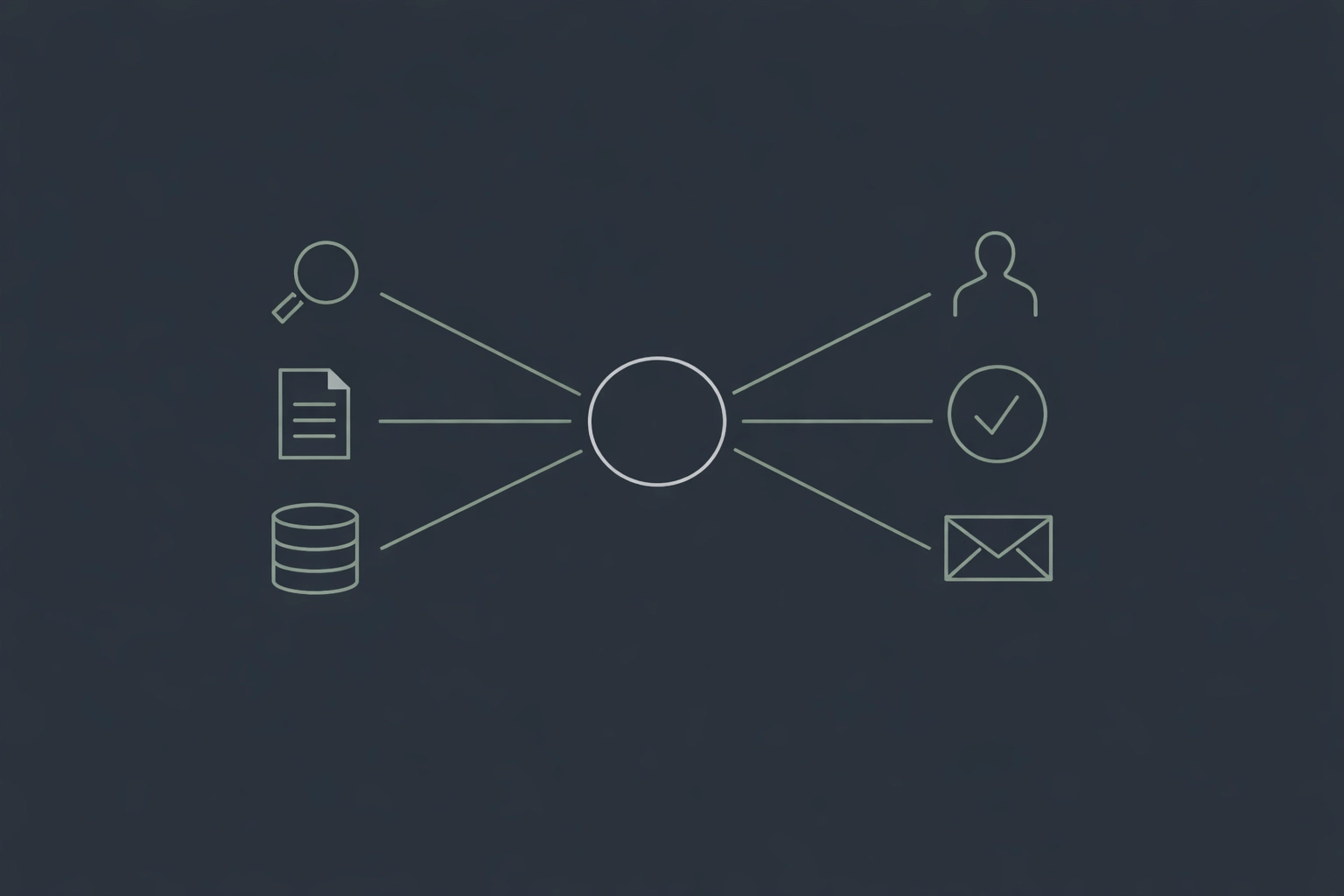
Ramen doesn't use templates. Ever. When you feed a list of prospects into Ramen, it goes to work like a researcher. It scans the web, looks at LinkedIn, reads recent news, and identifies a specific "hook" for every single person. It then writes a bespoke email based on that research. This isn't a mail-merge; it’s a manual-quality email written at scale.
Human-in-the-Loop Control
We don't believe in full autopilot for founders. Your reputation is too valuable. Ramen generates the research and the drafts, but you have the final say. You can skim through your outbound for the day, tweak a word here or there, and hit "Approve." It gives you the power of a 10-person SDR team with the quality control of a founder.
The BYOK Model (Bring Your Own Keys)
Most AI SDR platforms upcharge you on every little thing. We use a "Bring Your Own Key" model. You connect your own OpenAI or Anthropic API keys. This means you control your costs and you benefit from the rapid improvements in underlying models without waiting for us to update our software.
Built for the $499/mo Reality
We know what it’s like to look at a bank balance and wonder how you’re going to hit your growth targets. Ramen is priced at $499/mo. No hidden fees, no "enterprise" seat requirements. It’s designed to be the first "hire" a solo founder makes.
Addressing the Elephant in the Room: "Isn't AI Outreach Just Spam?"
If you do it wrong, yes. If you use AI to send 10,000 emails a day to people who don't care about your product, you are a spammer.
But if you use AI to find 50 people a day who actually have the problem you solve, and you send them a thoughtful, well-researched note, that’s not spam. That’s sales.
The goal of the best AI SDR isn't to increase your volume to infinity; it’s to increase your quality to a level that was previously impossible without a massive budget. It’s about doing the things that don’t scale, at scale.
The Chicken-and-Egg Problem
Startups face a brutal cycle:
- You can’t raise money without a pipeline.
- You can’t build a pipeline without a sales team.
- You can’t afford a sales team without money.
An AI SDR breaks this cycle. It allows you to replace a traditional SDR agent with a system that costs less than a gym membership for a mid-sized office. It gives you the "proof of concept" you need to show investors that your outbound works and your ICP is solid.
How to Get Started (Without Losing Your Mind)
If you're ready to stop spending your Sundays in a spreadsheet, here is the path forward:
- Clean your ICP: Don't target "everyone in marketing." Target "Head of Growth at Series A fintech companies using React."
- Focus on the Hook: The first sentence of your email is the only thing that matters. If it doesn't prove you did research, the rest of the email won't be read.
- Approve, Don't Just Send: Spend 15 minutes a morning reviewing what your AI SDR has prepared. It’s the highest ROI 15 minutes of your day.
- Scale Gradually: Start with 20-30 high-quality sends a day. Once you see the replies coming in, then you can think about scaling your outbound.
The Verdict
The best AI SDR isn't the one with the most features; it’s the one that actually understands your prospects. In a world where everyone is using AI to be louder, you should use AI to be smarter.
Ramen was built for founders who hate "salesy" sales. We don't do hype, and we don't do templates. We do deep research that helps you get the booked demos you need to keep your company alive.
If you’re tired of the Sunday night outreach grind, maybe it’s time to let a bot do the research for you.
Check out Ramen and see how we handle personalization. Your Sundays belong to you again.