
You see a $60,000 base salary on a job posting and think that’s what a Sales Development Rep (SDR) costs. You do the math: $5,000 a month for someone to take outbound off your plate so you can finally stop writing cold emails on Sunday nights. It seems reasonable.
Then reality hits. Between recruitment fees, employer taxes, health insurance, a $1,000/month tech stack, and the three months it takes them to send a single decent email, that $5,000 hire is actually costing you closer to $12,000 a month. For a seed-stage founder, that's not just an expense: it's a massive risk to your runway.
I’m breaking down the true, "fully loaded" SDR costs and explaining why smart startups are moving away from the traditional hiring model in favor of AI-driven systems that save over $80,000 a year.
The "Fully Loaded" Cost of a Sales Development Rep for Startup Founders
When you hire a human SDR, the base salary is just the tip of the iceberg. Most founders forget about the "burdened" or "fully loaded" cost, which includes everything required to keep that person sitting in a chair and actually productive.
Let’s look at the actual numbers for a typical US-based startup SDR in 2026.
1. The Direct Financial Burden
If the base salary is $65,000, your immediate additions are payroll taxes (Social Security, Medicare, state unemployment) and health insurance. In the US, you can expect to add roughly 20-30% on top of the base salary for these items alone. Now your $65k hire is costing the company $84,500.
2. The Tech Stack Tax
An SDR is only as good as their tools. To do the job, they need:
- A CRM seat (Salesforce or HubSpot)
- A sales engagement platform (Salesloft, Outreach, or Apollo)
- Data providers (ZoomInfo, LinkedIn Sales Navigator)
- Email deliverability and warming tools
For a single rep, this stack typically runs between $600 and $1,200 per month. That’s another $10,000 a year just to give them the phone and the list.
3. Recruitment and Onboarding
Unless you want to spend 40 hours a week screening resumes yourself, you’ll likely pay a recruiter or an agency. Standard fees are 20% of the first-year salary. That’s $13,000 out of the gate before Day 1. Even if you do it yourself, your time as a founder has a high hourly value. Every hour you spend interviewing SDR candidates is an hour you aren’t closing deals or building product.

4. The "Ramp" Productivity Gap
This is the hidden killer. Most SDRs take 3 to 4 months to reach full productivity. During this time, you are paying 100% of the cost for maybe 20% of the output. You are effectively subsidizing their education on your product and market. If it takes four months to ramp, you’ve spent $40,000+ just to find out if they can actually book a meeting.
5. Management Debt
SDRs are often entry-level hires. They don’t just "figure it out." They need scripts, coaching, daily standups, and constant course correction. As a founder, you become a part-time sales manager. If you value your time at $200/hour and you spend 5 hours a week managing a single SDR, that’s another $52,000 of "soft cost" annually.
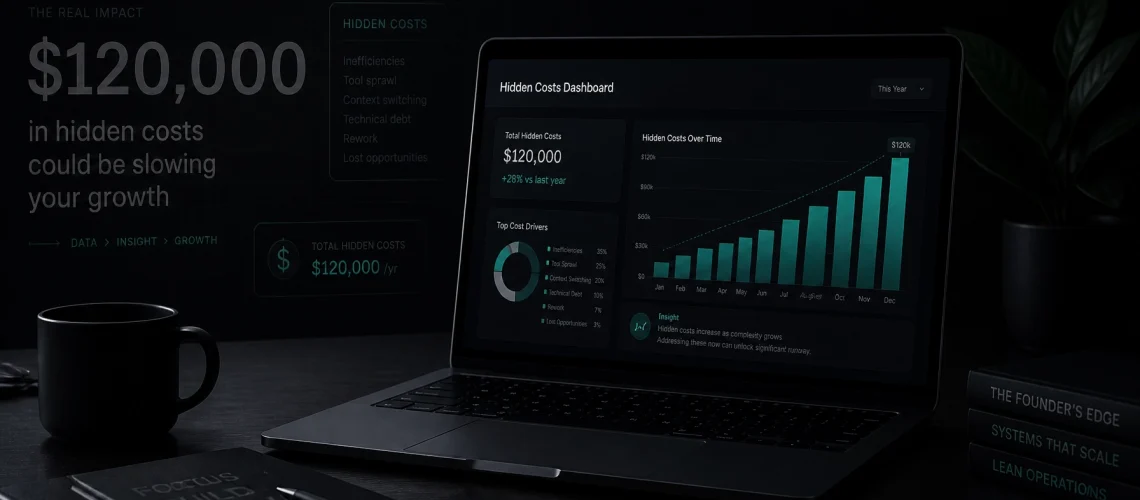
When you add it all up, a single SDR often costs a startup between $120,000 and $150,000 per year. For that same price, you could have hired a senior engineer or extended your runway by several months.
Why Traditional SDR Models Fail at Seed Stage
The traditional SDR model was built for mature companies with established Product-Market Fit (PMF). In a mature company, the "playbook" is written. You give the SDR the script, the list, and the tool, and they execute.
At the seed or pre-seed stage, the playbook doesn't exist yet. You are still experimenting with messaging, ICP (Ideal Customer Profile), and value propositions.
The Experimentation Trap
Human SDRs are expensive to pivot. If you realize your current messaging isn't working, it takes weeks to retrain a human, update their scripts, and get them back up to speed. An AI-powered SDR can pivot in thirty seconds.
The Turnover Cycle
The average tenure of an SDR is roughly 14 to 18 months. By the time they are finally good at their job and have fully "ramped," they are looking for a promotion to Account Executive (AE) or leaving for a higher base salary at a Series B company. You then have to restart the $15,000 recruitment and 4-month ramp cycle all over again.
The Volume vs. Quality Conflict
Most human SDRs are incentivized by activity metrics: dials made, emails sent. This leads to "template blasting." They take a generic template, swap out the first name, and hit send to 500 people. This doesn't just fail to book meetings; it burns your domain reputation and makes your brand look like a spammer to your most valuable prospects.

"Can AI really replace a human's touch?"
This is the number one objection founders have. "I don't want my prospects getting 'AI-sounding' emails."
The irony is that most human SDRs are currently sending emails that sound more like robots than the AI does. When a human SDR is pressured to meet a quota of 100 emails a day, they stop doing research. They use a template.
Ramen’s approach to AI sales isn't about replacing the human touch; it’s about using AI to do the deep research a human doesn't have time for.
Instead of a human spending 30 seconds to find a name and company, Ramen’s AI agents spend minutes browsing the prospect’s LinkedIn, reading their recent company news, listening to their podcast appearances, and analyzing their website. It then writes a personalized hook based on that data.
The result is an email that looks like it took 20 minutes to write, sent at a scale no human could ever achieve.
The Human-in-the-Loop Safeguard
The biggest fear with automation is the "set it and forget it" disaster where an AI sends something stupid to a high-value CEO.
This is why we built Ramen with a human-in-the-loop model. You (the founder) approve every single email before it goes out. You get the benefits of AI research and drafting speed, but you maintain 100% control over the quality and voice of your brand. You aren't replacing yourself; you're giving yourself a team of 10 virtual researchers who work for $499 a month.

The Math of the Modern Outbound Stack
If a human SDR costs $12,000 a month, what does the AI alternative look like?
With Ramen, the cost structure shifts from "hiring a person" to "running a system."
- Ramen Platform: $499/month (unlimited agents).
- BYOK (Bring Your Own Keys): You connect your own OpenAI or Anthropic API keys. This means you pay the raw cost for the AI's "brain power." Typically, this adds $10-$30 per month depending on your volume. You aren't paying a marked-up "AI tax" to a software vendor.
- Email Infrastructure: A few Google Workspace or Microsoft 365 seats for sending ($20-$50/month).
Total cost: ~$550 per month.
By switching from a human hire to an AI SDR system, you are saving roughly $11,450 every single month. For most startups, that is the difference between having a 6-month runway and an 18-month runway.
Reclaiming Your Sundays
The "chicken-and-egg" problem for founders is real: you can't raise your next round without a solid pipeline, but you can't build a pipeline without spending all your time on outbound instead of building the product.
Hiring a human SDR is often a desperate attempt to buy back time, but it usually ends up costing more time in management and more money in overhead than it's worth at the early stage.
You don't need a $150,000-a-year employee to do research and write drafts. You need a system that does the heavy lifting so you can focus on what actually matters: talking to customers and closing deals.
Stop overpaying for a playbook that hasn't been written yet. Let AI handle the prospecting, keep your human-in-the-loop for quality, and keep your $80k in the bank.
See how Ramen works and start building your pipeline without the $12k/month overhead.