
You’ve spent weeks interviewing. You waded through dozens of resumes, sat through ten "coffee chats," and finally hired a "rockstar" SDR who promised to fill your calendar. You signed the $65k base salary offer, paid the recruiter’s fee, and bought the tech stack.
Fast forward three months. Your calendar is still empty. Your new hire is "still warming up the domain," or "perfecting the script," or: worst of all: blaming your product-market fit for the lack of replies.
This isn't a hiring problem. It’s a structural one. You’re looking for a person to do a machine’s job.
The traditional Sales Development Representative (SDR) model was built for an era where manual labor was the only way to personalize outreach. In 2026, that model is officially broken. I’m going to show you exactly why the "hire an SDR" playbook fails most startups and how AI agents provide the consistency and research depth that humans simply can't sustain.
The SDR Churn Cycle
The math of hiring a human SDR at the early stage is, frankly, depressing.
According to recent benchmarks, the annual turnover rate for SDRs is hovering between 35% and 45%. That means there is nearly a one-in-two chance that the person you just hired will be gone in twelve months. Even if they stay, the "fully loaded" cost of that seat: including salary, tech stack, recruiting fees, and management time: regularly exceeds $100,000 per year.
But the real killer isn't the salary. It’s the ramp time.
It takes an average of 3.2 months for a human SDR to reach baseline productivity. For a seed-stage founder, three months is an eternity. You need pipeline today to raise your next round tomorrow. You can't afford to pay $8,000 a month for someone to "learn the industry" while your runway evaporates.

When you hire an SDR, you aren't just buying their time; you're buying a massive management overhead. You have to coach them, keep them motivated through the "no's," and ensure they aren't burning your domain reputation with lazy templates. Most founders realize too late that they’ve just hired a second job for themselves.
Why Personalized Research Can't Be Manually Scaled
Everyone knows that generic templates don't work anymore. If your outreach looks like it was written for a thousand people, it will be ignored by a thousand people.
The solution, we’re told, is "personalization." But think about what that actually requires a human to do:
- Find a prospect.
- Read their LinkedIn profile.
- Listen to a recent podcast they were on.
- Read their company’s 10-K or recent news.
- Synthesize all of that into a relevant three-sentence hook.
A high-performing human can maybe do this 20 times a day before their brain turns to mush. To hit the volume needed for a healthy pipeline, that human inevitably starts cutting corners. They start using "Personalization Tokens" like {{Company_Name}} and calling it a day.
This is where the AI SDR vs Human SDR debate ends. An AI agent doesn't get tired. It can perform deep research on 500 prospects in the time it takes a human to finish their first cup of coffee. It doesn't "skim": it reads every available data point and writes a unique email based on actual logic, not a template.
The Shift: From Management to Approval
At Ramen, we believe the founder should be the hero, not the SDR manager.
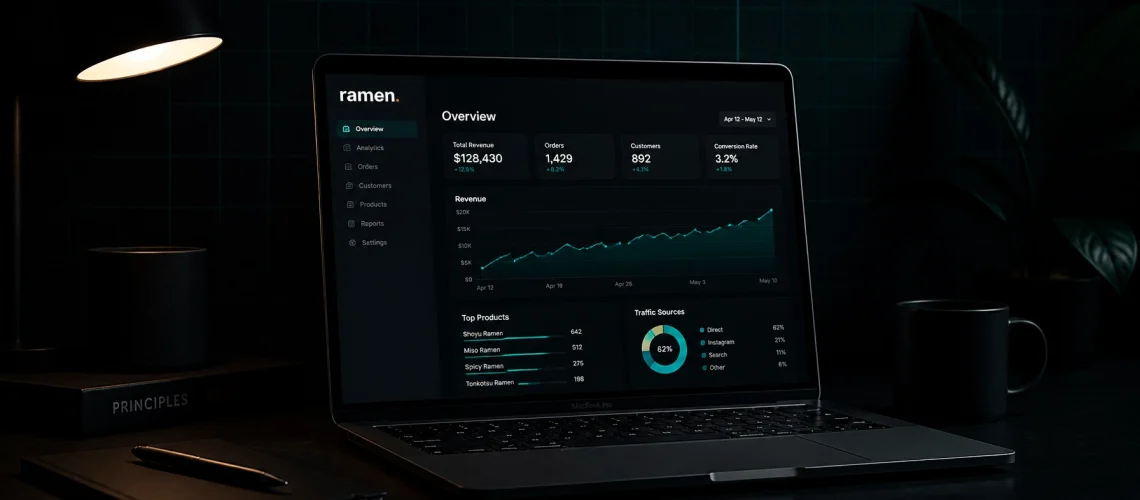
We built an AI-powered sales platform that acts as your virtual SDR team. Instead of spending your Sundays writing outreach or your Mondays in 1:1s, you spend five minutes a day approving high-quality, research-backed drafts.

What makes this different from the "AI automation" tools that burned your inbox in the past is the Human-in-the-Loop approach. You see every email before it goes out. If the AI missed a nuance, you fix it. If it’s perfect, you click send. You get the 100% research-based personalization of a top-tier rep with the 90% time-savings of automation.
We also solved the "hidden cost" problem. Most agencies or platforms mark up your lead data and AI usage by 300%. With Ramen, you bring your own API keys. You pay for the intelligence at cost, and you pay us a flat $499/month for unlimited agents. Compare that to the $8,000/month for a human SDR who might quit in six months.
"But I need someone to talk to leads!"
The most common objection we hear from founders is: "I need a human to handle the nuances of a conversation."
You're right. You do. But that person is you.
In the early stages, the founder is the best person to handle the demo. You know the product better than any $60k-salary hire ever will. You can navigate objections, spot gaps in the market, and build the kind of rapport that closes deals.
The job of an SDR isn't to close the deal; it's to book the meeting. AI agents are objectively better at the "grind" of outbound: the prospecting, the research, the initial outreach, and the relentless following up. By letting AI handle the prospecting, you free yourself up to do the only thing that actually moves the needle: talking to qualified leads who actually want to hear from you.
Stop Hiring for a Machine's Job
If you're a solo founder or leading a pre-seed/seed stage team, you're likely caught in the chicken-and-egg problem: you can't raise funding without a pipeline, but you can't build a pipeline without the time or money to hire a sales team.
Hiring a human SDR is a gamble that most early-stage companies lose. The ramp is too long, the cost is too high, and the turnover is too frequent.
The alternative is to scale your outbound with a system that doesn't sleep, doesn't quit, and does more research in an hour than a human does in a week. It’s time to stop managing people and start approving results.
If you’re ready to get your Sundays back and start seeing demos on your calendar without the $100k overhead, see how Ramen can build your pipeline for a fraction of the cost.