
You’re sitting there on a Sunday night, staring at a spreadsheet of 200 "leads" you scraped from LinkedIn. You know you need to send these emails to hit your demo targets for the month, but you also know that if you send another generic "I’d love to sync and discuss synergies" template, you’re going to get marked as spam faster than a Nigerian prince.
Most AI SDRs on the market today are just glorified mail merges. They take a name, a company, and a job title, then wrap it in a slightly better-written template. In 2026, that doesn't just fail to work: it actively ruins your brand. Prospects can smell AI-generated fluff from a mile away. Their filters are sharper, and their patience is non-existent.
If you’re a founder who needs a real pipeline, not just high activity metrics that lead to zero closed-won deals, you need to rethink your stack. The best AI SDR isn't the one that sends the most emails; it’s the one that does the most homework.
At Ramen, we built a tool for the founder who can’t justify a $100k salary for an SDR but also can’t afford to burn their domain with low-quality volume.
What Actually Defines the "Best" AI SDR in 2026?
The market has shifted. In 2024 and 2025, people were impressed if an AI could mention a prospect’s college. In 2026, that’s the bare minimum. To land a meeting with a high-value prospect today, your AI needs to act like a high-performing human.
Before we look at specific features, let's look at the three pillars that define a top-tier AI SDR:
- Deep Reasoning, Not Just Templates: The AI shouldn't just "fill in the blanks." It should understand your product’s value proposition and how it specifically maps to a prospect’s recent pain points.
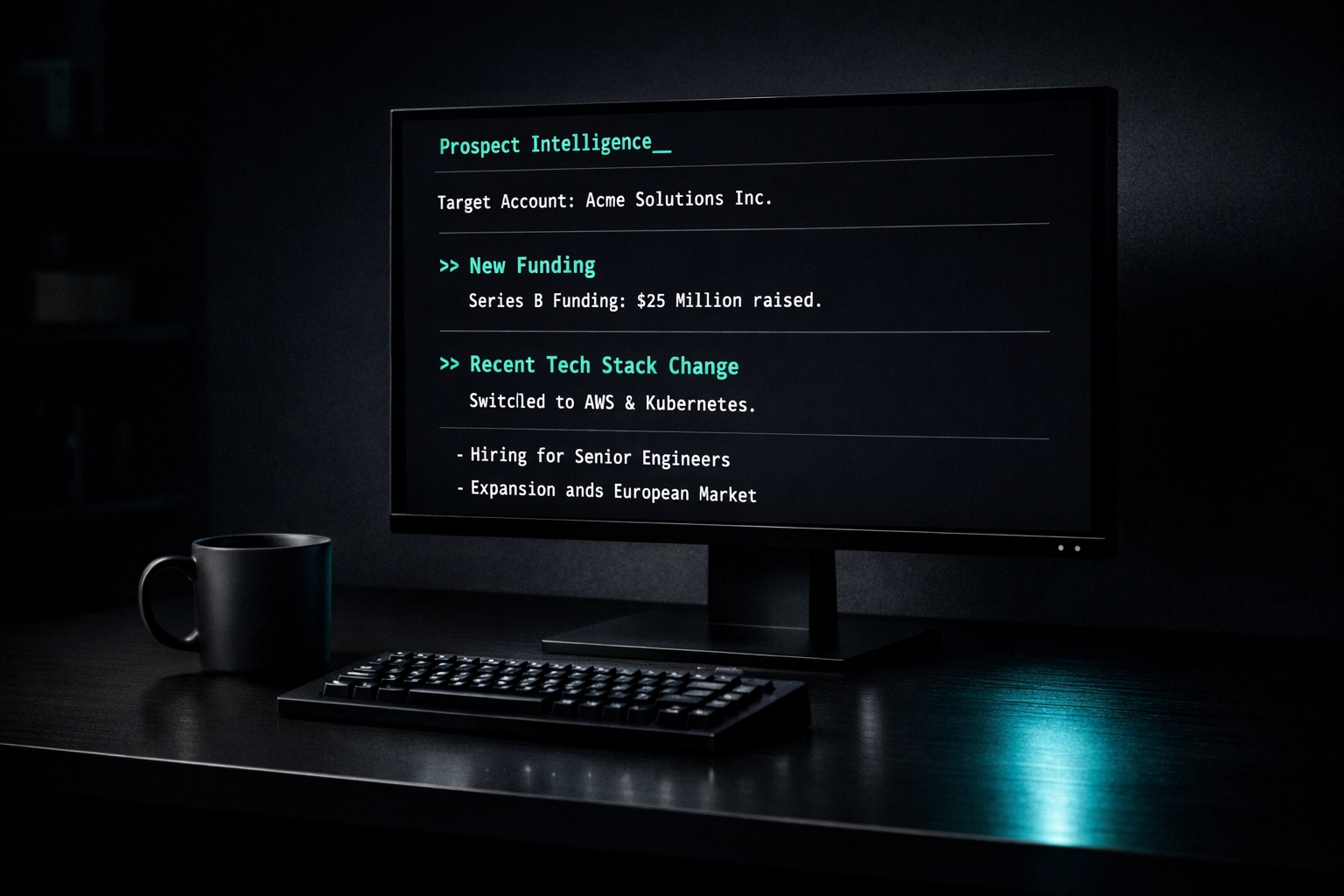
- Research-First Execution: It must look at 10-Ks, recent podcast appearances, tech stack changes, and hiring trends before it even thinks about writing a subject line.
- Transparency and Control: You shouldn't be locked into a "black box." You need to see why the AI said what it said and, more importantly, have the final say before it hits "send."
Why Personalization Is the Only Way to Break Through
We’ve reached "peak noise." Every mid-market VP is getting 50+ outbound emails a day. Most of those are generated by "standard" AI agents that follow the same three-step sequence.
If your outreach looks like everyone else’s, you aren’t just ignored: you’re blocked.
Personalization in 2026 isn't about mentioning a prospect's latest LinkedIn post. Everyone does that. Real personalization is about relevance. It’s the difference between saying "I saw you like hiking" and "I noticed your engineering team is expanding in EMEA, which usually means your current localization workflow is about to break."
One requires a scrape; the other requires an understanding of business triggers.
When you use a research-first outbound AI SDR, you’re moving from "bothering people" to "solving problems." Data shows that companies using AI agents with deep prospect intelligence see up to a 70% increase in conversions compared to those using basic automation.
The Power of Deep Prospect Research
Human SDRs historically spend about 72% of their time on non-selling tasks: mostly manual research and data entry. When you automate that research, you aren't just saving time; you're increasing the quality of the output.
A sophisticated AI SDR doesn't just look at a LinkedIn profile. It scans:
- Company News: Did they just raise a round? Did they just lay off 10% of their sales team?
- Job Postings: What skills are they hiring for? This tells you exactly what their internal gaps are.
- Financial Reports: For public companies, what are the "Risk Factors" mentioned in their latest filings?
- Tech Stack: What tools are they currently using, and are those tools' contracts likely up for renewal?
This level of detail allows the AI to craft a message that feels like it was written by a peer, not a bot. It creates a "human-in-the-loop" feel where the prospect thinks, "This person actually knows my business."
"Will This Get Me Marked as Spam?"
This is the number one question we get from founders. The answer is: Volume kills domains, but irrelevance kills brands.
If you send 1,000 generic emails a day, Google and Microsoft will nukes your inbox. If you send 50 highly researched, relevant emails, your deliverability stays high because people actually open and reply to them.
The best AI SDRs in 2026 prioritize "Inbox Health" by mimicking human behavior. This means:
- Variable sending cadences: Not sending 100 emails at exactly 9:00 AM.
- High-intent targeting: Only reaching out to people who actually fit your ICP.
- Research-based outreach: Using unique content in every email so that spam filters don't see repetitive patterns.
By focusing on quality over quantity, you avoid the "spam" label and actually build a reputation as a founder who provides value.

Why Ramen is the Choice for Founders
We didn't build Ramen for enterprise sales teams with 500 reps. We built it for the founder who is currently doing their own sales while also trying to ship code and raise a Seed round.
We know the "chicken-and-egg" problem: you can't raise money without a pipeline, but you can't build a pipeline because you're too busy building the product.
Here is how Ramen approaches the AI SDR role differently:
1. Bring Your Own AI API Keys (BYOK)
Most AI SDR platforms charge you a massive premium on top of the AI's processing costs. You end up paying $2,000 a month for $50 worth of actual AI compute. At Ramen, we believe in owning your stack. You bring your own API keys (OpenAI, Anthropic, etc.), and you only pay for what you use. No hidden markups. No "platform tax" on your intelligence.
2. Unlimited Configurable AI Agents
Your business isn't one-size-fits-all. You might need one agent targeting CTOs for a technical sell and another targeting HR directors for a culture-led sell. Ramen allows you to deploy unlimited AI agents with different personalities, research deep-dives, and goals.
3. Human-in-the-Loop Approach
We don't believe in "set it and forget it" for outbound. Your brand is too valuable. Ramen's workflow is designed so you can review the research and the drafted email before it goes out. It takes you 10 seconds to approve a draft that took the AI 10 minutes to research. This ensures that every message that leaves your domain is something you'd be proud to sign your name to.
4. Simple, No-Fluff Pricing
We’ve seen the pricing breakdowns of our competitors. It’s often confusing and tied to "seats" you don't need. We keep it simple. You’re a founder; you have enough subscriptions. We want to be the tool that pays for itself in the first three demos booked.
Moving Beyond the "Agency" Trap
Many founders, frustrated by the lack of time, turn to lead gen agencies. They pay a $5,000/month retainer only to receive low-quality leads and burned-out email accounts. Agencies are running a playbook designed to extract your monthly fee, not to understand your product.
An AI SDR is the modern way to scale outbound without agencies. It doesn't get tired, it doesn't take commissions, and it learns your product better every day.

The Verdict: Quality Over Everything
As we move through 2026, the gap between "good" and "bad" outbound will only widen. The "Best AI SDR" is the one that allows you to remain a founder while acting like a world-class sales team.
It’s about using AI-driven outbound playbooks to create genuine connections at scale. If you're still using tools that just blast templates, you're fighting a losing battle.
Stop playing the volume game. Start playing the research game. Your pipeline (and your domain health) will thank you.
Ready to see how deep research changes your reply rates?
See how Ramen works and start building a pipeline that actually converts.