
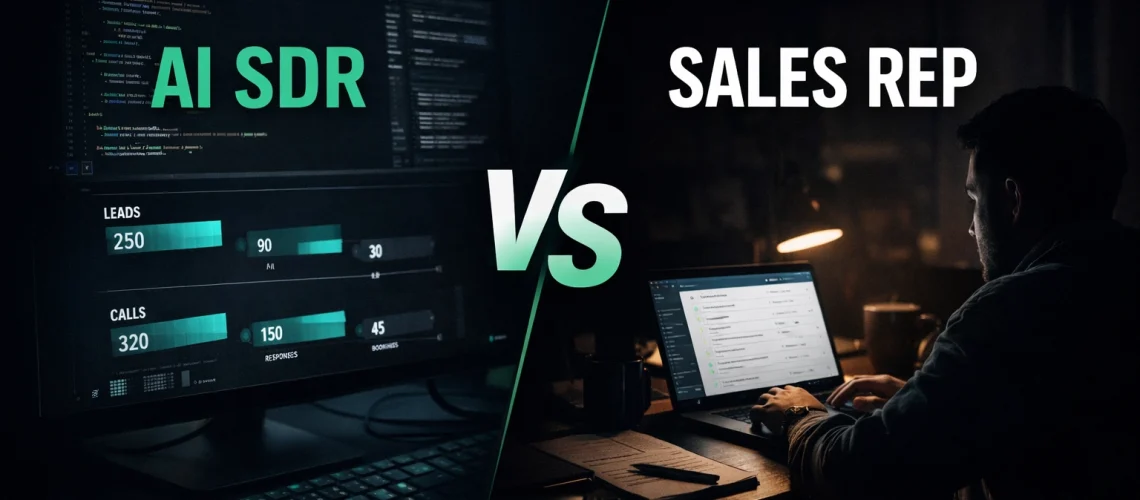
It’s 11 PM on a Sunday. You’re staring at a spreadsheet of 200 prospects, clicking through LinkedIn profiles, trying to find one "hook" that doesn’t sound like a generic template. You need to book three meetings this week to show your investors that your seed round wasn't a fluke.
You’ve got two options: hire a human Sales Development Rep (SDR) for $80,000 a year or find the best AI SDR to do it for you.
For a startup, this isn't just a "software vs. human" debate. It’s a survival choice. If you hire a human, you're betting $8,000 a month (including overhead) that they can find your ICP, research them deeply, and write emails that actually get a reply. If you go with AI, you’re worried you’ll just be sending high-speed spam that burns your domain.
Let’s look at who actually wins the research game when your runway is ticking and you need results yesterday.
The $80,000 Gamble: The Human SDR Reality
Most founders think hiring a sales development rep for startup growth is the "grown-up" thing to do. You imagine a hungry, junior hire who will grind all day, learn your product, and fill your calendar.
The reality? A human SDR spends about 70% of their day on non-selling activities. They are toggling between LinkedIn, your CRM, company websites, and industry news. By the time they’ve actually found a relevant piece of information: like a recent pivot or a specific technical requirement: they’ve spent 20 minutes on one lead.
If they’re doing "deep research," they might send 20 high-quality emails a day. In a 20-day work month, that’s 400 emails. Even with a stellar 5% meeting-booked rate, you’re looking at 20 meetings for $8,000. That’s $400 per meeting.
And that assumes they don't quit after six months because they’re bored of manual data entry.

Why Manual Research is a Startup Killer
When you’re at the seed stage, time is your scarcest resource. You can’t wait three months for a human SDR to "ramp up" and understand your market.
Traditional research follows a predictable, slow pattern:
- Check the prospect's LinkedIn "About" section.
- Check the company’s "Recent Posts."
- Look for a shared connection or a common university.
This is surface-level stuff. Prospects can smell it a mile away. "I saw you went to Stanford" is the new "Dear Sir/Madam." It doesn't prove you know their pain; it proves you know how to use a browser. True research is finding out that their company just lost their Head of Engineering or that they are struggling to integrate two specific pieces of legacy software.
A human SDR simply doesn't have the bandwidth to do that for 500 prospects a week. They take shortcuts. They start using templates. And then your reply rates tank.
The AI SDR Reality: Speed vs. Substance
This is where the best AI SDR tools claim to change the game. An AI agent doesn't "browse" a website; it ingests it.
An AI can analyze a company’s 10-K filing, their latest product release notes, and their CEO’s recent podcast appearance in about four seconds. It doesn't get tired at 3 PM. It doesn't need a "culture fit" interview.
The research provided in recent SaaS case studies shows that AI-driven agents can respond to and nurture hundreds of leads per week: a volume that would require a team of five humans to match. In some manufacturing sales pilots, AI agents were able to match equipment specifications to facility requirements with higher accuracy than junior reps, increasing technical validation calls by 65%.
But here is the catch: most AI SDRs are just sophisticated mail-merges. They scrape a name, a title, and a company, and then "hallucinate" a compliment. That’s not research; that’s a recipe for a blacklisted domain.
Head-to-Head: The Research Game
Let's break down how they actually compare in the trenches of outbound sales.
1. Depth of Context
Human SDR: Can understand nuance. They can see a prospect’s post about a personal tragedy or a specific joke and respond with genuine empathy.
AI SDR: Can analyze data at a scale humans can't. It can find a pattern across 50 different data points (hiring trends, tech stack changes, funding rounds) that a human would miss.
Winner: AI for data; Human for empathy.
2. Consistency
Human SDR: Has bad days. Gets sick. Takes vacations. Their research quality drops on Friday afternoons.
AI SDR: Operates 24/7 with 100% consistency. Every lead gets the same level of scrutiny.
Winner: AI.
3. Cost to Performance (The Startup Math)
The financial case for a startup is usually the deciding factor. Companies using AI for sales development report a 317% annual ROI. Why? Because the cost of "unlimited" AI agents is usually a fraction of one human salary.
Winner: AI.

The Objection: "But AI Emails Look Like Bot Spam"
You’re right to be worried. We’ve all received those "I was impressed by your role as CEO at [Company Name]" emails. They’re terrible.
The problem isn't the AI; it’s the lack of oversight. Many founders buy an AI tool, give it a list, and hit "send." That is a mistake.
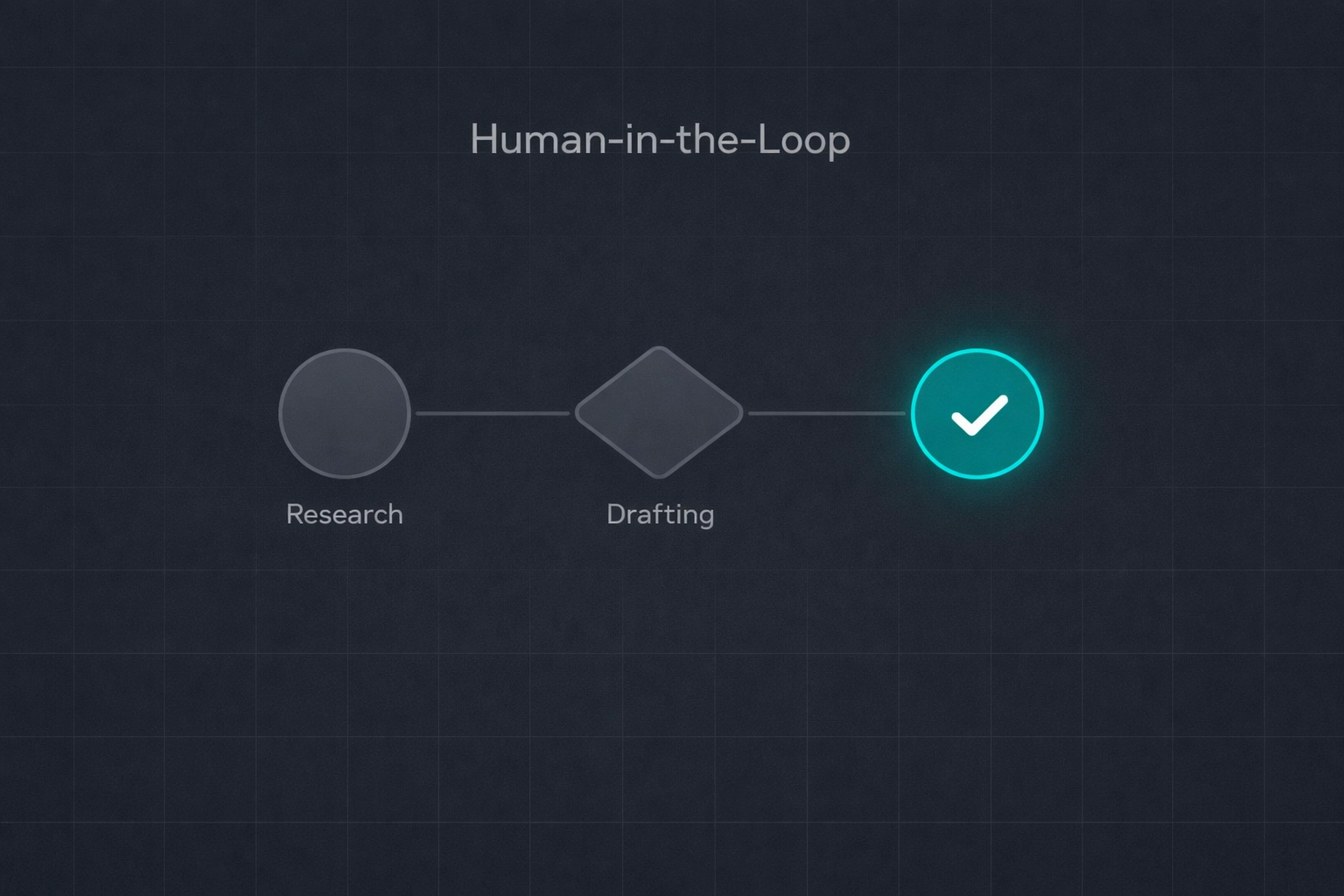
The best AI SDR strategy for a startup isn't "set it and forget it." It’s "AI-researched, human-approved." At Ramen, we believe the founder is the hero, not the AI. The AI does the heavy lifting: the hours of scraping, the 10-K analysis, the tech-stack checking: and presents you with a drafted email.
You spend 10 minutes a morning reviewing 50 emails. You might tweak two words in one, hit "approve" on forty, and delete eight. You get the scale of 10 SDRs with the quality control of a founder.
The Chicken-and-Egg Problem
Most startups are stuck in a loop:
- You can’t raise your next round without a solid pipeline.
- You can’t build a pipeline without spending 40 hours a week on outbound.
- You can’t spend 40 hours a week on outbound because you’re building the product.
Hiring a sales development rep for startup roles feels like the solution, but it often adds more work. Now you’re a manager. You’re teaching someone who has never sold your product how to speak to your customers.
AI agents don't need to be managed; they need to be calibrated.
The Ramen Difference: Why We Built This
We didn't build Ramen to replace humans; we built it to replace the "Sunday night spreadsheet session."
We saw founders spending $80k they didn't have on agencies that sent generic sequences and burned their reputation. We saw founders trying to do it all themselves and burning out.
Ramen is built on three specific principles that win the research game:
- Deep Research over Template Blasting: Our agents don't just look at LinkedIn. They look at the "why" behind the outreach.
- Human-in-the-Loop: You approve every single email before it leaves the building. No "accidental" spam. No hallucinations.
- The BYOK Model: We’re for founders who care about margins. You bring your own API keys, meaning you control your costs and your data. No hidden markups on "credits."
For $499 a month, you can deploy unlimited agents. That’s less than the cost of a single desk at a co-working space, and it does more for your revenue than a dozen "strategy" meetings.
Verdict: Who Wins?
If you have a $50M Series B and need to build a massive corporate culture, hire the human SDRs. You have the money to burn on training and turnover.
If you are a seed-stage founder, a solo founder, or a small team trying to find product-market fit, the best AI SDR wins every time. It gives you 90% of your time back. It scales with you without increasing your headcount. It turns your outbound from a manual chore into a repeatable system.
The "research game" isn't about who can write the most clever poem about a prospect's dog. It's about who can consistently identify high-intent signals and act on them before the competition does.
Stop spending your Sunday nights in a spreadsheet. Let the machines do the digging so you can do the selling.