
You're three months into evaluating "AI SDR" tools and they all sound the same. They promise to "automate your outbound" and "10x your pipeline." But when you actually test them, half just suggest actions you still have to execute yourself. The other half blast templates that get your domain flagged within a week.
Here's the truth: calling something the "best AI SDR" in 2026 means nothing if you're still spending Sundays crafting sequences, checking deliverability, and manually following up. The real question isn't whether it uses AI, it's whether it actually delivers meetings or just adds another tool to your stack that requires a full-time person to manage.
What Separates Real AI SDRs from Suggestion Engines
Most tools marketed as AI SDRs fall into one of two categories: glorified email schedulers with ChatGPT bolted on, or suggestion engines that tell you what to do but make you do the work.
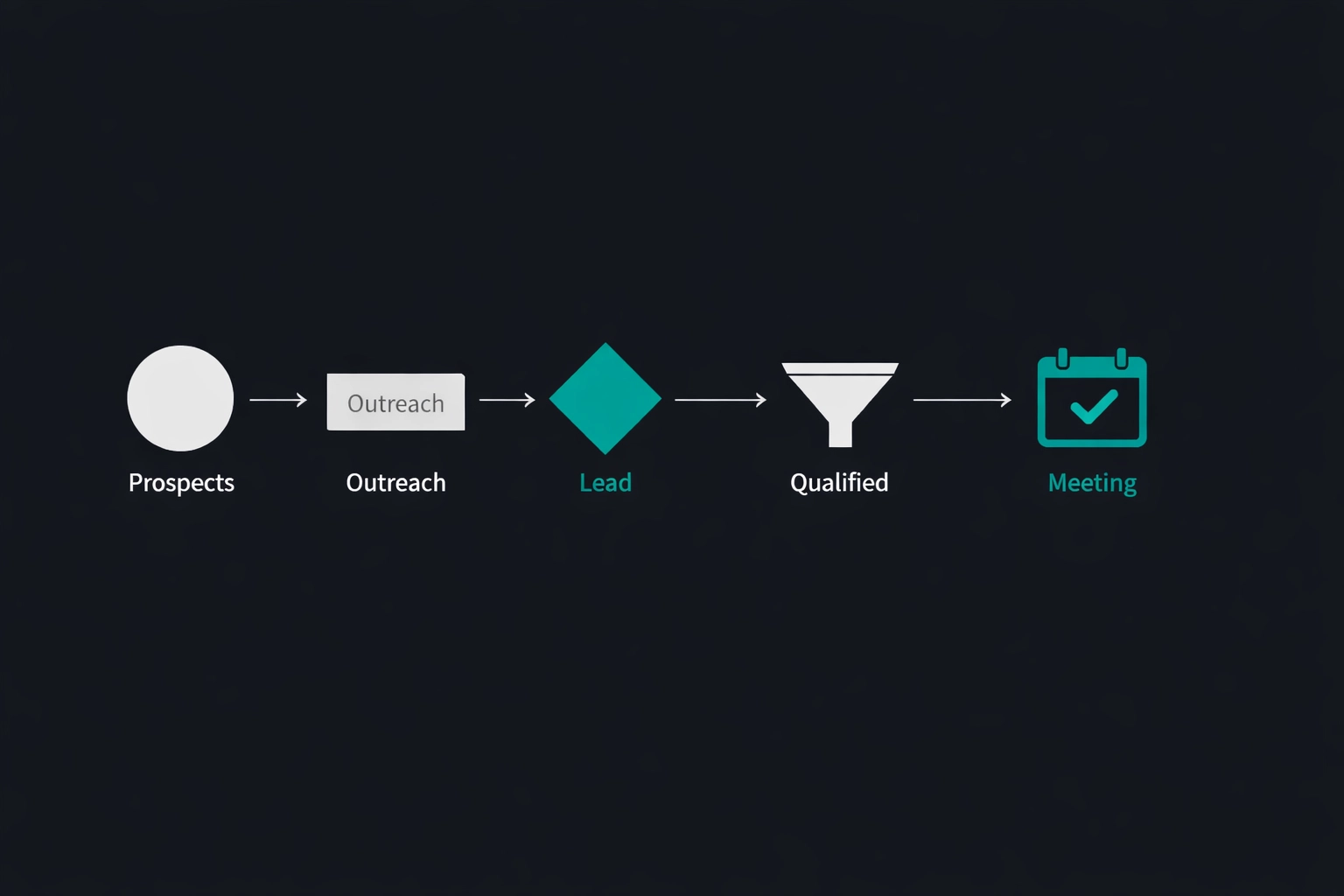
The distinction that matters is execution versus recommendation. A suggestion engine analyzes your prospects and says "you should reach out to this person about their recent funding round." A real AI SDR researches that prospect, writes the email, manages the sequence across email and LinkedIn, handles replies, and books the meeting when they say yes.
One sales team testing multiple platforms reported that only one AI tool survived their pilot because it "delivered meetings, not suggestions." That's the bar in 2026. Does it generate pipeline or does it generate tasks for you?

Here's what actual execution looks like:
Research depth: The platform pulls relevant signals, recent funding, hiring plans, tech stack changes, and incorporates them into personalized messaging. Not just mail merge personalization. Actual research that shows you know their business.
Multi-channel orchestration: Email isn't enough anymore. Your AI SDR needs to coordinate across email, LinkedIn, and potentially phone, adapting cadence based on engagement. If they opened three emails but didn't reply, the platform should adjust strategy automatically.
Reply management: When a prospect responds with "send me more info" or "not now, check back in Q2," your AI SDR should handle it. Not flag it for you to handle. Actually respond appropriately and update the sequence.
Meeting booking: When someone says yes, it should propose times, send calendar invites, and confirm attendance. You shouldn't be copying Calendly links into reply threads.
If your "AI SDR" makes you do any of these steps manually, you're paying for a research assistant, not an SDR.
The Hidden Economics: Why This Math Actually Works
Let's talk about SDR costs honestly. Hiring an entry-level SDR runs $80-120K loaded (salary, benefits, tools, training). That person takes 2-3 months to ramp, quits after 14 months on average, and spends 72% of their time on repetitive tasks that don't require human judgment.
The best AI SDR platforms flip this equation completely.
Companies using AI SDRs that actually execute see 317% annual ROI with payback in 5.2 months. Not because AI is magic, but because the cost structure is fundamentally different. You're not paying for 72% of someone's time to be wasted on list building and sequence management. You're paying for the 28% that matters: strategy, messaging, and closing deals.
Here's where the economics get interesting:
Speed matters exponentially: You're 21 times more likely to convert a lead if you contact them within 5 minutes versus an hour. Human SDRs check email every 30-60 minutes if they're disciplined. AI SDRs respond within minutes, 24/7. That's not a 2x improvement: it's a structural advantage.
Parallel processing changes the game: One SDR can have maybe 20 meaningful conversations per day. An AI SDR can engage hundreds of prospects simultaneously, each receiving personalized attention. Scale isn't linear, it's exponential.
The ramp time disappears: You don't spend 3 months training an AI SDR on your ICP, value prop, and objection handling. You configure it once, test messaging, and scale immediately. For pre-seed founders trying to show traction before their next raise, that 3-month difference is everything.
But here's what the ROI calculations don't capture: you get your nights and weekends back. When you're founder-led selling, outbound eats your calendar. You're prospecting Sunday nights, writing sequences between product meetings, and manually following up with tire-kickers who'll never buy. An AI SDR executing this work means you spend time on high-intent conversations, not busywork.
Intelligence Isn't About Automation: It's About Learning
This is where "best AI SDR" claims get interesting. Any tool can automate sending emails. The question is whether it gets smarter over time or just runs the same playbook forever.
Advanced AI SDR platforms learn from your sales cycle. When certain messaging gets higher reply rates, they incorporate those patterns into future outreach. When specific prospect signals correlate with closed deals, they prioritize similar profiles. When objections come up repeatedly, they adjust positioning.
This creates compounding returns. Month one, your AI SDR performs like a junior SDR following a script. Month six, it's pattern-matching across thousands of interactions and adapting strategy based on what actually works in your market.
The critical feature most platforms miss: feeding insights back into the system. If your AI SDR books a meeting but that prospect ghosts on the call, that's valuable data. If certain titles engage but never convert, that should adjust targeting. The best systems close this feedback loop automatically.

What this means practically: you're not just scaling volume, you're scaling quality. Most founders assume AI means trading personalization for scale. The reality with sophisticated platforms is you're getting both: personalized outreach that improves based on real outcomes, not hunches.
"But Doesn't AI Outbound Feel Spammy?"
Let's address the elephant in the room. You've seen bad AI-generated emails. Everyone has. They're obvious, generic, and usually get caught in spam filters before they reach anyone.
That's not an AI problem: it's an implementation problem.
Bad AI outbound blasts templates with surface-level personalization. "Hi {{FirstName}}, I saw you work at {{Company}}…" Good AI outbound researches each prospect individually and writes messaging that demonstrates genuine understanding of their business challenges.
The difference is depth of research and human oversight. If your AI SDR is sending emails you wouldn't send yourself, you're using the wrong tool or configuring it wrong.
Here's the hybrid model that actually works: AI handles 60-80% of prospecting work (research, sequence management, reply routing) while you maintain approval rights on messaging and strategy. You're not removing humans from the loop: you're removing them from the grunt work.
This matters for deliverability too. When you're manually approving campaigns before they send, you catch potential issues before they hurt your domain reputation. When you're reviewing messaging quality, you maintain brand voice. When you're analyzing what's working, you build institutional knowledge instead of outsourcing it completely.
The Real Question: What's Your Time Worth?
Most founders evaluating AI SDRs focus on the wrong metrics. They compare cost per email sent or cost per meeting booked. But the actual calculation is simpler: what's your time worth, and how much of it are you currently spending on outbound grunt work?
If you're spending 10 hours per week on list building, email writing, sequence management, and follow-ups, that's 520 hours per year. For most founders, that time is worth exponentially more than the cost of any AI SDR platform: especially if that time could go toward product development, closing deals, or sleeping more than 5 hours per night.
The best AI SDR isn't the one with the most features or the most aggressive pricing. It's the one that actually delivers meetings while giving you back the time to run your company.
If you're tired of tools that require another full-time person to manage, Ramen takes a different approach. You approve every email before it sends, bring your own API keys to control costs, and the platform handles deep research on every prospect: not template blasting. Built for founders who can't justify $80K for an SDR but need pipeline to close their next round. See how it works.