
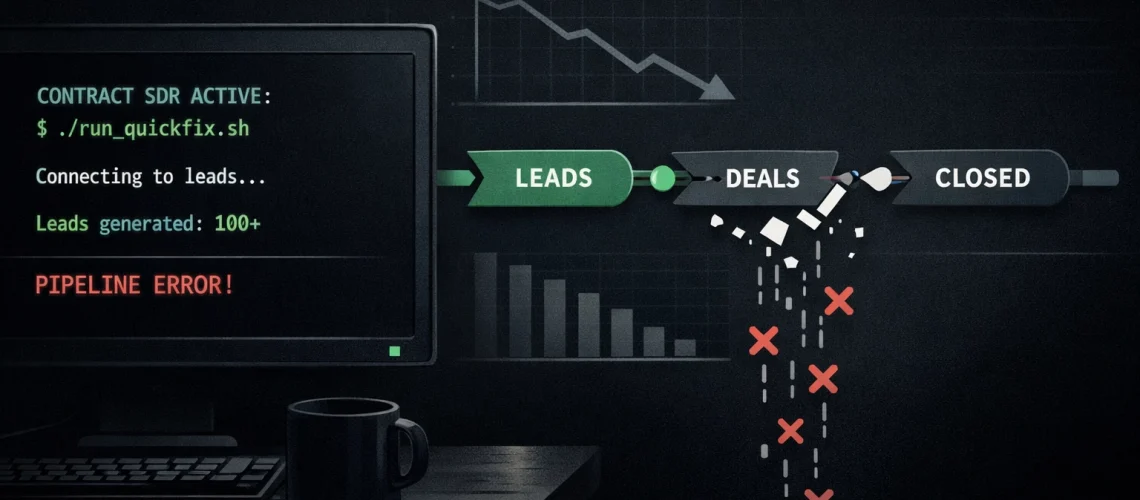
You're doing founder-led sales. It's working, kind of. You've got 3-5 calls a week, but you're also shipping product, managing the team, and trying to not fall asleep in investor meetings. The idea hits you at 11 PM on a Sunday while you're writing yet another batch of outreach emails: What if I just hired a contract SDR for a few months?
It feels smart. No $80K+ salary commitment. No equity. No onboarding nightmare. Just someone to take the outbound grind off your plate while you focus on closing and building.
Here's the problem: A contract SDR is a painkiller that makes the infection worse.
By the time you realize your pipeline is full of junk leads, your domain reputation is cooked, and your ICP has no idea what your product actually does, you've burned 3 months and $15-25K. And you're back to square one, except now you're also fixing the mess they left behind.
Let me show you why this happens, and what actually works when you can't afford a full-time SDR but need to scale outbound.
Why Contract SDRs Feel Like the Perfect Solution
The math seems reasonable. A freelance SDR charges $3K-5K per month. You give them 90 days to prove out the channel. If it works, great. If not, you cut them loose with no hard feelings.
They come with their own tools. They claim to know your ICP. They promise to hit the ground running because they've done this for "dozens of startups just like yours."
You're outsourcing a problem you don't have time to solve yourself. That's the entire value prop.
And if you're pre-seed or bootstrapped, the alternative: hiring a full-time SDR at $60-80K base plus $20-40K in ramp costs, tools, and training: feels impossible. The contract SDR is the compromise that lets you sleep at night.
Until it doesn't.

The Four Ways a Contract SDR Breaks Your Pipeline
1. They Don't Know Your Product (And They Don't Have Time to Learn It)
A contract SDR is juggling 3-5 clients at any given time. You're one of them. They've got maybe 10 hours a week to dedicate to your outbound, and most of that is sending emails, not learning why your API is better than the competitor's or how your pricing model works for mid-market vs enterprise.
So they do what every contract SDR does: they default to generic positioning.
Your emails sound like everyone else's. "We help companies like yours increase efficiency and drive growth." Cool. So does everyone.
The result? Your reply rates sit at 1-2% instead of 5-8%, because nobody reading your emails understands what you actually do or why they should care.
2. They Optimize for Volume, Not Quality
Contract SDRs get paid whether your demos turn into deals or not. Their incentive is to hit activity metrics: emails sent, calls made, LinkedIn touches: not to book qualified meetings that turn into revenue.
So they blast. They send 500 emails a week from your domain with minimal personalization. They book meetings with anyone who replies, regardless of fit.
You end up with a calendar full of calls with companies that can't afford you, don't have the problem you solve, or thought they were signing up for a demo of something completely different.
Your close rate tanks. And worse, you start doubting your product-market fit because "we're getting meetings but nothing's closing."
3. They Torch Your Domain Reputation
Here's the part nobody tells you until it's too late.
That contract SDR sending 500+ cold emails a week? They're not monitoring deliverability. They're not warming domains properly. They're not rotating sender addresses or managing bounce rates.
They're using your domain like a rental car.
Within 6-8 weeks, your emails start landing in spam. Your domain gets flagged by Google and Microsoft. By the time you notice, you've burned the one asset you can't easily replace: your ability to reach your ICP via email.
Fixing this takes months. New domains, warm-up sequences, rebuilding sender reputation from scratch. And during that time, your outbound is dead.
4. There's No Knowledge Transfer
Let's say the contract SDR actually does decent work. They figure out a script that works. They identify a segment of your ICP that's responding well. They develop a qualification process that filters out junk.
Then their contract ends.
All of that knowledge walks out the door. You're left with a spreadsheet of leads and a CRM full of notes you don't understand. When you hire your next person: contract or full-time: they start from zero.
You paid for trial and error, but you don't own the learning.

"But I Can't Afford a Full-Time SDR"
I know. That's the whole point of this post.
If you're pre-seed, you're probably sitting on $500K-1M in runway. Hiring an SDR at $80K loaded cost plus 3-4 months of ramp time is a $50-60K bet before you see a single booked demo.
That's 10-12% of your runway on one hire who might not work out.
The math doesn't math.
And even if you could afford it, you're still stuck with the same problem: training someone on your ICP, your messaging, your product, and your process while you're also trying to close deals and ship features.
So what's the move?
What Actually Works: The Founder-Led to AI-Assisted Transition
Here's the model that makes sense for early-stage companies that need to scale outbound without hiring:
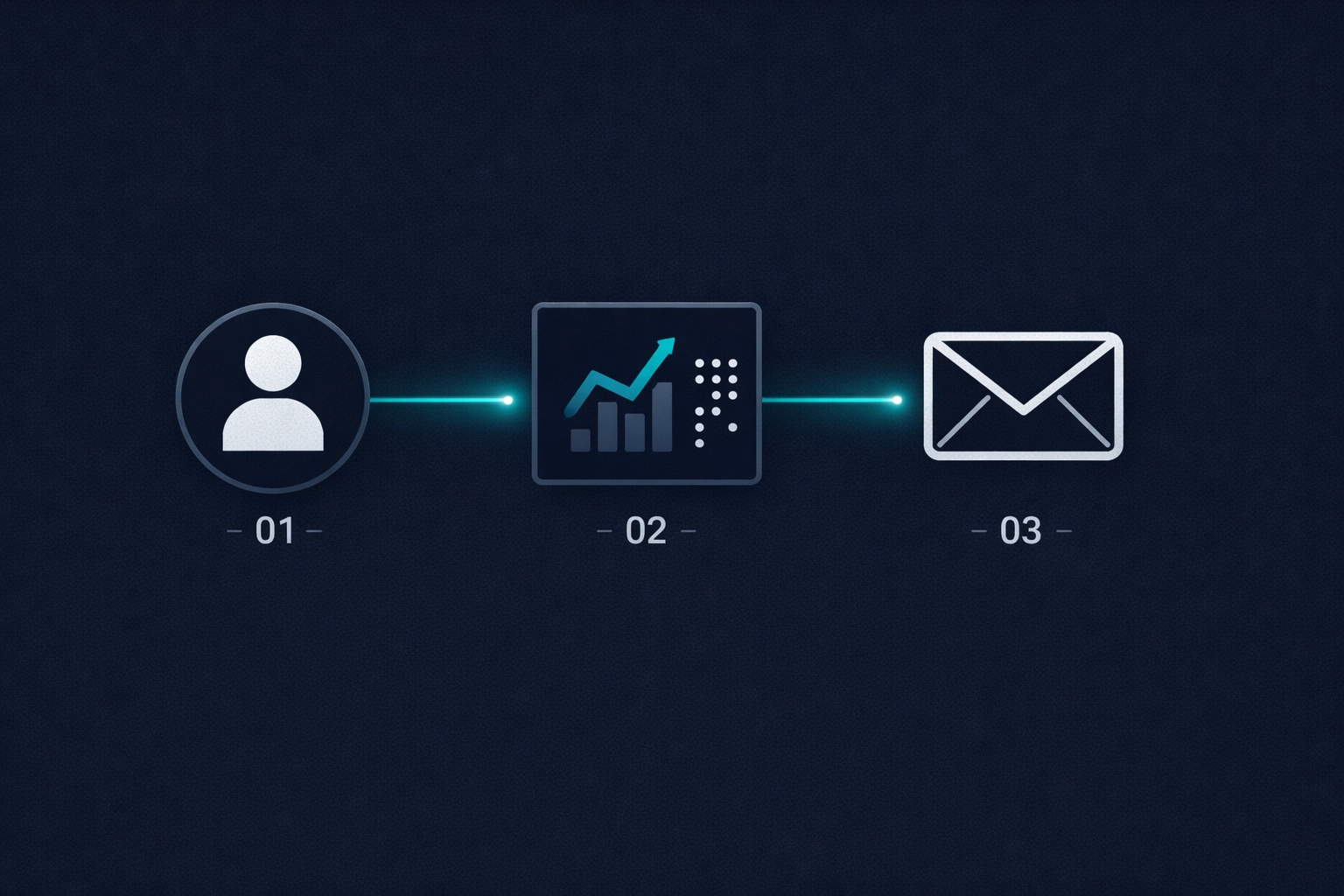
Step 1: Do 50-100 manual sends yourself.
I know you don't want to hear this. But you need to prove the message works before you automate it. Write 50-100 hyper-personalized emails to your ICP. See what reply rates you get. Figure out what positioning resonates.
This takes 10-15 hours. Do it over two weeks. You'll learn more about your ICP in this sprint than a contract SDR will learn in three months.
Step 2: Automate the research, not the relationship.
Once you know the message works, the bottleneck becomes research. Finding the right people. Understanding their pain points. Personalizing at scale.
This is where an AI SDR actually makes sense: not as a replacement for strategy, but as a research and execution layer that scales your proven playbook.
Tools like the best AI SDR platforms do deep research on every prospect, write personalized emails based on your voice, and let you approve every message before it sends.
You're still in control. You're still the one closing deals. But you're not spending 15 hours a week doing research and writing emails.
Step 3: Keep a human in the loop.
The biggest mistake founders make with automation: whether it's a VA, a contract SDR, or an AI tool: is assuming they can set it and forget it.
You can't.
Pipeline quality degrades the moment you stop reviewing what's going out. This is true whether it's a human or an AI doing the sends.
The right model is human-in-the-loop: automation does the research and drafts the emails, but you review and approve before anything goes out. You catch bad fits. You refine messaging. You stay close to the process.
This is how you scale without losing quality.
"What If I've Already Hired a Contract SDR?"
If you're two weeks in, cut your losses now. The sunk cost fallacy is real, but two weeks of pain is better than three months.
If you're two months in and the pipeline quality is questionable, audit the next 20 demos they book. If more than half are unqualified or off-ICP, you have your answer.
If you're locked into a contract, use the remaining time to document everything they're learning. Get them to write down their process, their best-performing scripts, their ICP insights. At least extract the knowledge before they leave.
And if you've already burned your domain, start fresh. New domain, proper warm-up, controlled sending volume. It sucks, but it's fixable.
The Bottom Line
A contract SDR feels like a shortcut. It's actually a detour that costs you time, money, and often your domain reputation.
The alternative isn't hiring a $80K full-time SDR you can't afford. It's staying close to your outbound motion, proving the message works yourself, and then using automation to scale your process: not replace your judgment.
Your pipeline is too important to outsource to someone who's splitting their attention across five clients and has no skin in the game.
Ramen is built for founders who need to scale outbound without hiring. You bring your proven playbook. We do the deep research, write the emails in your voice, and let you approve every message before it sends. You own your data, your domain, and your pipeline quality.
No contracts. No onboarding circus. Just outbound that works, without sacrificing your Sundays.