
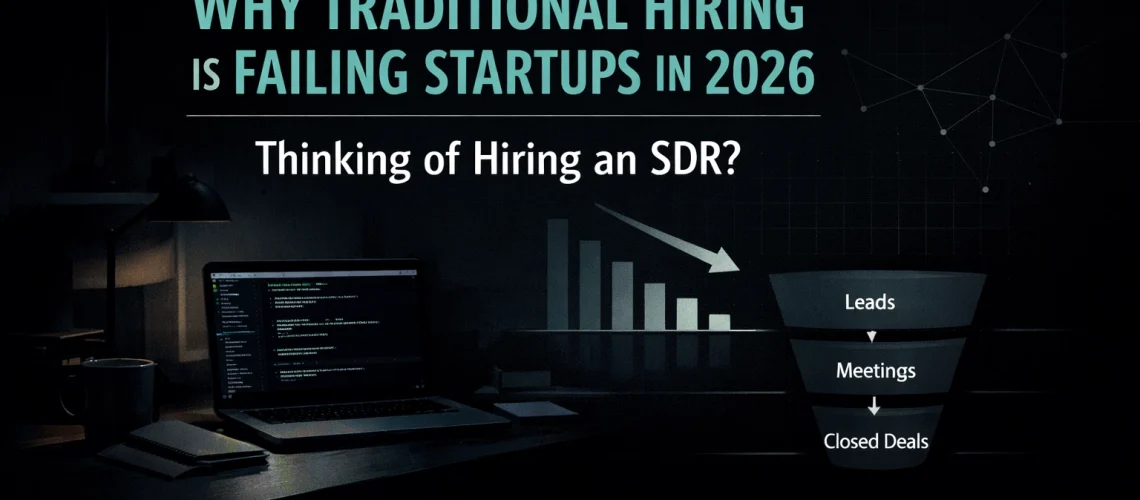
It’s Sunday night. You’re staring at your calendar for the upcoming week, and it’s looking dangerously thin. No demos. No follow-ups. Just a sea of internal meetings and "focus time" that you know will be spent firefighting product bugs.
The thought hits you, just like it hits every founder at this stage: “I need to hire an SDR.”
You imagine a hungry, mid-twenties go-getter who will come in, take the outbound grind off your plate, and magically fill your pipeline while you focus on building the product. You think that by spending $60k to $80k on a base salary, you’re buying yourself growth.
But it’s 2026. The math has changed, the technology has shifted, and the "traditional" SDR model is officially broken for early-stage startups.
In reality, hiring your first SDR today often results in three months of expensive training, another three months of "ramping," and a mountain of overhead: only to realize six months later that your messaging was the problem all along. Or worse, the SDR quits for a "Senior" role at a Series B company just as they start hitting their stride.
If you’re pre-seed or seed-stage, hiring a human SDR is probably the biggest financial risk you can take right now. Here is why the traditional playbook is failing and why the "hire" you actually need isn't a human at all.
The hidden risks of hiring your first SDR too early
Most founders view an SDR as a solution to a pipeline problem. In reality, an SDR is an amplifier of a proven sales process. If you haven’t personally booked and closed your first 10-20 customers, you don’t have a process to amplify. You have a series of experiments.
When you hire a human SDR before you have Product-Market Fit (PMF), you are effectively paying someone $100,000+ a year (once you factor in taxes, benefits, and tech stack) to run experiments that you should be running yourself.
The "Loaded Cost" Trap
The salary you see on the offer letter is never the real cost. In 2026, the loaded cost of a human SDR ranges between $100k and $130k annually. This includes:
- Recruiting fees (usually 20-25% of base salary).
- Sales engagement software (Salesloft, Outreach, etc.).
- Data providers (ZoomInfo, Apollo).
- Health insurance, 401k, and office overhead.
- Management time (Your time).
For a startup with $500k in the bank, one bad SDR hire can burn through 25% of your runway before you even see a single qualified demo.
The Management Tax
As a founder, your most valuable asset isn't money; it's focus. When you hire an SDR, you aren't just adding a line item to your budget; you’re adding a management burden. You have to write the scripts, build the lead lists, handle the 1-on-1s, and provide the emotional support when they hit a string of "no's."
If you’re still the primary person building the product, you simply don't have the 5-10 hours a week required to manage an entry-level salesperson effectively.

Why traditional methods fall short in 2026
The market in 2026 is louder than it has ever been. Every prospect you want to reach is being bombarded by generic, automated sequences. The "spray and pray" method that worked in 2021 is dead.
Traditional SDRs are trained to hit volume targets: 50 calls a day, 100 emails a day. But volume without deep relevance is just spam. To get a reply in 2026, you need to know who the prospect is, what their company just announced, what their specific pain points are, and why now is the time to talk.
A human SDR can do this research, but they can only do it for maybe 10-15 leads a day if they’re being thorough. That puts your Cost Per Lead (CPL) through the roof. If your SDR is making $100k and booking 5 meetings a month, each meeting is costing you nearly $1,700. That math doesn't work for most SaaS startups.
Furthermore, the talent market has shifted. The best sales talent isn't looking for entry-level SDR roles at unproven startups. They want established playbooks and big commissions. You’re often left choosing between someone who is overqualified and bored, or someone who is underqualified and needs you to hold their hand through every email draft.
Why AI is the smarter "hire" for pre-seed and seed startups
This is where the paradigm shifts. For a founder in 2026, the goal shouldn't be "hiring a person." The goal should be "building a repeatable pipeline."
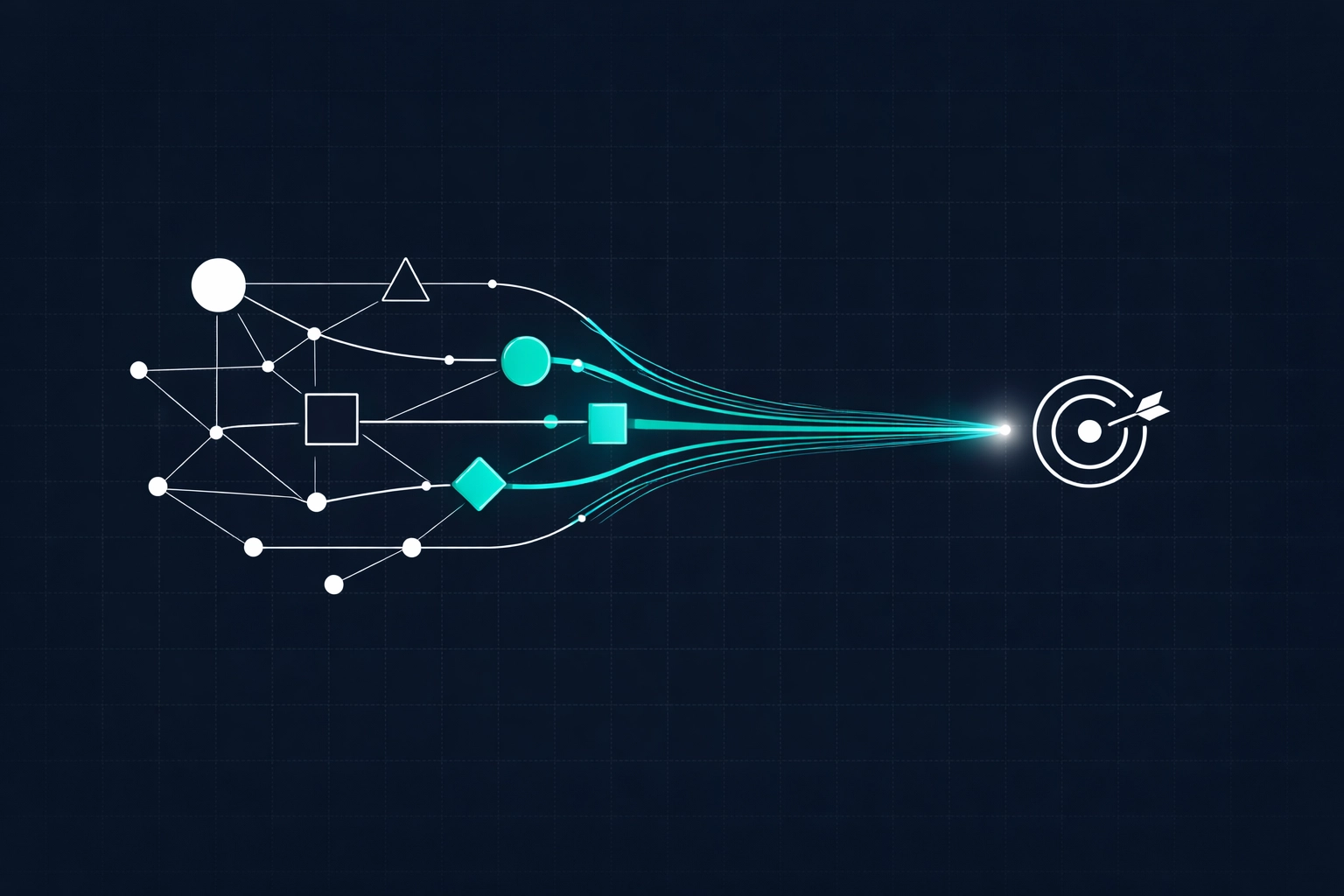
An AI SDR isn't just a bot that sends emails. It's a system that replicates the best parts of a human SDR: research, personalization, and follow-up: without the baggage of overhead, churn, or "bad days."
1. The Cost Efficiency is Unbeatable
While a human SDR costs $10k+ a month, an AI SDR through a platform like Ramen starts at $499/mo. That is a 95% reduction in cost. For a seed-stage startup, that difference is the gap between having 18 months of runway and 24 months.
2. Zero Ramp Time
A human SDR takes 3 to 6 months to become fully productive. They have to learn your product, your persona, and your industry. An AI agent can ingest your entire website, documentation, and past successful emails in minutes. It starts sending high-quality, researched outreach on Day 1.
3. Unlimited Scalability
If you want to double your outreach with a human team, you have to hire another person, pay another $100k, and spend another 3 months training. With AI, you just increase the lead volume. It works 24/7, doesn't need a holiday break, and never gets "burnt out" by rejection.
4. Better Research Than a Human
Be honest: if you tell an SDR to find 50 leads, they are going to scrape a list and send a semi-templated email. They aren't going to read the prospect’s latest 10-K filing or listen to their recent podcast appearance. AI can do that in seconds for every single lead.
Objection handling: "Can AI really represent our brand?"
This is the biggest hurdle founders have when considering AI. You’re worried that an AI will hallucinate, send a "Dear {First_Name}" email, or sound like a robot, effectively burning your reputation with your most valuable prospects.
And if you use a generic "AI wrapper" that just plugs ChatGPT into a spreadsheet, you’re right to be worried. That is spam.
But that’s not how we built Ramen. We took a "research-first" approach.
The Research-First, Non-Template Approach
Instead of starting with a template and trying to jam "personalization" into it, Ramen starts with the prospect. Our agents scrape the web, LinkedIn, and company news to understand what is actually happening in that person's world.
Only after the research is done does the AI draft an email. And here is the kicker: You are the human-in-the-loop.
In the early days of your startup, you shouldn't automate everything blindly. With Ramen, the AI does the 90% of the grunt work: finding the lead, doing the research, and writing a draft that actually sounds like you. You then spend 10 minutes a morning reviewing and hitting "approve."
You get the scale of AI with the quality control of a founder-led sales process. It’s not about replacing your voice; it’s about giving your voice a megaphone.
The Chicken-and-Egg Problem
Founders often find themselves in a trap: you can’t raise your next round without a solid pipeline, but you can’t afford the $100k SDR to build that pipeline until you raise.
Traditional hiring forces you to gamble your remaining cash on a person who might not work out. AI allows you to bridge that gap. You can build a consistent, high-quality outbound machine for the price of a gym membership.
Once you have that machine running: once you’re booking 10, 15, or 20 demos a month: then you hire a human. But you don't hire them to do the research. You hire an Account Executive (AE) to close the deals the AI is booking for you.
Moving Forward: The 2026 Playbook
If you are a founder doing your own outbound, stop. Your time is too valuable to be spent manually searching LinkedIn and drafting cold emails.
And if you’re thinking about hiring an SDR, look at your bank account and ask yourself if you’re ready to lose $30k in the next three months just to "see if it works."
The smarter move in 2026 is to automate the "DR" (Development Rep) part of the job and keep the "S" (Sales) for yourself until you hit PMF. Use a tool that allows you to scale outbound without agencies or expensive hires.
Ramen was built specifically for founders who are in the trenches. We don't believe in "set it and forget it" spam. We believe in high-relevance, research-backed outreach that respects the prospect's time and protects your brand.
You can bring your own API keys, control your costs, and finally get those Sunday nights back.
Ready to see how an AI SDR can actually book demos without sounding like a bot? Check out how Ramen works and start building your pipeline today for $499/mo.