
You just closed a $500K seed round. Your runway is 18 months. You need pipeline yesterday, but you're still building the product on weeknights. Every founder advice thread says "hire a sales development rep for startup growth," but that's $80-120K loaded cost for someone who takes 3 months to ramp. Meanwhile, your co-founder sends the same cold email template to 100 prospects every Sunday and gets radio silence.
Here's the choice that keeps you up at night: hire SDR talent and burn through 15% of your runway on one person, or piece together a "virtual" team that might be cheaper but feels like managing a remote sales circus.
Let's break down what each option actually means, what it costs beyond the price tag, and how to decide without burning your precious runway on the wrong bet.
The Real Cost of Hiring Your First SDR
When founders say they're going to hire SDR talent, they're usually thinking about base salary. That's the first mistake.
An entry-level SDR in a major market runs $60-70K base, plus another $20-30K in OTE if they hit quota. Add payroll taxes, benefits, laptop, software licenses (CRM, sales engagement platform, data tools), and you're at $100-120K loaded cost. That's before they send a single email.
But the hidden costs hurt more:
Ramp time is real. Your first SDR takes 2-3 months to become productive. They need to learn your product, your ICP, your messaging, and how to handle objections. During this time, you're paying full salary for zero pipeline.
You become a sales manager. Every forecast call, every coaching session, every "why aren't these leads converting" conversation is time you're not building product or talking to customers. Most technical founders underestimate this tax by 10-15 hours per week.
One person is a single point of failure. They get sick, burn out, or get poached by a Series B company offering equity that's actually worth something. Your pipeline goes to zero overnight.
The upside? When it works, a good SDR becomes an extension of you. They learn the nuances, they iterate on messaging, they tell you what prospects actually care about. That feedback loop is valuable.
But here's the part nobody mentions in those LinkedIn thought leadership posts: you shouldn't hire an SDR until you've personally closed 15-20 deals. If you don't have a repeatable sales process that you can teach, you're paying someone $10K/month to figure out your GTM for you. That rarely ends well.

What "Virtual SDR Team" Actually Means
The term "virtual SDR" is deliberately vague, and that's part of the problem. It can mean:
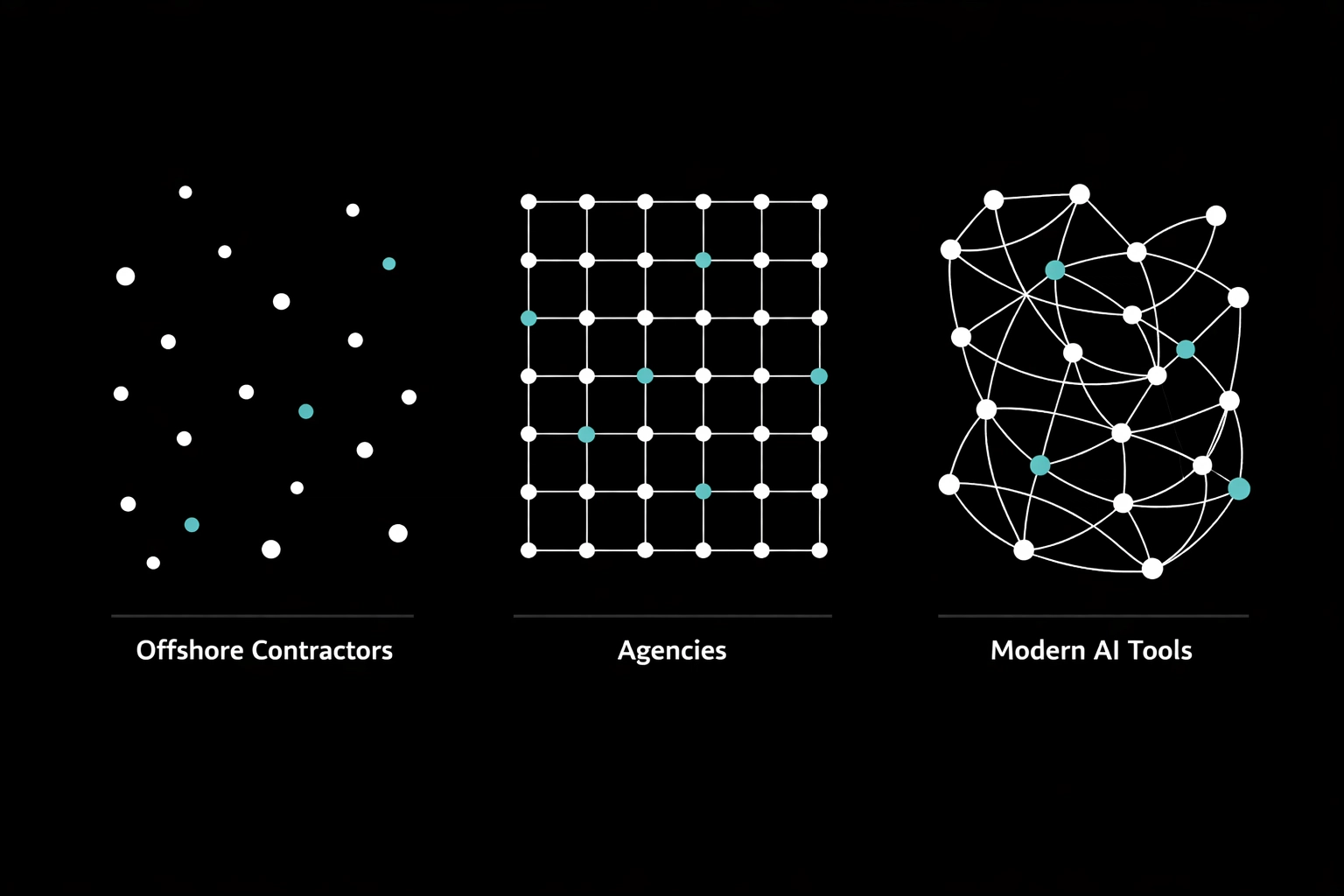
Offshore contractors ($15-25/hour) who send emails from the Philippines following your scripts. Quality varies wildly. You get what you pay for.
Lead gen agencies ($3-8K/month) that promise qualified meetings. Most run the same spray-and-pray playbook across 50 clients, burn your domain reputation, and blame your ICP when results disappoint.
Freelance SDRs ($40-75/hour) who work part-time across multiple clients. Less commitment, more flexibility, but they're not living and breathing your product.
AI SDR platforms (variable cost, usually under $500/month) that research prospects and draft personalized emails at scale, with you approving each one. This is the newest category, and the one most founders haven't evaluated yet.
The promise of virtual teams is simple: lower fixed costs, faster to start, easier to scale up or down. The risk is equally simple: you're outsourcing the top of your funnel to people who don't care about your company as much as you do.
Most virtual setups fail because founders treat them like "set it and forget it" solutions. You hand over a target list, check back in two weeks, and wonder why the 2% reply rate isn't converting. Virtual teams need more oversight, not less, because they lack the context that a full-time hire absorbs through osmosis.
The Decision Framework: What's Right for Your Stage?
Stop asking "which is better" and start asking "what does my situation actually require?"
You should hire an SDR if:
You've closed 20+ customers yourself and have a documented sales process. You know exactly what messages work, which objections come up, and how to handle them. You can train someone.
You have 12+ months of runway after the hire. An SDR is a 6-9 month bet minimum. If you're cutting it close, the pressure to see immediate ROI will poison the relationship.
You need the feedback loop. A full-time SDR hears hundreds of objections, competitive mentions, and ICP signals that improve your entire GTM. That intelligence is hard to get from contractors.
You're technical and hate sales. If you're a product-first founder who would rather build features than send cold emails, a dedicated SDR can take that entire workload off your plate.
You should explore virtual options if:
You haven't proven repeatable sales yet. You're still testing messaging, refining ICP, and figuring out what resonates. A flexible, lower-commitment option lets you iterate without a $120K fixed cost.
Your runway is tight. If every dollar matters and you can't afford a hiring mistake, virtual teams let you test channels and approaches at 1/4 the cost.
You have strong sales chops yourself. If you know how to prospect and close but lack the time to execute, virtual teams can be force multipliers. You provide the strategy, they provide the execution.
You're willing to stay in the driver's seat. Virtual teams aren't autopilot. You need to review emails, approve approaches, and give feedback. If you want to fully delegate, hire full-time.
The Objections Nobody Talks About
"But AI SDRs just spam people, right?"
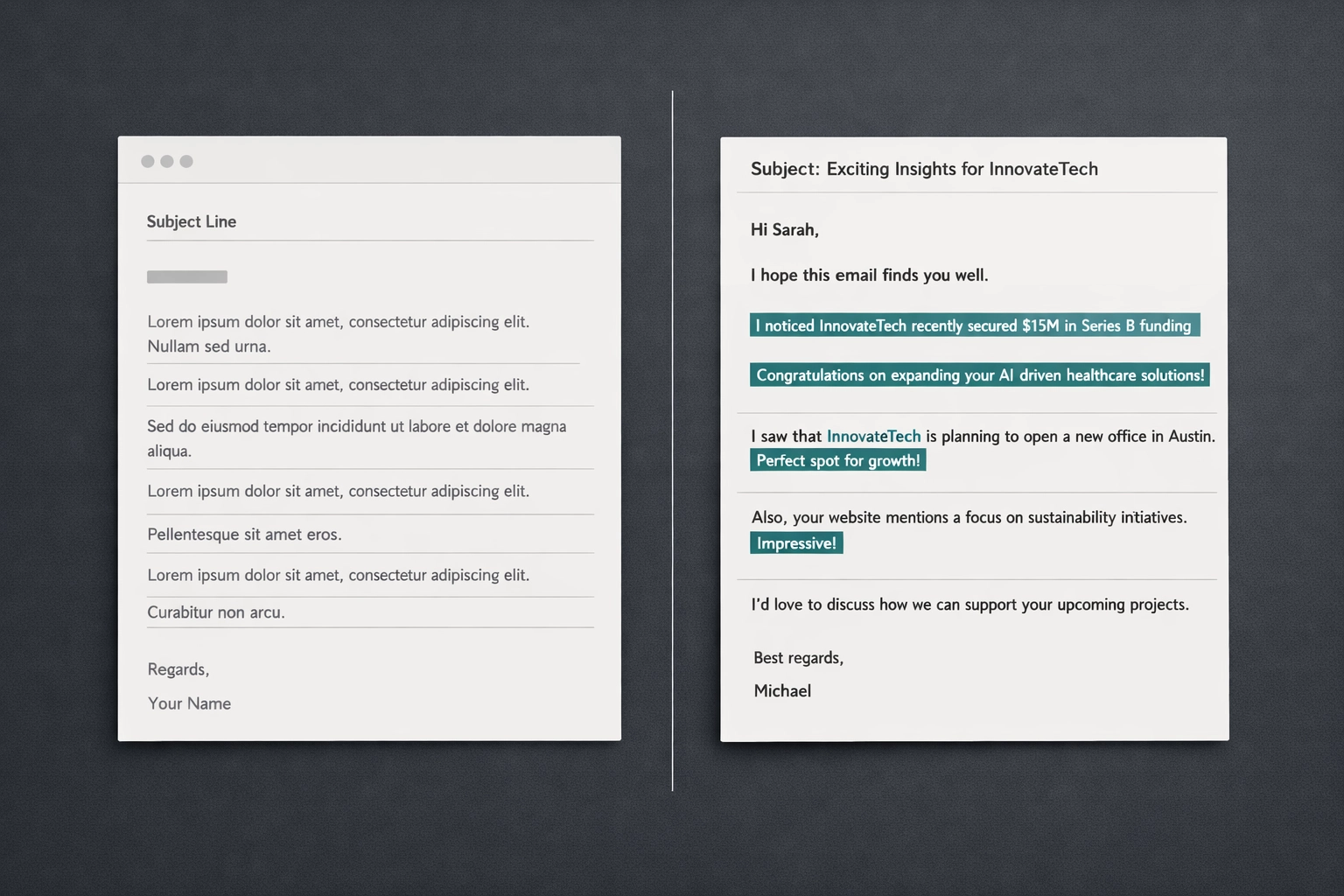
The bad ones do. So do bad human SDRs. The difference is in the implementation. Template-blasting 500 prospects with "I noticed your company…" is spam whether a human or AI sends it. Deep research on 50 prospects with customized angles is valuable whether a human or AI writes it.
The question isn't "human vs. AI," it's "generic vs. personalized." Most founders conflate the two.
"Virtual teams don't understand my product deeply enough."
True. And your first SDR hire won't either, for the first 3 months. The difference is how you manage the gap. With full-time hires, you invest in onboarding and expect it to pay off long-term. With virtual teams, you compensate with tighter scripts, better documentation, and more oversight.
Neither solves the problem automatically. Both require your time.
"I need someone to own the number."
This is the strongest argument for a full-time hire. When someone's entire compensation depends on hitting quota, they have skin in the game. Virtual contractors don't. Agencies definitely don't.
But here's the counterpoint: at pre-seed and seed stage, pipeline isn't really the SDR's number, it's yours. You're the one who lives or dies by revenue. Whether you hire full-time or virtual, you're still the one holding the bag.
What Most Founders Actually Do
In my experience talking to hundreds of early-stage founders, here's the pattern that works:
Months 0-6: Founder-led sales. You're doing everything yourself. You close the first 10-20 customers, figure out messaging, and build a repeatable process.
Months 6-12: Hybrid approach. You bring in a part-time contractor, freelance SDR, or AI tool to multiply your efforts. You're still approving everything, but you're not personally writing every email.
Months 12-18: If the hybrid approach is working and you've raised enough runway, you hire your first full-time SDR. You now have proof that the motion works, and you can train them on a proven process.
The mistake is jumping straight to the full-time hire before you have the foundation. The second mistake is staying in DIY mode so long that you become the bottleneck.
The Middle Path Nobody Mentions
There's a third option that's gaining traction: AI SDR platforms that let you stay in control while automating the grunt work.
Instead of choosing between $120K for a human or $5K/month for an agency that owns nothing, you use software that researches prospects, drafts personalized emails based on deep context, and queues them for your approval. You hit "send" on the ones that feel right and regenerate the ones that don't.
This isn't outsourcing sales. It's multiplying your own sales capacity. You're still the strategist, still the decision-maker, still the one who knows what good outreach looks like. But you're not spending 10 hours a week researching companies and writing cold emails from scratch.
The cost is a fraction of a full-time hire. The ramp time is days, not months. And you maintain complete control over your domain reputation, your messaging, and your brand.
For founders who are good at sales but don't have time, or founders who are learning sales and can't afford mistakes, it's the best of both worlds.
Making the Call
Here's the truth: there's no universal right answer. The founder who just raised a $2M seed and has proven PMF should absolutely hire SDR talent. The bootstrapped founder with $40K MRR and no outside funding should probably start virtual.
What matters is honest self-assessment:
Do you have a repeatable sales process? If no, don't hire full-time yet.
Can you afford a 6-month bet? If no, stay flexible.
Are you willing to manage and coach? If no, hire experienced AEs instead of junior SDRs.
Do you want to stay close to prospects? If yes, keep control with tools that amplify you rather than replace you.
The worst decision is indecision. Spending three months debating while doing zero outbound is how you end up with 6 months of runway and no pipeline.
Pick the option that matches your stage, commit to it for 90 days, and measure ruthlessly. If it's not working, you'll know soon enough to pivot.
If you're leaning toward the control and cost-efficiency of a virtual approach but don't want to manage a scattered team of freelancers, Ramen might be worth exploring. It's built specifically for founders who want to multiply their outbound capacity without hiring, using AI to research and draft personalized emails while you stay in the driver's seat. Think of it as the SDR intern who never sleeps, costs under $500/month, and doesn't need equity.