
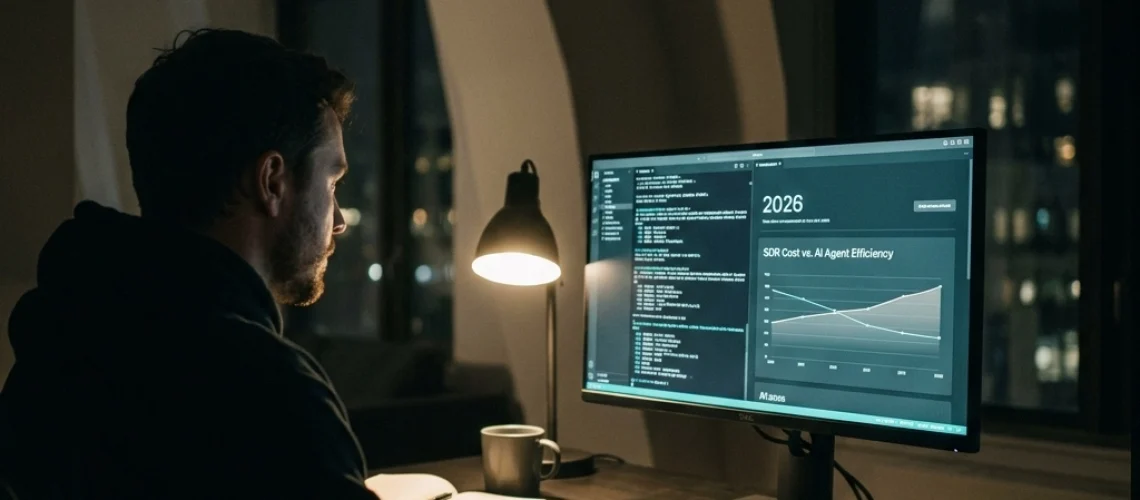
You’re staring at a spreadsheet on a Sunday night, trying to make the math work. To hit your Series A targets, you need a predictable pipeline. To get that pipeline, you think you need a Sales Development Representative (SDR).
But then you look at the real numbers for 2026. A decent SDR in a tech hub now asks for $80,000 base. By the time you add payroll taxes, healthcare, a desk, a laptop, and a $1,200-a-month tech stack, you’re looking at a fully loaded cost of $140,000 or more.
And that’s if they stay.
The SDR role has become a revolving door. You spend three months training them, another three months watching them "ramp up," and by month nine, they’re looking for an Account Executive role elsewhere. You’re essentially paying six figures to be a finishing school for someone else’s future closer. This is the SDR cost trap, and in 2026, it’s where startup margins go to die.
There is a better way. Startups are moving away from the "throw bodies at the problem" approach and switching to AI agents. You can get the same: or better: output as a human SDR for 90% less cost. An AI agent doesn't need a 401k, it doesn't get "prospecting fatigue" at 3:00 PM on a Friday, and it works 24/7 while you sleep.
The real cost of a human SDR in 2026
When founders budget for their first sales hire, they usually only think about the salary. That’s a mistake that can sink a seed-stage company.
The financial case against traditional human SDRs has become stark. Beyond the base compensation, you have to account for the "ramp time" killer. Industry data shows that a new SDR takes roughly 3.2 months to reach full productivity. During those 90+ days, you are paying full price for zero results. You’re burning $30,000 to $45,000 just to see if they can actually write an email that doesn't get marked as spam.
Then there’s the turnover. In 2026, the average SDR tenure has dropped even further. Most stay for 14 months. If it takes 3 months to ramp, you only get 11 months of actual value. When they quit, the hole they leave in your budget is massive: between recruiting fees and the lost pipeline, a single SDR departure can cost your startup $150,000 in momentum.
You also have the "management overhead." A human SDR isn't a "set it and forget it" solution. They need weekly 1-on-1s. They need scripts written for them. They need to be reminded to update the CRM. They need motivation when they hit a dry spell. As a founder, your time is your most expensive asset. If you’re spending 10 hours a week managing a junior salesperson, you aren't building product or talking to investors. You’ve just bought yourself another job.
Scaling your pipeline without scaling your headcount
The dream has always been to decouple revenue growth from headcount. In the old world, if you wanted double the leads, you had to hire double the people. In 2026, that’s a legacy mindset.
AI agents allow you to scale your outbound volume horizontally without adding a single person to your Slack workspace. While a human SDR can realistically send 50–100 high-quality, researched emails a day before their brain turns to mush, an AI agent can do that in seconds.
But it’s not just about "blasting" more emails. We’ve all seen the "Dear [First_Name]" templates that plague our inboxes. Those don't work anymore. The reason AI agents are winning in 2026 is because they can do deep research at scale.
An AI agent can visit a prospect’s website, read their latest annual report, listen to a podcast they guest-starred on, and check their LinkedIn activity: all before writing a single word. It then synthesizes that information into a message that feels like it was written by a human who actually cares about the prospect’s problems.
This means you can maintain a "boutique" feel while running a "factory" level of volume. You get the quality of a founder-led outreach campaign with the scale of a global agency.
Addressing the elephant in the room: "AI can't handle our complexity"
The biggest objection we hear from founders is: "Our sales cycle is too complex. An AI can't understand the nuances of our enterprise buyers or the specific technical pain points we solve."
Five years ago, that might have been true. In 2026, it’s a myth.
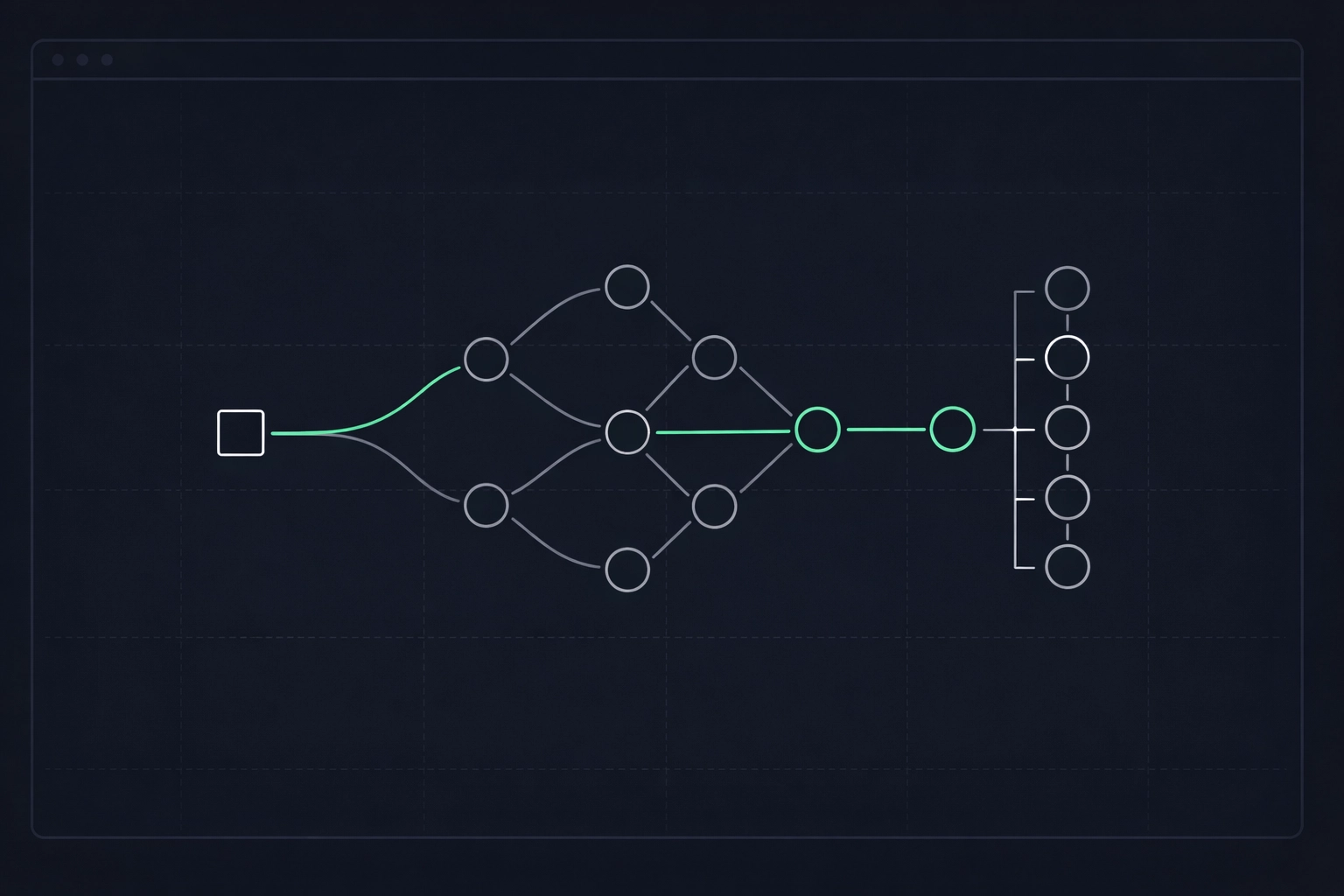
Modern AI agents are highly configurable. They aren't just GPT-4 wrappers; they are specialized systems that integrate directly with your CRM: whether you use Salesforce, HubSpot, or something else. You can feed the AI your proprietary sales playbooks, your case studies, and your "no-go" zones.
The most effective model today isn't "AI or Human": it’s "AI with a Human-in-the-loop." This is exactly how we built Ramen.
You don't just turn the AI loose and hope it doesn't hallucinate a discount code. You set the strategy, the AI does the grunt work of research and drafting, and you (the founder) simply approve the outbound queue. You keep 100% control over the brand voice and the quality, but you spend 10 minutes a day on it instead of 10 hours.
If a prospect replies with a complex question about your API's security protocols, the AI doesn't just guess. It flags the conversation for you, drafts a potential response based on your documentation, and waits for your "OK." You are the pilot; the AI is the engine.
The shift is already happening
The math is too compelling to ignore. A team of four human SDRs costs roughly $580,000 per year when you factor in everything. Replacing that setup with AI agents costs about $40,000 to $60,000.
That’s half a million dollars you can put back into engineering, product, or paid ads. For a seed-stage startup, that $500k isn't just "savings": it's an extra 6 to 12 months of runway. It’s the difference between having to raise a bridge round in a down market or being profitable.

We’re seeing a split in the market. Human SDR roles aren't going away entirely, but they are moving upmarket. Large enterprises might still justify the cost for seven-figure deals that require months of wining and dining. But for everyone else: especially startups selling $10k to $100k ACV: the human SDR model is becoming a luxury most can't afford.
Escaping the trap with Ramen
If you’re a founder who’s tired of the "Sunday night spreadsheet session," it’s time to stop looking for a "rockstar SDR" who probably doesn't exist.
At Ramen, we built an AI SDR platform specifically for founders who can't justify the $80k+ gamble of a human hire. We focus on deep research: not template blasting. Our agents dig into the data to find the "why" behind every outreach.
We also believe in transparency. With our BYOK (Bring Your Own Key) model, you control your costs and your data. No hidden markups, no "agency fees" that disappear into a black box.
You started your company to build something great, not to manage a team of 22-year-olds who are just waiting for their next promotion. It’s 2026. The technology is here to give you your time back.
If you want to see how an AI agent can handle your specific outbound workflow: without the $140k price tag: take a look at how we're helping founders scale at Ramen. Stop hiring for a role that an agent can do better, faster, and cheaper. Your runway will thank you.