
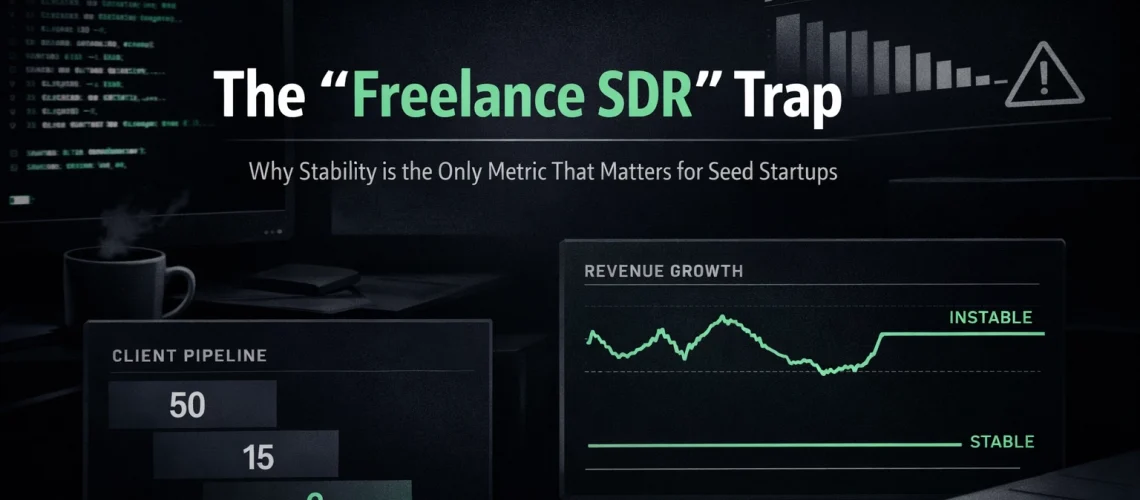
You hire a freelance SDR on Tuesday. By Friday, they've sent 50 emails using a template they swear "crushes it" for their other clients. The following Monday, they're ghosting your Slack messages because another client just doubled their retainer. Wednesday, they resurface with 3 booked meetings, two are recruitment agencies, one is a college student asking if you're hiring interns.
This isn't a horror story. It's the typical month-one experience with a freelance SDR.
The Divided Attention Problem Isn't a Bug, It's the Business Model
Freelance SDRs work with multiple clients simultaneously because they have to. It's how they make rent. But that creates an incentive structure that's fundamentally broken for seed startups.
When you're pre-seed or seed, you don't just need someone booking meetings. You need someone embedded enough to give you feedback on your messaging, help refine your ICP, tell you when a prospect's objection points to a product gap, and serve as an extension of your founding team. You need them to care about your pipeline as much as you do.
A freelancer juggling 4-6 clients can't give you that level of attention. They'll always prioritize the client offering higher commissions or the one with the tightest deadline. Your startup, the one still figuring out product-market fit and operating on a 9-month runway, becomes the account they work on during the gaps between "real" projects.
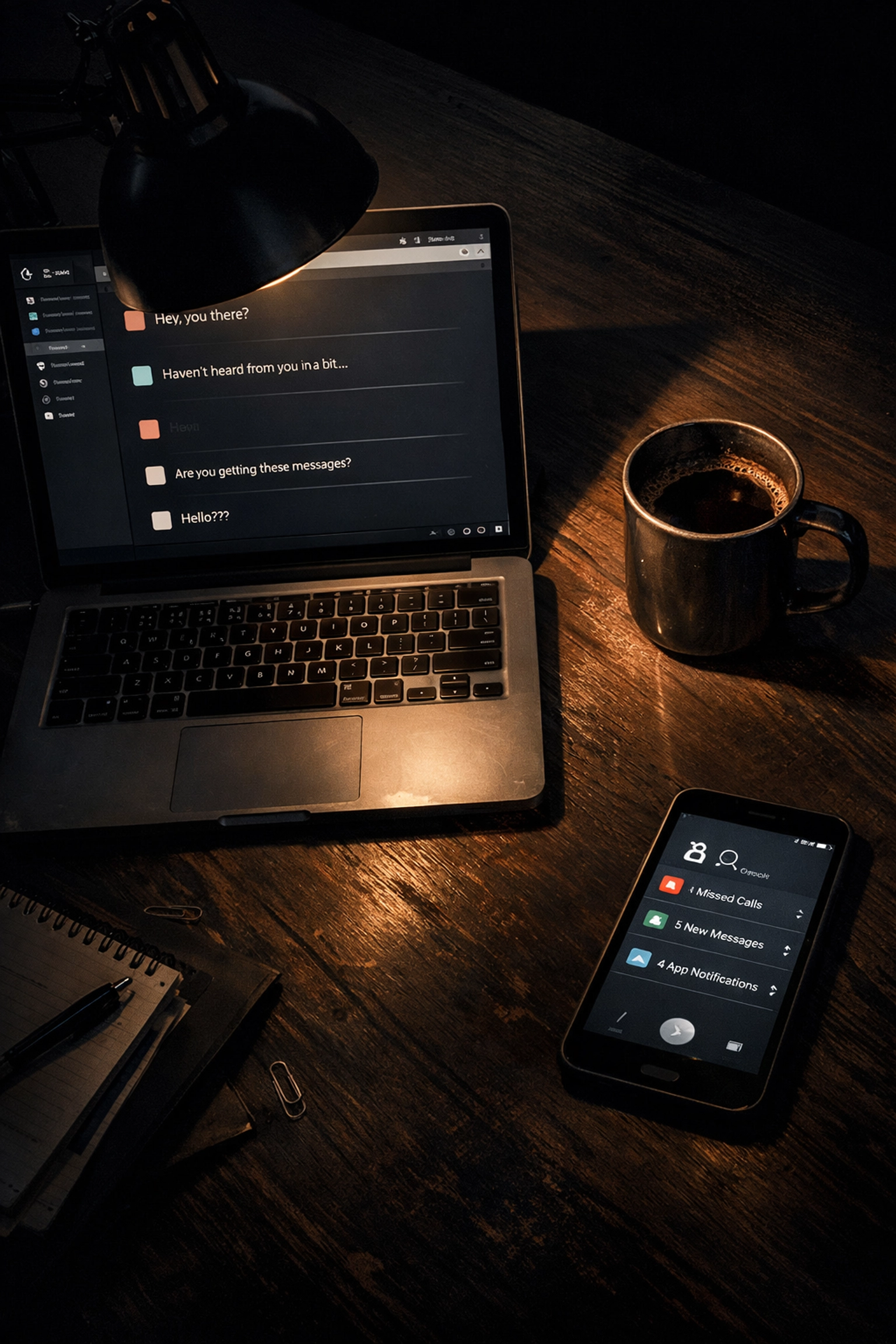
The turnover problem compounds this. You spend two weeks onboarding a freelance SDR, sharing your deck, explaining your differentiation, walking them through your tech stack. They book 5 meetings in week three. Week four, they take a full-time offer somewhere else. Now you're back to square one, posting on Upwork, reviewing portfolios, and burning another two weeks ramping someone new.
You're not building a sales function. You're running a revolving door.
Variable Performance Kills the One Thing Seed Startups Can't Afford to Lose: Momentum
The performance of a freelance SDR fluctuates based on market conditions, their personal workload, and which of their other clients is currently on fire. Some weeks they're sending 100 emails. Other weeks, radio silence.
This variability is poison for early-stage companies. You're trying to build a repeatable sales motion, something you can show investors to prove there's demand. You need consistent outbound activity to gather data on what messaging works, which segments respond, and how long your sales cycle actually is.
A freelancer who puts "too much on their plate" and misses deadlines doesn't just delay meetings. They corrupt your data. You can't tell if your ICP is wrong or if your SDR was just too busy that week. You can't iterate on messaging when the sample size keeps changing. You can't forecast pipeline when output swings wildly month-to-month.
Seed startups don't have margin for this kind of noise. Every qualified meeting matters. Every wasted week is runway you're not getting back.
You Probably Shouldn't Hire Any SDR Yet, Freelance or Otherwise
Here's the part most founders miss: before you hire a freelance SDR, contract SDR, or even a full-time SDR, you need three things in place:
1. A repeatable sales process. Not a perfect one. Just something you've done 10-15 times that you can hand off. If you're still figuring out who buys, why they buy, and how they buy, adding an SDR will just crowd your calendar with unqualified meetings.
2. The bandwidth to manage a junior employee. SDRs need structured weekly 1:1s, message reviews, and feedback loops. If you can't commit to that, you're setting them up to fail, and wasting your money in the process.
3. The ability to handle the meetings they book. If an SDR books 15 meetings next week and you don't have time to take 10 of them, you've just burned 10 potential customers and taught your SDR that their work doesn't matter.
Most seed founders hire a freelance SDR because they're trying to solve a founder bandwidth problem. But a freelancer doesn't solve that problem, they just create a new one. Now you're managing someone who doesn't fully understand your product, training them on the fly, and fielding Slack messages at 11pm because they need your input before a prospect call tomorrow morning.

The real question isn't "Should I hire a freelance SDR?" It's "Do I have the infrastructure in place to make any SDR successful?"
If the answer is no, you're not ready. And hiring someone with divided loyalties and variable output won't change that.
The Compounding Cost of Instability
Let's talk numbers. A freelance SDR might charge $3,000-5,000/month plus commissions. Seems reasonable compared to the $80-120K loaded cost of a full-time hire, right?
But here's what that actually costs you:
- 2 weeks ramping them up, sharing context, and building their knowledge base
- 3-4 weeks of inconsistent output while they balance your account with others
- Another 2 weeks recruiting and onboarding their replacement when they leave
- Zero institutional knowledge transfer between SDR 1 and SDR 2
Over six months, you've spent $18-30K and gone through 2-3 different people. You've had dozens of conversations explaining the same product details. You've rebuilt your outbound lists multiple times. And you still don't have a repeatable motion or clean data.
Compare that to the founder who spends Sunday nights doing their own outbound. It's brutal. It's unsustainable. But at least they're building real knowledge about what works. They're iterating in real-time. They're not playing telephone with someone who's also managing three other pipelines.
What Stability Actually Looks Like for a $10K MRR Startup
You don't need a freelance SDR who's "crushing it" for five other companies. You need something that shows up every day, learns your business deeply, and compounds its effectiveness over time.
That's either a full-time SDR you can't afford yet, or a system that behaves like one without the $80K price tag.
The best AI SDR tools give you that stability: not by replacing human judgment, but by removing the variable performance problem. You still write the strategy. You still approve the emails. You still take the meetings. But the research, personalization, and consistent daily outreach happen whether you're in back-to-back investor meetings or shipping a critical product update.
Ramen was built for this exact scenario. You bring your own API keys (so costs stay predictable), approve every email before it sends (so quality stays high), and let the system handle the deep research and daily follow-ups that freelancers deprioritize when another client needs attention.
It's not magic. It's just stable. And for a seed startup trying to build repeatable pipeline on a tight timeline, stability is the only metric that actually matters.