
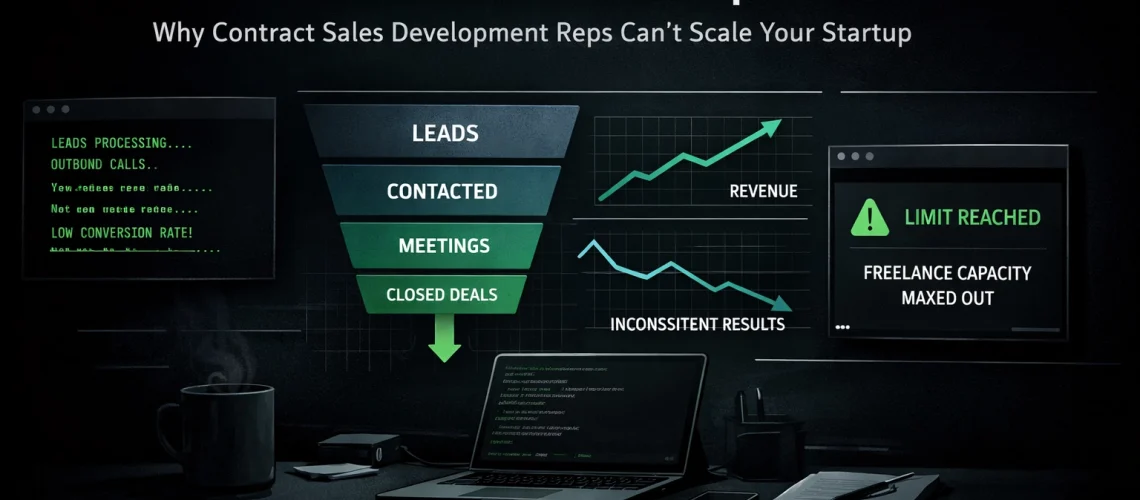
You're three months post-seed. Pipeline's thin. You can't justify an $80-120K loaded cost for a full-time SDR who needs three months to ramp. So you do what seems rational: hire a freelance SDR on contract. They've got experience, they can start immediately, and you only pay for results.
Two months later, your reply rates are hovering at 1%, half your outreach emails never got sent, and the freelance SDR just accepted a full-time gig elsewhere. You're back to square one, except now you've burned through budget and wasted eight weeks.
Here's why contract sales development reps can't scale your startup: and what actually works when you need predictable pipeline without the full-time hire.
The Freelance SDR Problem Isn't About Skill
Most freelance SDRs are competent. They've worked at real companies, know the frameworks, understand qualification. The problem isn't that they're bad at sales development. The problem is the structure itself.
They're juggling 3-5 clients simultaneously. Your startup is competing for attention with whoever's paying more this month or whose product is easier to sell. When a freelance SDR has a full pipeline at another client, your outreach gets deprioritized. You don't even know it's happening until you check the activity reports and realize half the week went by with zero sends.
Their availability is unpredictable. Freelancers operate on project timelines, not your fundraising deadlines. Need to ramp up outreach before your next board meeting? They might be slammed with another client's product launch. Need consistent daily activity to keep your pipeline full? Good luck getting that from someone working on five different accounts with five different schedules.
This isn't a character flaw. It's basic economics. Contract SDRs optimize for their own survival, which means spreading risk across multiple clients. Your scaling needs will always take a backseat to their portfolio management.

Quality Control Is a Fantasy
You hired a freelance SDR because you don't have time to do outbound yourself. But here's the trap: without direct oversight, you have no idea what they're actually sending until prospects start replying (or not replying).
Brand alignment takes months, not weeks. Full-time SDRs spend their first 90 days learning your product, your ICP, your messaging. Freelance SDRs get a 30-minute onboarding call and a pitch deck. They're writing emails about your product while simultaneously writing completely different emails for three other clients. The cognitive load alone guarantees generic output.
You can't enforce your process. Maybe you've spent months refining your qualification criteria or your follow-up cadence. Your contract SDR has their own system, built across dozens of previous clients. They're not going to overhaul their workflow for one account. You get their process, not yours.
Messaging drift happens invisibly. One prospect replies with "this doesn't apply to us" and you realize the SDR's been targeting the wrong persona for two weeks. Another reply shows they're pitching a feature you deprecated three months ago. By the time you catch these mistakes, dozens of prospects have already been burned.
The freelance SDR model assumes you can outsource strategy and execution simultaneously. You can't. Strategy requires deep product knowledge and market understanding that only comes from being embedded in the business day-to-day.
The Performance Variability No One Talks About
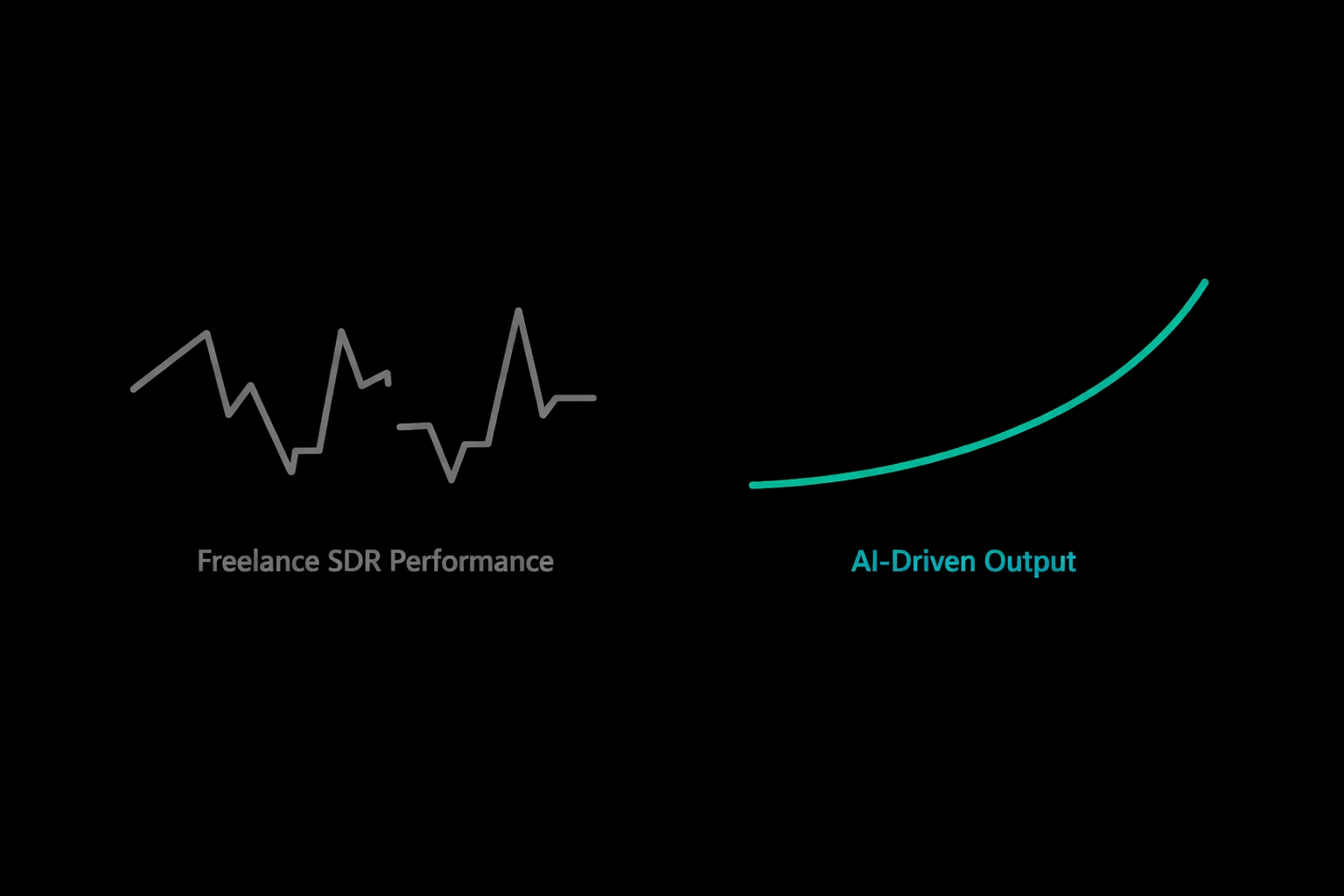
Freelance SDRs produce wildly inconsistent results, and it's rarely about effort. It's about incentive alignment.
Commission structures create perverse incentives. If a freelance SDR is paid per meeting booked, they optimize for volume over quality. You get calendar slots filled with unqualified prospects who ghost after the first call. If they're paid hourly, they optimize for time spent, not outcomes. You get activity reports that look great but pipeline that stays flat.
They prioritize high-commission projects. When your contract SDR lands a gig with better pay or a hotter market, your account gets deprioritized. You won't get a memo about it. You'll just notice the activity dropping off and the excuses piling up about "email deliverability issues" or "tough market conditions."
Personal circumstances dictate output. Freelancers are one sick kid or one vacation away from zero activity. Unlike a team where coverage exists, a solo contract SDR going dark for a week means your pipeline generation just stopped. No backup. No continuity.
You need predictable pipeline to scale. Freelance SDRs give you variance.
The Retention Nightmare
Here's the part that kills scaling momentum: freelance SDRs leave. Usually right when they've finally figured out your product and ICP.
Three-month cycles destroy institutional knowledge. By the time a contract SDR understands your market positioning, your competitors, and which messaging actually resonates, their contract ends or they take a full-time role elsewhere. You're back to onboarding someone new, repeating the same ramp period, losing another quarter of momentum.
There's no long-term investment. Freelance SDRs don't care about your six-month pipeline goals. They care about this month's invoice. They won't tell you when they're interviewing for full-time roles. They'll just give you two weeks notice and disappear, usually right before your busiest quarter.
Continuity breaks the sales process. Prospects who engaged with your first contract SDR but didn't book a meeting get orphaned when that person leaves. Your new SDR starts fresh sequences, often hitting the same prospects again because records are incomplete. It looks sloppy and damages your brand.
Scaling requires compounding knowledge. Every week, your SDR should be getting better at targeting, better at messaging, better at handling objections. Freelance SDR relationships reset that curve every few months.
Why AI Agents Scale Differently
The alternative isn't hiring a full-time SDR before you can afford one. It's using AI agents that don't have divided attention, don't negotiate contracts every quarter, and don't disappear when they find a better opportunity.
Consistent availability and output. AI agents don't juggle multiple clients or take surprise vacations. They execute the volume you need, when you need it, without performance variability based on personal circumstances or competing priorities.
Deep research on every prospect. Unlike contract SDRs racing through lists to hit their numbers across multiple accounts, AI agents can spend time researching each prospect individually. That means personalized outreach that actually reflects the prospect's business, not template spray-and-pray.
You control the process completely. With human-in-the-loop AI systems, you approve every message before it sends. No messaging drift. No brand misalignment. No wondering what's being said in your company's name. You get the leverage of automation with the quality control of doing it yourself.
No retention risk. The system doesn't quit. Institutional knowledge stays in your account. The AI gets smarter about your ICP over time, but you never lose that learning to turnover.
The Real Objection: "But AI Emails Feel Generic"
You're right to be skeptical. Most AI SDR tools blast templates with light personalization variables. That's not what works.
The difference is research depth. When an AI agent spends actual time researching each prospect: reading their LinkedIn, understanding their company's challenges, tailoring the angle specifically to them: the emails don't read like AI. They read like someone who did their homework.
The second difference is oversight. When you approve every email before it sends, you're not outsourcing judgment. You're outsourcing the grunt work of research and drafting while maintaining full control over quality and brand voice.
Freelance SDRs promise control but deliver variance. AI agents, when built correctly, give you the consistency and research depth that contract SDRs can't sustain across multiple clients.
What Actually Works for Seed-Stage Teams
If you can afford a full-time SDR and they're amazing, hire them. But most seed-stage founders are stuck in the middle: too much outbound work to do themselves, not enough budget or volume to justify a full hire.
That's where the freelance SDR trap springs. It looks like the rational middle ground. It's actually the worst of both worlds: you pay ongoing costs without getting consistency, quality control, or scalability.
The better middle ground is AI agents with human oversight. You control the strategy and messaging. The AI handles research and execution. You approve every touchpoint. And you get predictable pipeline generation without the retention risk, divided attention, or quality control nightmare that comes with contract sales development reps.
Your pipeline shouldn't depend on whether your freelance SDR's other clients are having a good month. Build it on a system you control, that scales with your needs, and that doesn't disappear right when it's finally working.
See how Ramen helps founders run consistent outbound without hiring SDRs or gambling on freelance contracts.