
You're at 15 customers, burning $40K/month, and your inbox is a graveyard of cold emails you sent at 11 PM last Sunday. Your advisor just asked about your sales process, and you mumbled something about "founder-led sales" while secretly wondering if it's time to hire your first SDR.
The hiring decision feels impossible. You can't afford to get it wrong, but you also can't keep writing prospect research notes in Uber rides between investor meetings.
Here's the uncomfortable truth: most founders hire their first SDR 6 months too early or 12 months too late. Both mistakes cost you deals, burn rate, and sanity.
The Real Math Behind Your First SDR Hire
Before we get into when to hire, let's talk about what you're actually signing up for. The $65K base salary you budgeted? That's not the real number.
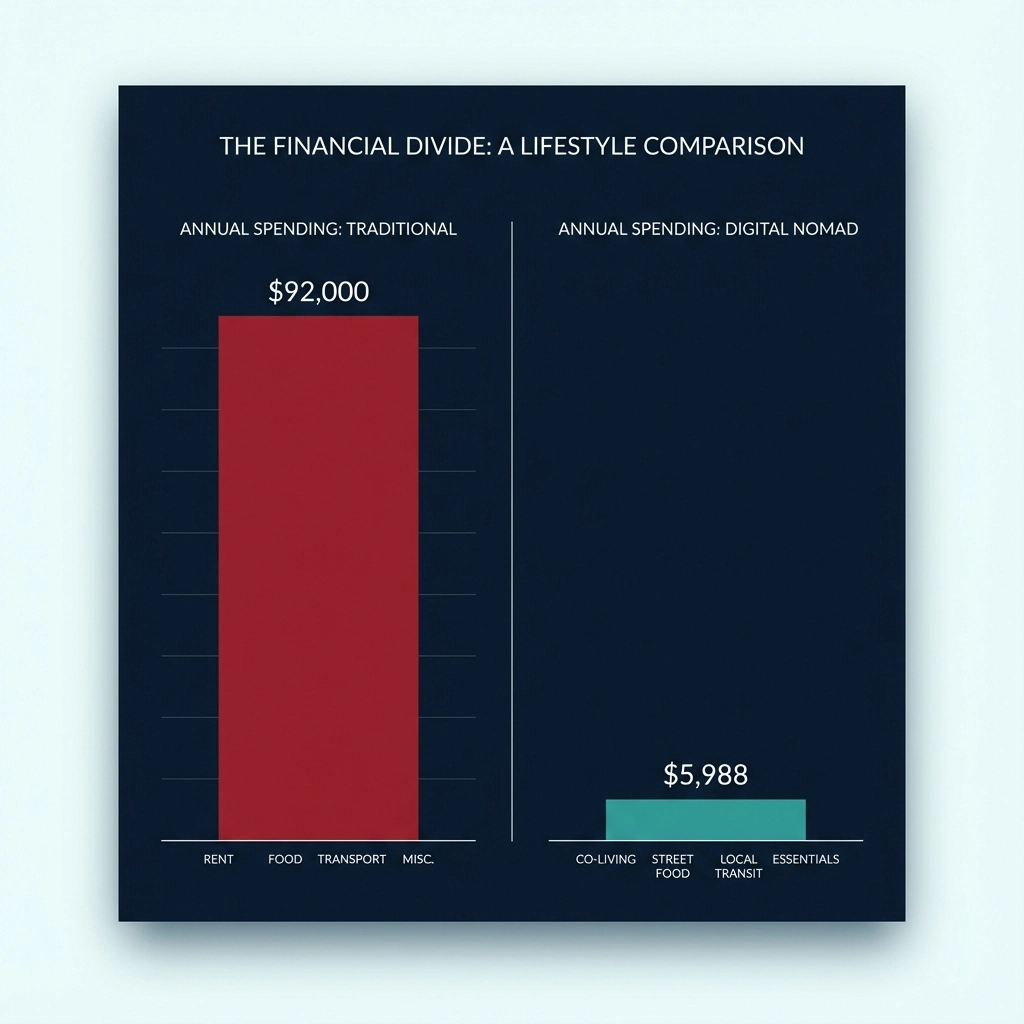
Full loaded cost of an SDR:
- Base salary: $65,000
- Taxes and benefits: $13,000
- Tech stack (CRM, tools, seats): $6,000
- Onboarding and training: $8,000
- Total Year 1: $92,000
And that's before they send a single email. Most SDRs take 60-90 days to ramp, meaning you're paying full salary while they learn your product, ICP, and messaging. If they don't work out (30% don't make it past 6 months), you're starting over with another $15K in hiring and training costs.
When Hiring Your First SDR Actually Makes Sense
You should hire when:
Revenue threshold: You're at $50K+ MRR with clear product-market fit. Below this, you're still figuring out messaging and ICP: paying someone $92K to learn alongside you is expensive.
Volume justification: You need 200+ personalized outbound emails per week. If you're only sending 50 emails/week, you can't justify full-time headcount.
Process documentation: You have a repeatable playbook. Your SDR shouldn't be experimenting with messaging while you're paying them $4,000/month.
Management bandwidth: You can dedicate 10+ hours/week to coaching. SDRs without management fail fast.
Capital runway: 18+ months of burn rate, including the SDR's full loaded cost. Hiring an SDR 6 months before you need to fundraise is startup suicide.
When $499/Month Beats $92,000/Year
Most founders at the pre-seed/seed stage aren't ready for a full-time SDR. You need pipeline now, but you don't have the volume, process, or cash flow to justify headcount.
This is where the math gets interesting.
Ramen vs. SDR Year 1 comparison:
- Ramen: $5,988 annual cost
- Full-time SDR: $92,000+ annual cost
- Difference: $86,012
But cost isn't the whole story. Here's what changes:
Speed to market: Ramen starts generating pipeline in week 1. Your SDR hire takes 8-12 weeks to contribute meaningfully.
Risk profile: If Ramen doesn't work, you cancel next month. If your SDR doesn't work out, you're stuck with severance, recruiting costs, and 3 months of lost momentum.
Scope flexibility: Ramen handles research, email writing, follow-ups, and CRM hygiene. Most SDRs are strong in 2-3 of these areas.
The SDR Job That Actually Needs Doing
Before you hire anyone (human or AI), understand what sales development actually includes:
Research and list building: Finding the right people at target accounts, understanding their context, building lists that don't immediately bounce.
Email writing and personalization: Crafting messages that sound like a human wrote them specifically for that prospect.
Follow-up sequences: Managing multi-touch campaigns across hundreds of prospects without dropping leads.
Reply management: Qualifying interest, routing to sales, handling objections and unsubscribes.
CRM maintenance: Keeping data clean, logging activities, maintaining pipeline visibility.
Most founders underestimate this scope. You're not just hiring someone to send emails: you're hiring someone to run a complete outbound engine.
The Configurable Agent Advantage
Here's where traditional thinking breaks down. You don't need one SDR doing everything the same way.
With Ramen's configurable agents, you can run multiple outbound motions simultaneously:
Agent 1: Targeting CTO prospects with technical product messaging
Agent 2: Reaching CMOs with ROI-focused case studies
Agent 3: Following up with demo no-shows using different tone and urgency
Each agent learns your approval preferences and adapts its research depth, email style, and follow-up cadence based on the motion. Try doing that with a junior SDR making $65K.
Your First SDR Hire Checklist
Before you post that SDR job listing, check these boxes:
✅ Pipeline volume test: Can you justify 40+ hours/week of outbound activity?
✅ Management capacity: Do you have 10+ hours/week to coach and review performance?
✅ Process documentation: Is your ICP, messaging, and qualification criteria written down?
✅ Technology stack: Do you have proper CRM, email tools, and attribution in place?
✅ Capital buffer: Can you afford 6 months of full loaded cost even if pipeline takes time to convert?
✅ Geographic requirements: Do you need someone local for events, demos, or customer meetings?
If you checked fewer than 5 boxes, you're not ready to hire. If you checked all 6, you're ready to scale with human headcount.

What "Human-in-the-Loop" Actually Means
The biggest fear about AI sales tools: "I don't want robots spamming my prospects."
Ramen requires approval before sending anything. Every email, follow-up, and prospect interaction gets reviewed by you. You're not losing control: you're gaining efficiency.
The approval workflow:
- Ramen researches prospects and drafts personalized emails
- You review and approve (or edit) before sending
- Follow-ups are pre-written but require approval for each send
- Replies get routed to you for human response
You keep your voice and quality standards while eliminating the 4+ hours of research and writing that kills your evenings.
The Sunday Night Test
Here's the simplest way to know if you're ready: what happens to your outbound on Sunday nights?
If you're writing prospect research notes at 11 PM because it's the only quiet time in your week, you need systematic help. But if you're not sending 100+ personalized emails per week consistently, you don't need a $92K employee.
You need something that handles the grunt work while keeping you in control of quality and messaging. Something that costs $499/month instead of $7,600/month.
Your pipeline doesn't care if it comes from an employee or an AI agent: it cares about consistency, personalization, and human oversight.
Most founders wait until they're desperate to solve outbound, then make expensive hiring decisions under pressure. The smart move? Start with a system that scales with your stage and gives you data on what works before you commit to headcount.
Ready to test if AI SDR can handle your outbound before you hire? Start with Ramen and see how many qualified meetings you can generate for $499/month. If it works, you'll have validation and process documentation for when you're ready to hire. If it doesn't, you saved $91K+ finding out.