
You need pipeline to raise your next round. But you don't have time to build it because you're busy building the actual product. And you definitely don't have $80-120K sitting around to hire an SDR who'll take three months to ramp up: assuming they even work out.
This is the chicken-and-egg problem that kills seed-stage companies. Investors want to see traction. Traction requires pipeline. Pipeline requires outbound. Outbound requires either your nights and weekends or money you don't have.
So what's the fastest way to get real SDR capability without making a full-time hire?
The Real Cost of Hiring an SDR
Let's talk numbers, because "expensive" doesn't mean anything.
A full-time SDR in the US runs $50-70K base salary. Add benefits, payroll taxes, and equipment, and you're looking at $80-120K loaded cost annually. That's before tools: your CRM, sales engagement platform, data providers, email infrastructure. Stack those on top and you're pushing $100-140K all-in for year one.
Now here's the part that really stings: the average SDR takes 3.2 months to fully ramp. During that window, you're paying full price for someone who's still learning your ICP, your messaging, your product. If they don't work out: and plenty don't: you're back to zero, minus the cash and time you burned.
For a seed-stage company with 12-18 months of runway, that math is brutal. You're betting a significant chunk of your resources on a single hire who may or may not produce results before your next board meeting.

The Alternatives (And Why Most of Them Suck)
Before we get to what actually works, let's quickly run through the options founders usually try:
Outsourced SDR agencies: They promise 20 qualified meetings per month. What you actually get is a junior rep in a call center working five other accounts, blasting templates to a scraped list. You pay $3-5K/month, your domain reputation tanks, and you're left explaining to investors why your reply rates are 0.3%.
Freelance or fractional SDRs: Better than agencies in theory, but you're still managing someone. You're reviewing their work, answering Slack messages, hopping on "quick sync" calls. The whole point was to get time back: not add another direct report.
Doing it yourself on Sunday nights: This is where most founders land. You carve out a few hours on the weekend, manually research prospects, write emails one by one. You get a few replies, maybe book a meeting or two. But it's not scalable, it's not sustainable, and honestly, it's a terrible use of founder time when you should be building product or talking to customers.
Training existing team members: If you have a marketer or ops person, you could theoretically upskill them. But now you're pulling them away from their actual job, and SDR work is a specific skill set. Most people aren't wired for cold outbound rejection all day.
None of these options solve the core problem: you need pipeline now, you need it at a cost you can control, and you can't afford to babysit another system or person.
What "SDR Capability" Actually Means
Here's the thing most founders get wrong: you don't need an SDR. You need what an SDR produces.
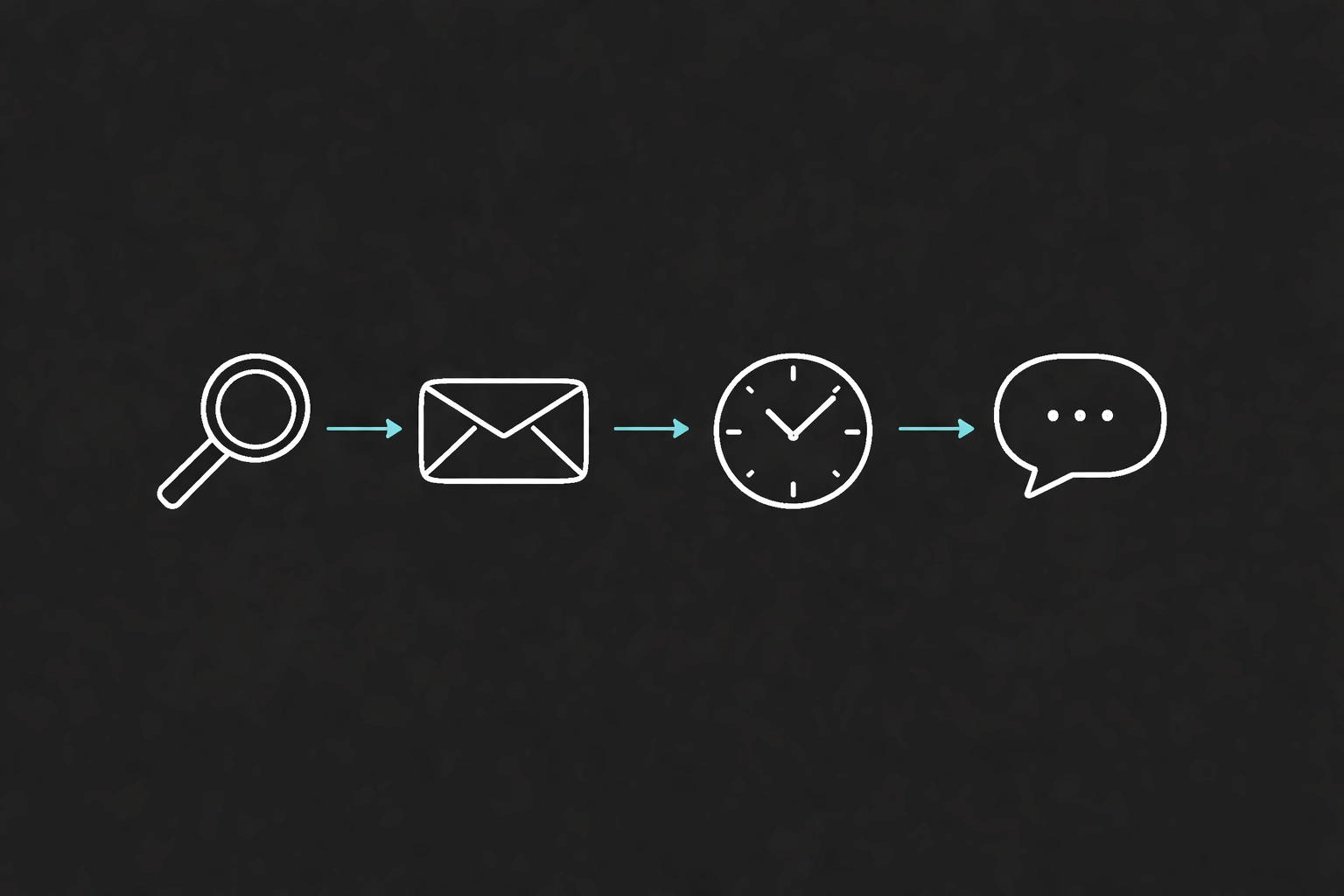
An SDR does four things:
- Researches prospects to find relevant pain points
- Writes personalized outreach that references those pain points
- Sends emails at scale without torching your domain
- Follows up persistently until they get a response
That's it. That's the job. And in 2026, you don't need a human to do steps 1-3. You need a human to approve the output and handle the conversations that come back.
This is where AI SDR tools come in: but not all of them are created equal.
What to Look for in the Best AI SDR Solution
If you're evaluating AI SDR options (and you should be), here's what actually matters:
Deep research, not template blasting: Most "AI" outbound tools are just mail merge with extra steps. They pull a first name and company from a database and slot it into a template. That's not personalization: that's spam with a name attached. Look for tools that actually research each prospect: what their company does, recent news, job changes, tech stack, whatever's relevant to your pitch.
Human-in-the-loop approval: Here's a controversial take: fully autonomous AI outbound is a bad idea for early-stage companies. Why? Because your messaging is still evolving. Your ICP is still being refined. You can't afford to let a robot send thousands of emails that don't represent your brand. You want to approve every email before it goes out: at least until you've dialed in your angles.
Domain and inbox safety: This is the objection I hear most often: "Won't AI outbound destroy my domain reputation?" It's a fair concern. Aggressive sending patterns and spammy content will absolutely land you in the spam folder. The best AI SDR tools handle this automatically: warming up inboxes, rotating sending domains, throttling volume, monitoring deliverability. If the tool you're evaluating doesn't talk about this, run.
Cost transparency: Some platforms charge per lead, per email, or per meeting. Others lock you into annual contracts with vague "platform fees." For a seed-stage company, you need to know exactly what you're spending. Ideally, you want a bring-your-own-keys model where you control the underlying API costs directly.
Getting Live in 24 Hours (Not 3 Months)
The fastest path to SDR capability isn't hiring. It's automation with human oversight.
Here's what that looks like in practice:
Hour 0-2: Connect your email infrastructure. If you don't have a dedicated outbound domain yet, set one up. (Don't send cold email from your primary domain: ever.)
Hour 2-4: Define your ICP and upload your target list. Most AI SDR tools integrate with data providers or let you import a CSV.
Hour 4-8: Configure your research depth and messaging angles. What should the AI look for when researching prospects? What pain points should it emphasize? What's your unique angle?
Hour 8-24: Review and approve your first batch of emails. Make edits where needed. Hit send on the ones that feel right.
By this time tomorrow, you could have personalized outreach going to 50-100 prospects. Not templates. Not spray-and-pray. Actual research-backed messages that reference something specific about each person.
That's SDR capability without the SDR.

The Catch (Because There's Always a Catch)
AI SDR tools aren't magic. They're a force multiplier for founders who already have:
- A clear ICP (or at least a strong hypothesis)
- A value prop that resonates in text form
- The discipline to review and refine output
If you don't know who you're selling to or what to say to them, no tool will save you. The AI handles the research and writing grunt work. You still have to bring the strategic direction.
But if you've got those pieces in place and you're just bottlenecked on execution time? That's exactly where this approach shines.
What Happens Next
You're a founder. Your job isn't to send cold emails: it's to build something people want and figure out how to get it in front of them. The outbound motion is a means to an end.
The fastest way to get SDR capability is to stop thinking about hiring and start thinking about systems. A well-configured AI SDR setup, with you approving emails and handling replies, can match or exceed what a junior SDR produces: at a fraction of the cost and with zero ramp time.
If you want to see what this looks like in practice, book a demo with Ramen. We built this specifically for founders who can't justify the full-time hire but need pipeline to survive. You bring your API keys, control your costs, and approve every email before it sends.
Your next investor meeting is coming up faster than you think. Might as well have some pipeline to talk about.