

It's Sunday night. Again. You're hunched over your laptop, scrolling through LinkedIn profiles and crafting "personalized" cold emails while your family watches Netflix downstairs. You tell yourself this is temporary: just until you can afford a proper sales development rep for startup operations. But three months later, you're still here, burning through domains and getting 2% reply rates.
Here's the truth: if you're doing this dance every weekend, you've already crossed the line. You need help, but you can't justify $80K for an SDR who'll take three months to ramp. That's where the best AI SDR solutions come in: not to replace human judgment, but to give you back your Sundays.
Sign #1: Your Weekends Belong to Cold Email Research
You spend Friday afternoons telling yourself you'll "just do a quick prospect session" on Saturday morning. By Sunday evening, you've burned 6 hours researching 50 prospects and writing emails that sound exactly like everyone else's.
The math is brutal. If you're spending 8 minutes per prospect (LinkedIn stalk, company research, email draft), that's 6.7 hours for 50 emails. Most founders underestimate this because they don't track it. But those "quick sessions" add up to entire weekends.
What this actually costs you: Beyond the obvious time drain, you're context-switching between building your product and doing outbound. Your email quality suffers because you're rushing. Your product development slows because you're mentally exhausted from sales tasks.

Sign #2: You're Getting 2-5% Reply Rates Despite "Personalization"
You're doing everything right. Custom first lines. Company-specific pain points. Relevant case studies. But your reply rates are still garbage, and half the replies are unsubscribes.
Here's what's happening: your "personalization" is surface-level because you don't have time for deep research. You're mentioning their latest LinkedIn post, but you're not connecting it to actual business problems they care about. Real personalization requires understanding their tech stack, recent hires, growth trajectory, and competitive landscape.
One founder told me: "I was spending 15 minutes per email trying to be clever, but my open rates were 28% with 3% replies. I realized I was optimizing for my own ego, not results."
Sign #3: Your Follow-Up Game Is Completely Broken
You send Email #1 on Monday. By Thursday, you've forgotten who you emailed. You have a spreadsheet somewhere, but updating it feels like data entry hell. Some prospects get 5 follow-ups, others get zero.
The follow-up statistics are damning: 80% of sales require 5+ touchpoints, but most founders give up after 2. Not because they don't know this: because tracking and executing consistent follow-ups manually is exhausting.
This isn't about being lazy. You're juggling product development, fundraising, team management, and trying to build a sales pipeline. Something has to give, and usually it's the systematic follow-up that drives results.
Sign #4: You Can't Respond to Inbound Leads Fast Enough
A demo request comes in at 3pm. You see it at 8pm because you were in back-to-back product meetings. You respond the next morning. By then, they've already booked calls with two competitors.
Speed to lead matters more than perfect personalization. Studies show companies that respond within 5 minutes are 100x more likely to connect than those who wait 30 minutes. But as a founder wearing 12 hats, you can't monitor your inbox every 5 minutes.
This gets worse as you scale. One qualified lead slipping through costs you $5,000+ in potential revenue. Miss three per month, and you've lost more than most remote SDR tools cost annually.
Sign #5: You're Burning Domains Faster Than You Can Buy Them
Domain management has become a part-time job. You're rotating between 3-5 sending domains, monitoring deliverability, and watching your main domain reputation like a hawk. Every email campaign is a calculated risk.
The worst part? You're not even sending high volume. You're just hitting all the spam triggers because you don't have time to warm domains properly or craft emails that engagement algorithms favor.
Domain burns happen to careful founders too. You research your prospects, avoid spam words, and keep volumes reasonable. But without proper technical setup (SPF, DKIM, DMARC configuration) and strategic warming sequences, even "good" cold email campaigns tank your reputation.
Sign #6: You're Missing Obvious Qualification Signals
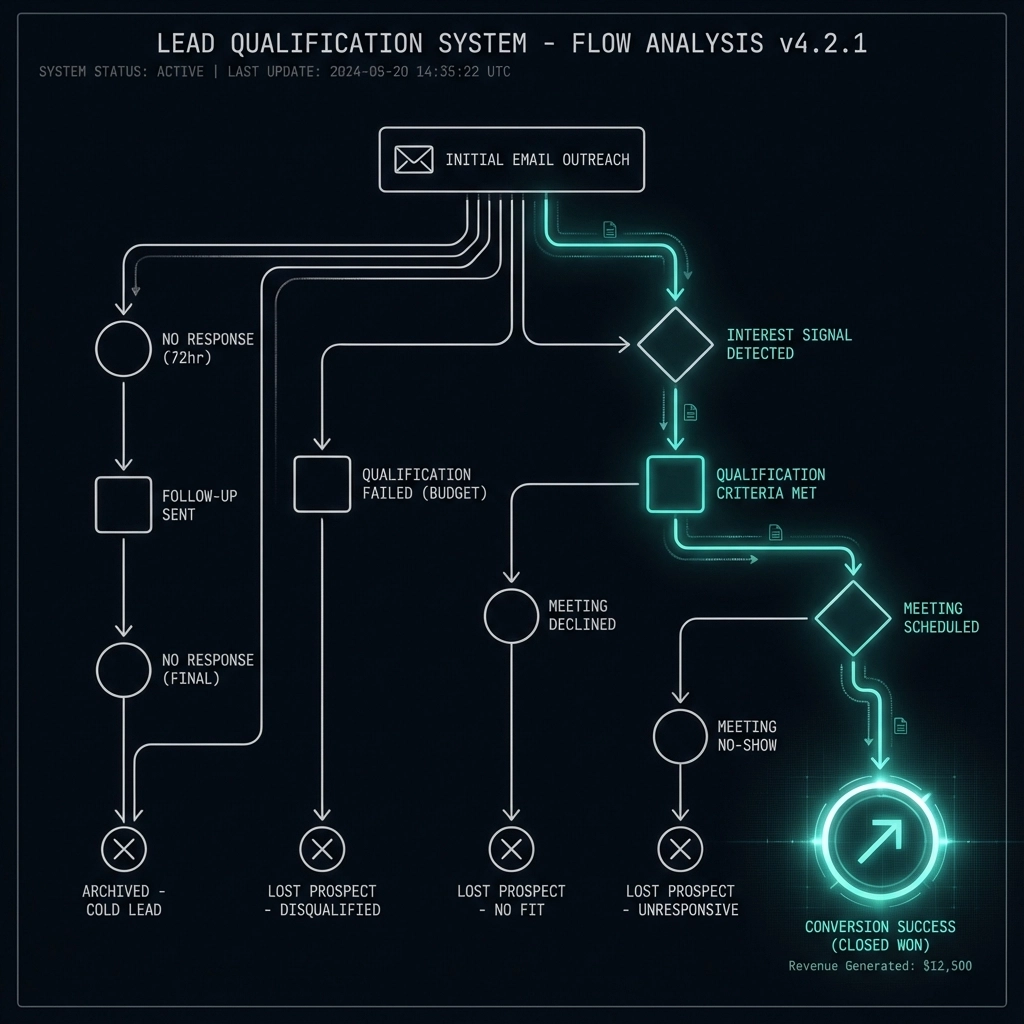
A prospect replies asking about pricing. You respond with a calendar link. They never book. Two weeks later, you see they signed with a competitor, and their LinkedIn shows they just raised a Series A.
You missed the signal. They weren't ready to buy: they were gathering intel for a future purchase decision. With proper qualification, you could have nurtured them through a longer sales cycle instead of pushing for an immediate meeting.
Most founders are terrible at lead scoring because they don't have systems. You're treating every reply the same way instead of identifying buying intent signals: budget questions, timeline mentions, stakeholder involvement, or technical implementation questions.
Sign #7: You Can't Scale Without Breaking Everything
You want to go from 50 emails per week to 200. But that means 20+ hours of research and writing. Your current process doesn't scale: it just becomes a bigger time drain.
The math is simple: if it takes you 8 minutes per prospect at 50 prospects weekly, scaling to 200 prospects means 26.7 hours per week just on cold outbound. That's not sustainable while building product and running a company.
This is where most founders break. They hire a VA or try an agency, then discover that outsourcing your sales voice is harder than doing it yourself. Quality drops. Brand voice gets diluted. Lead qualification suffers.
The AI SDR Solution (And Why Most Get It Wrong)
Here's what most founders miss about AI SDR tools: they're not email writing robots. The best AI SDR platforms handle the time-consuming research and initial outreach while keeping you in control of your sales process.
The secret is the human-in-the-loop approach. AI does the heavy lifting: prospect research, email drafting, follow-up sequences, lead scoring. But you approve every email before it sends. You maintain your voice and judgment while eliminating the manual grunt work.
This addresses the biggest objection: "Won't AI make my emails sound like spam?" Not if you're using it right. AI should amplify your insights and voice, not replace them.
What to look for in AI SDR solutions:
- Deep research capabilities beyond basic LinkedIn scraping
- Human approval workflows that let you edit before sending
- BYOK (bring your own keys) model so you control costs and data
- Integration with your existing CRM and tech stack
The goal isn't to remove yourself from sales: it's to focus on conversations instead of spreadsheets, relationship building instead of research rabbit holes.
Getting Your Weekends Back
The founders who succeed with AI SDR tools share one trait: they stopped trying to do everything manually and started thinking systematically. They use AI to handle research, initial outreach, and follow-up sequences while focusing their energy on closing qualified conversations.
If these seven signs hit home, you've already spent enough weekends on cold email. The question isn't whether you need help: it's whether you'll get it before burning out completely.
Ready to see how the best AI SDR can give you back your Sundays? Check out how Ramen handles deep prospect research and human-approved outreach so you can focus on building your business instead of managing spreadsheets.