
You finally have enough runway to hire a sales development rep for startup outbound. Then you hit the next decision: remote or in-office? The answer changes everything: your burn rate, culture, hiring pool, and how quickly you can iterate on messaging. And if you pick wrong, you're stuck with a $80K+ commitment that's either bleeding budget or bleeding momentum.
Here's what actually matters when you're choosing between remote SDR setups and bringing someone into the office.
The Math That Keeps Founders Up at Night
Let's start with the number that matters most when you're pre-seed or seed: cost.
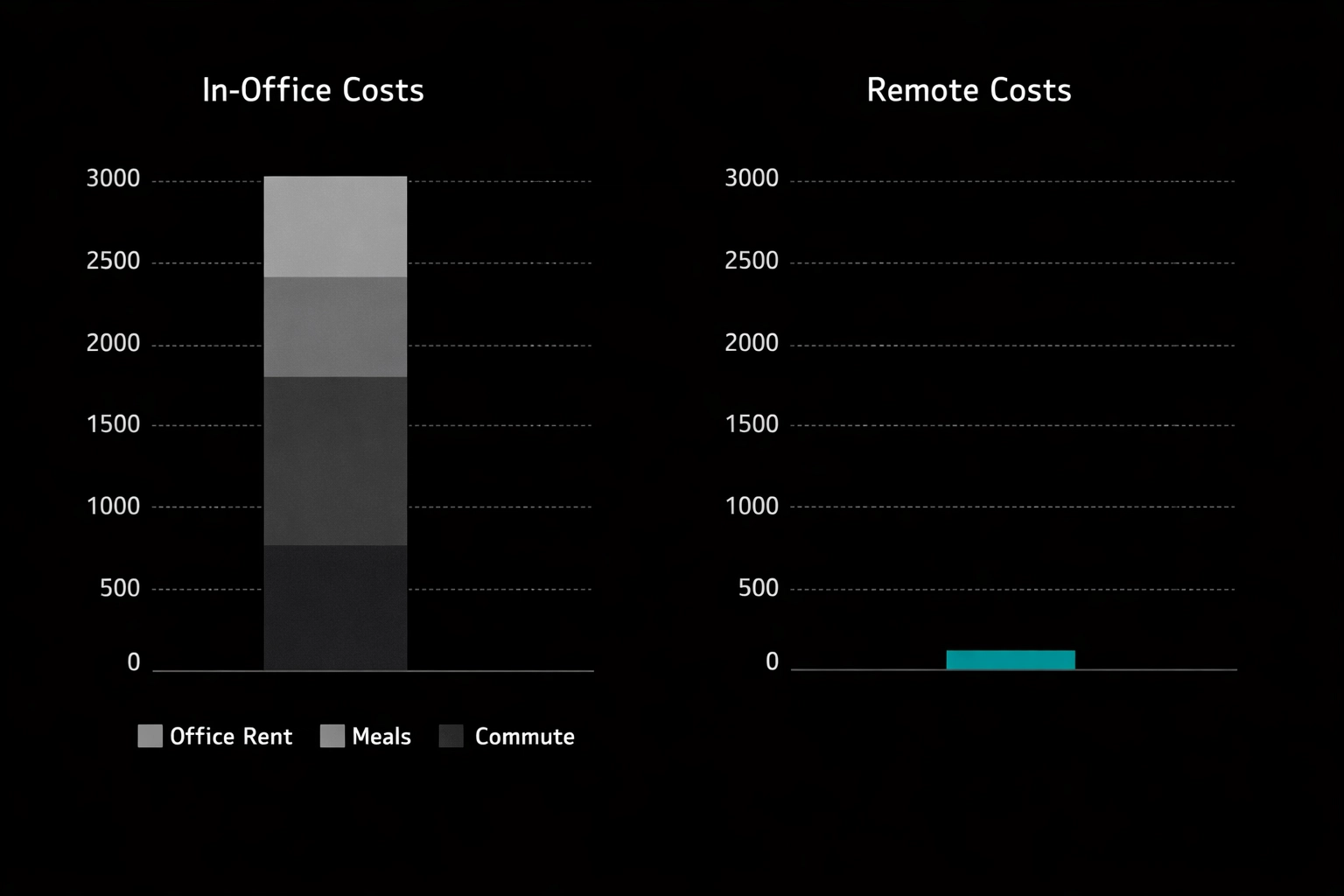
A remote SDR saves you real money. No office lease. No commute reimbursements. No daily lunches or team offsites every quarter. You're looking at $3K-5K per month in overhead that just vanishes. When you're watching every dollar and your SaaS metrics aren't quite where they need to be for the next round, that savings compounds fast.
But there's a hidden cost no one talks about in the remote SDR debate: coordination tax. Every question that would take 30 seconds at a desk now requires a Slack thread, a Loom video, or a scheduled call. Your SDR is crafting a cold email and needs to know if a specific use case actually exists in the product: do they wait for your reply or guess? When you're iterating on positioning weekly (because you're early-stage and still figuring out PMF), that friction adds up.
The talent pool argument is real though. If you're based in Des Moines or Boise, requiring in-office means competing for the three experienced SDRs in your metro area. Going remote opens up candidates from SF, Austin, and New York who won't relocate but have the chops you need. Research shows 90% of remote workers report equal or higher productivity, with 55% actually working more hours. For pipeline generation, that extra focus time matters.

The Culture Problem No One Wants to Admit
Here's the uncomfortable truth: remote SDRs are twice as likely to quit.
The data is stark: 37% turnover for remote versus 21% for in-office. When your entire pipeline depends on one person who's still learning your ICP, your product, and your messaging, that turnover risk is existential. You lose three months of ramp time. You lose institutional knowledge about which objections actually matter. You lose the Salesforce data that could have told you what's working.
And it's not because remote SDRs are less committed. It's because building real relationships over Zoom is hard. The hallway conversations that turn into "wait, did you know we can do X for Y customers?" don't happen. The spontaneous screen share where your SDR sees how a recent demo went and adjusts their pitch: gone. Culture isn't a nice-to-have for early-stage companies. It's the glue that keeps people bought in when things get hard.
Office environments create accidental learning. Your SDR overhears a customer call. They see the product roadmap on the whiteboard. They feel the energy when a deal closes. Remote work requires you to manufacture all of that intentionally, and most founders don't have the bandwidth to do it well.
The Hybrid Trap (And Why It Might Work Anyway)
The obvious answer is hybrid, right? Best of both worlds?
In practice, hybrid is the worst of both worlds unless you're disciplined about it. You still need office space (cost doesn't disappear). Your remote SDR still feels like a second-class citizen on Zoom calls while everyone else is in the conference room. The "come in for important days" policy sounds great until you realize every day feels important when you're pre-revenue.
But here's where hybrid actually works for early-stage: structured onboarding plus autonomy.
Bring your new SDR in for the first month. Sit together. Let them shadow calls. Workshop messaging in real-time. Then send them home with a tight playbook and weekly check-ins. You get the cultural immersion and rapid iteration where it matters most (month one), and then you get the cost savings and focus time for the long haul.
Some SaaS companies structure it seasonally: full remote except for quarterly planning weeks. Others do "in-office Tuesdays" for team syncs. The key is being intentional rather than defaulting to "flexible" which usually means no one knows where they're supposed to be.
The Question You're Not Asking
Both options: remote and in-office: assume you need to hire a human SDR at all.
For most early-stage founders, the real constraint isn't where your SDR sits. It's whether you can afford to hire, onboard, and manage a sales development rep for startup outbound when you're also building product, talking to investors, and trying to close your first ten customers yourself. The $80-120K loaded cost is one thing. The management overhead is another. The three-month ramp before they're productive is the real killer.
This is why more founders are exploring AI SDR tools: not as a replacement for human creativity, but as a way to handle the mechanical parts of outbound (research, list building, first drafts) while you stay in control of strategy and final messaging.

A tool like Ramen lets you bring your own API keys, approve every email before it sends, and scale research without scaling headcount. You're not choosing between remote and in-office. You're choosing between $100K in salary or $200/month in API costs while you prove out your outbound motion. Once you have consistent pipeline and real revenue, hire the SDR. But in the meantime, you keep your Sundays.
What Actually Matters for Your Stage
If you're pre-seed with less than $500K in the bank: you probably can't afford either option yet. Your job is to figure out messaging and ICP yourself before delegating to anyone. Use tools to automate the grunt work, but stay close to prospects.
If you're seed-stage with $2M+ and proven PMF: in-office or tight hybrid wins. You need speed of iteration more than cost savings. Bring someone in, sit next to them, and figure out the playbook together.
If you're seed-stage but fully remote as a company: remote SDR is your only real option. Don't pretend hybrid works when the rest of your team is distributed. Instead, over-invest in onboarding structure, daily syncs, and shared Slack channels where your SDR can see product and customer conversations in real time.
The dirty secret? Most founders hire too early because they think they "should" have an SDR by now. You see other startups announcing their first sales hire and feel behind. But hiring a mediocre SDR (remote or in-office) who sends generic templates and gets 0.5% reply rates just burns money faster. The right answer might be waiting another quarter while you tighten your own outbound process: either manually or with AI assistance: until you're ready to hand off a repeatable playbook.
The Bottom Line
There's no universal winner. Remote saves money and expands your talent pool but increases turnover risk and coordination costs. In-office accelerates collaboration and culture but limits hiring and burns budget faster. Hybrid sounds smart but usually ends up expensive and confusing unless you're very intentional.
For most early-stage founders, the real question isn't remote versus in-office. It's whether you're ready to hire an SDR at all: and whether AI tools can buy you six more months to figure out your outbound motion before making an $80K bet.
If you're not sure yet, that's your answer. Keep doing it yourself a little longer, but use tools that remove the manual research and drafting work. When you're confident in your messaging and seeing consistent replies, then hire the human who can scale what's working.
Want to test outbound without the SDR commitment? Ramen handles prospect research and email drafting while you stay in control of what actually sends. See how it works.