
You finally pulled the trigger and hired a remote SDR. Posted on a few job boards, filtered through dozens of applications, picked someone with decent experience at a SaaS company. $60K base plus commission, fully remote so you're "saving money" compared to an in-house hire.
Three months in, you're looking at 8 meetings booked and a reply rate hovering around 3%. Your remote SDR says the ICP needs refinement. The messaging needs work. The list quality isn't great. Meanwhile, you're still the one closing deals, building product, and wondering why you're paying someone $5K a month to send 40 emails a day.
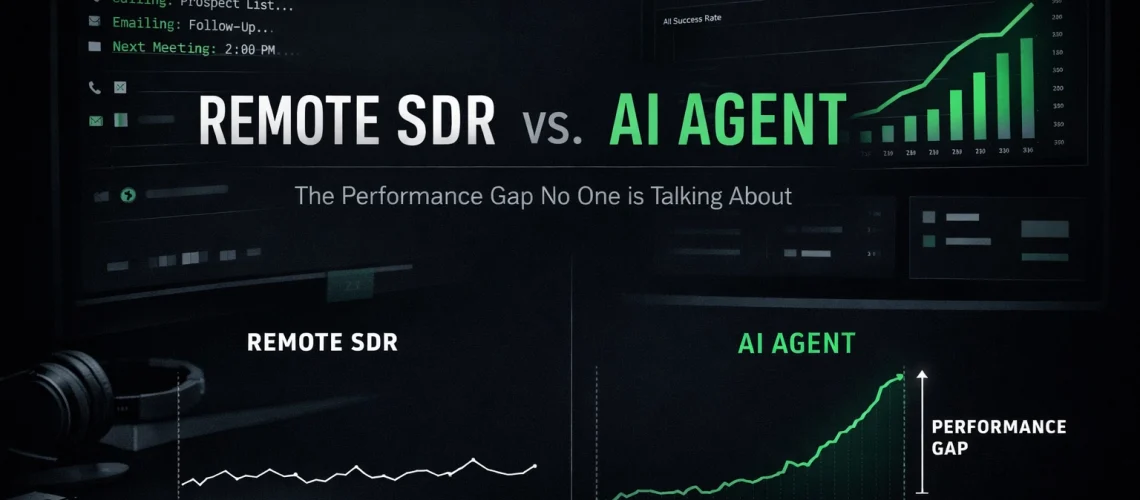
Here's what nobody told you: the performance gap between a remote SDR and an AI agent isn't close. And it's not just about cost: it's about volume, consistency, and whether you're optimizing for hiring theater or actual pipeline.
The Volume Gap Nobody Mentions
Your remote SDR: whether they're in Austin or Manila: sends between 50-100 personalized emails per day. That's considered good performance. If they're hitting 100, they're probably cutting corners on research.
An AI agent handles 200-500 personalized touchpoints daily. Not templates with {{FirstName}} tags. Actual research-backed outreach that references the prospect's company, role, and pain points. Some systems push 500-4,000+ leads daily without degrading quality.
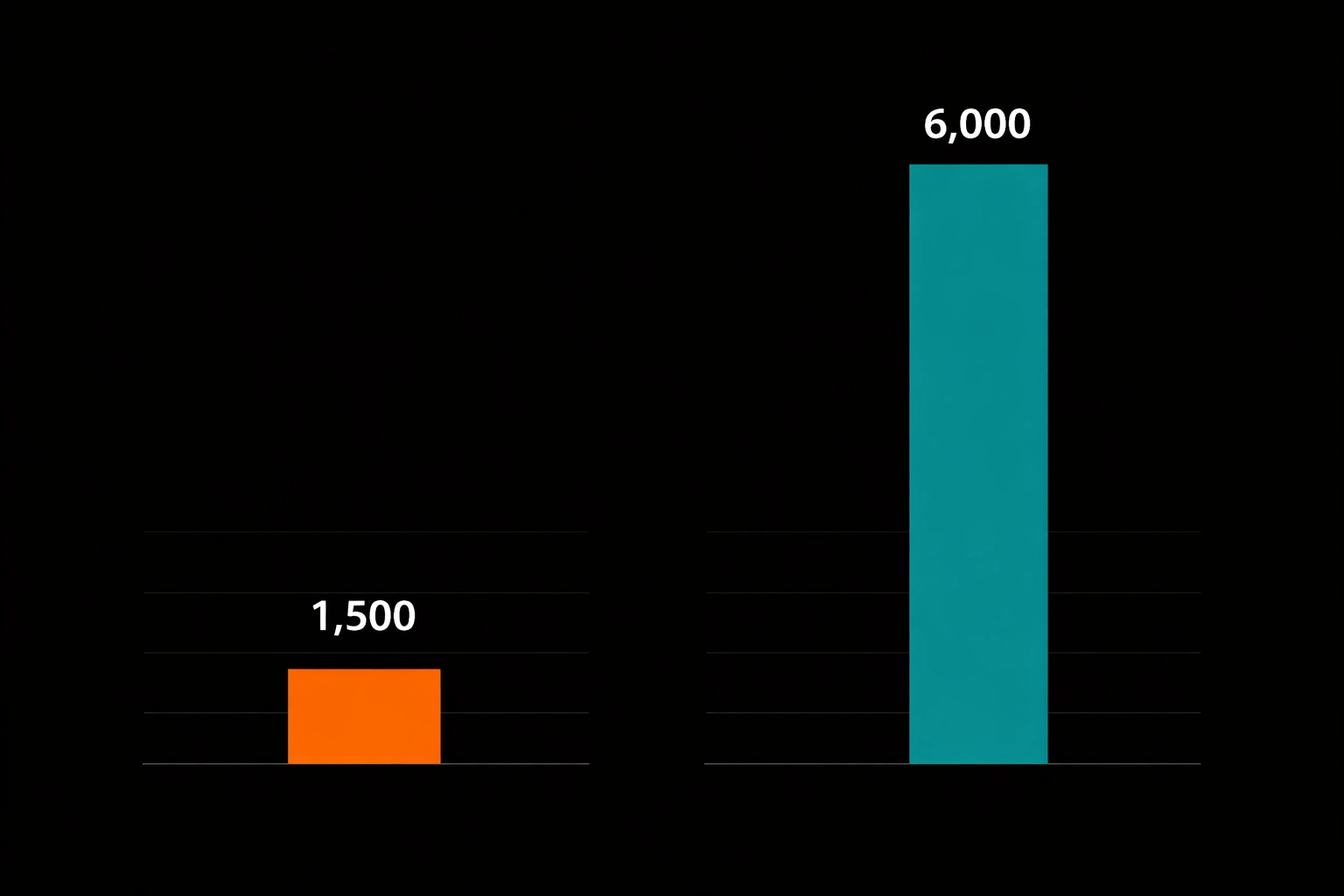
The math is brutal: If your sales development rep for startup is sending 75 emails a day, that's 1,500 emails a month. An AI agent at conservative volume (300/day) sends 6,000 emails in the same period. You're paying $5K+ per month for 25% of the output.
Response times tell the same story. Your remote SDR responds to inbound interest within hours: if they catch it. During their off hours, leads go cold. AI agents respond within minutes, 24/7, across every timezone. Follow-up consistency sits at 100% versus 65-75% for human teams, which means your remote SDR is literally forgetting to follow up with qualified prospects a quarter of the time.
The Conversion Reality (It's Complicated)
Here's where it gets interesting. AI agents don't win on every metric.
Meeting booking rates: AI agents show 12-25% booking rates compared to 6-12% for traditional human approaches. The difference isn't magic: it's optimized follow-up sequences that never miss a beat. Your remote SDR gets busy, forgets to follow up on Tuesday, loses momentum. AI agents maintain pressure without being annoying.
Response rates: AI agents hit 6-10% in direct comparisons, with some implementations reaching 25%. Your remote SDR is probably sitting at 5-10% if they're decent. The gap isn't enormous, but it's consistent. And consistency at scale compounds.
But here's the nuance: human SDRs still win at complex qualification by 25-30%. When a prospect responds with a weird edge case or needs technical clarification before booking a call, your remote SDR can navigate that conversation. Current AI agents struggle with multi-turn qualification threads that go off-script.
The question is whether that 25-30% advantage in complex qualification justifies paying 4x more for 25% of the volume.
The Real Cost of "Saving Money" with Remote
You hired remote to save money versus an in-house SDR. Smart move: you're not paying $80-120K loaded cost for someone in San Francisco.
But you're still paying $60-75K all-in when you factor in:
- Base salary ($50-60K for decent talent)
- Payroll taxes and benefits
- Software licenses (CRM, sequencing tools, data providers)
- Ramp time (3+ months before they're productive)
- Management overhead (your time reviewing their work)
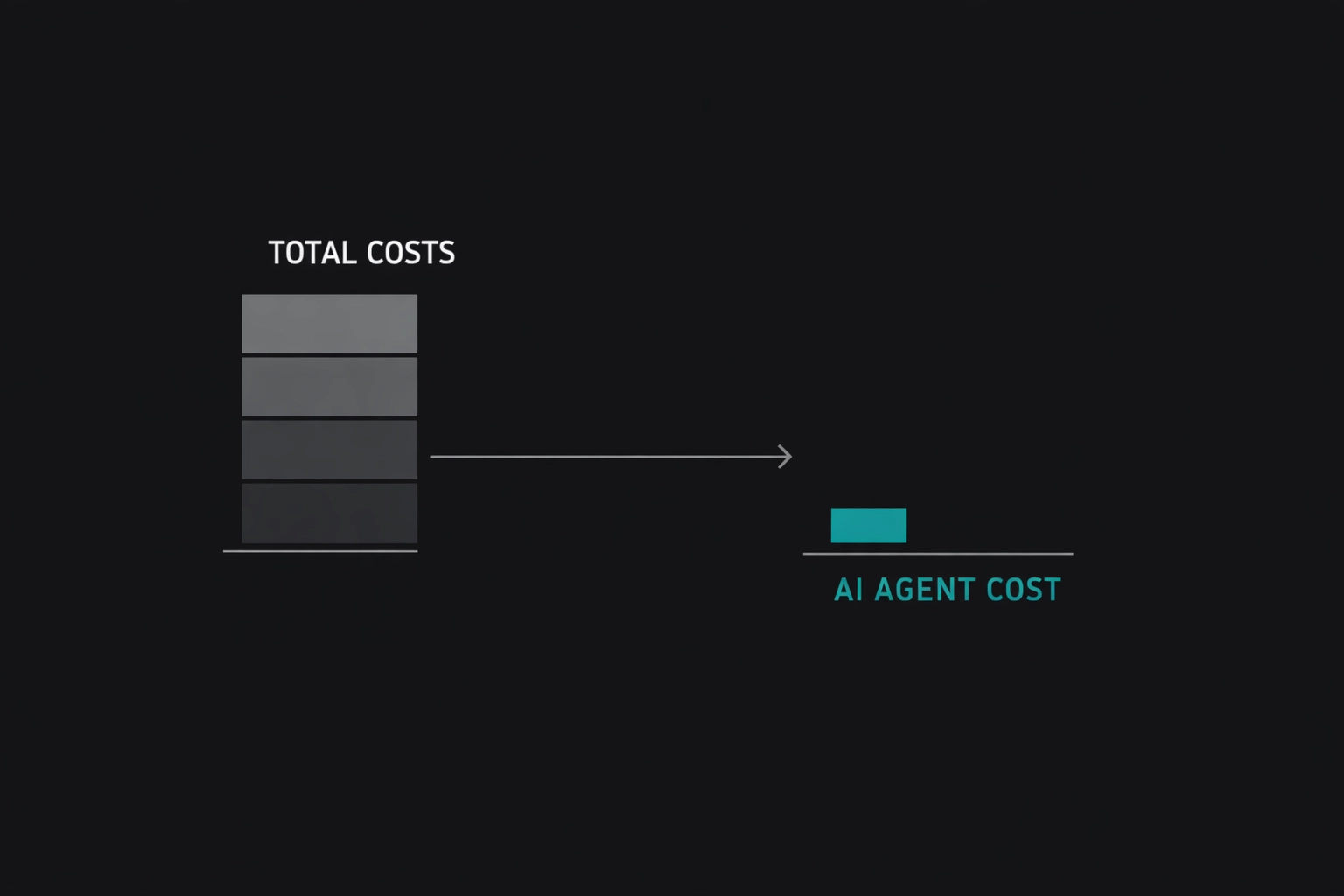
AI agents cost 60-75% less than human SDRs, with some implementations showing 83% cost reduction. More importantly, the payback period averages 5.2 months with 317% annual ROI, compared to 12-24 months for human teams at 200% ROI.
Your remote SDR takes three months to ramp, hits full productivity around month four, and you're hoping they don't quit by month eight once they've got "SDR at funded startup" on their resume. AI agents are productive on day one and don't browse LinkedIn for their next role.
The Operational Gaps You're Living With
Your remote SDR works 9-5 in their timezone. If they're in Eastern time and you're in Pacific, you're constantly out of sync. If they're overseas, you're managing async communication and praying they understood the ICP shift you explained over Slack.
They take PTO. They get sick. They have bad days where productivity tanks. You need backup coverage, which means hiring two remote SDRs or accepting that pipeline development stops when someone's out.
AI agents run 24/7 across every timezone with zero downtime. A prospect in London responds at 3am your time? The AI is already engaging. Your remote SDR would catch it eight hours later, and the prospect has moved on.
Follow-up cadences that human teams struggle to sustain are automatic. Day 3 follow-up happens on day 3, every time. Your remote SDR gets distracted by a hot lead, forgets to queue up the day 3 touches for 15 other prospects, and you're losing deals in the cracks.
Where Humans Still Win (And Why It Matters Less Than You Think)
Remote SDRs aren't useless. They're better than AI agents at:
Complex, multi-turn qualification conversations. When a prospect has specific technical questions or needs hand-holding through edge cases, humans navigate that better. The challenge: most conversations aren't that complex. Most outbound replies are either "interested, let's talk" or "not interested, stop emailing." The 25-30% advantage in complex scenarios applies to maybe 10% of your total conversations.
Building rapport with high-value accounts. If you're doing true enterprise sales where one deal is worth $500K and requires six months of relationship building, a human SDR who can nurture that over time has value. But if you're early-stage selling $10-50K ACV deals, you need volume and speed more than white-glove account nurturing.
Adapting to rapid ICP or messaging pivots. Your remote SDR can adjust on the fly when you realize mid-week that you should be targeting VPs instead of Directors. AI agents need clearer instruction and can't improvise as well. The question: how often are you pivoting so dramatically that this flexibility justifies 4x the cost and 75% less volume?
What This Actually Means for Your Startup
You're pre-seed or seed stage. You've got 12-18 months of runway. Every dollar spent on sales development is a dollar not spent on product or extending runway.
Hiring a remote SDR feels like building a "real sales team." It's what you're supposed to do. It's what investors expect. It feels more legitimate than "using AI."
But legitimacy doesn't book meetings. Your remote SDR sends 1,500 emails a month, books 8-12 meetings if they're good, and costs $5-6K all-in. An AI agent sends 6,000+ emails a month, books 25-40+ meetings with optimized follow-up, and costs $1,500-2,000.
The performance gap isn't debatable: it's math.
The real question is whether you're optimizing for what feels right or what actually fills your pipeline. Because if you're choosing remote SDR over AI agent to avoid looking "too AI-dependent," you're paying $4K a month for that feeling.
The Middle Ground Nobody's Talking About
Here's the approach most founders miss: you don't need to choose between fully automated AI or fully human SDRs.
Use AI agents for top-of-funnel volume: research, personalized outreach, initial follow-up sequences, meeting booking. Let the AI handle 200-500 touchpoints daily, respond within minutes, and maintain 100% follow-up consistency.
Then bring in human judgment at the qualification stage. Review the meetings before they hit your calendar. Train the AI on what good looks like. Keep a human (you or a part-time closer) handling the complex conversations where nuance matters.
You get the volume and consistency of AI with the judgment of human oversight. And you're not paying $60K+ for someone to manually research prospects and send emails that an AI can handle for 75% less.
What to Do About It
If you've already hired a remote SDR and they're performing well, don't panic and fire them tomorrow. But be honest about the ROI. Track the actual metrics: emails sent, reply rate, meetings booked, cost per meeting.
If you're about to hire a remote SDR because it feels like the "right" next step, run the numbers first. Calculate what 4x volume at 3x lower cost means for your pipeline over the next six months.
And if you're in the early-stage trap: can't afford a full-time SDR but need pipeline to raise your next round: stop trying to hire your way out of the chicken-and-egg problem.
Ramen gives you the AI agent volume with human oversight. You approve every email before it sends. You control the messaging. You bring your own API keys so there's no markup on costs. It's built for founders who need pipeline now, not three months from now after someone ramps.
The performance gap between remote SDRs and AI agents isn't closing. The only question is how long you're willing to pay 4x more for 25% of the output before you admit the math doesn't work.