
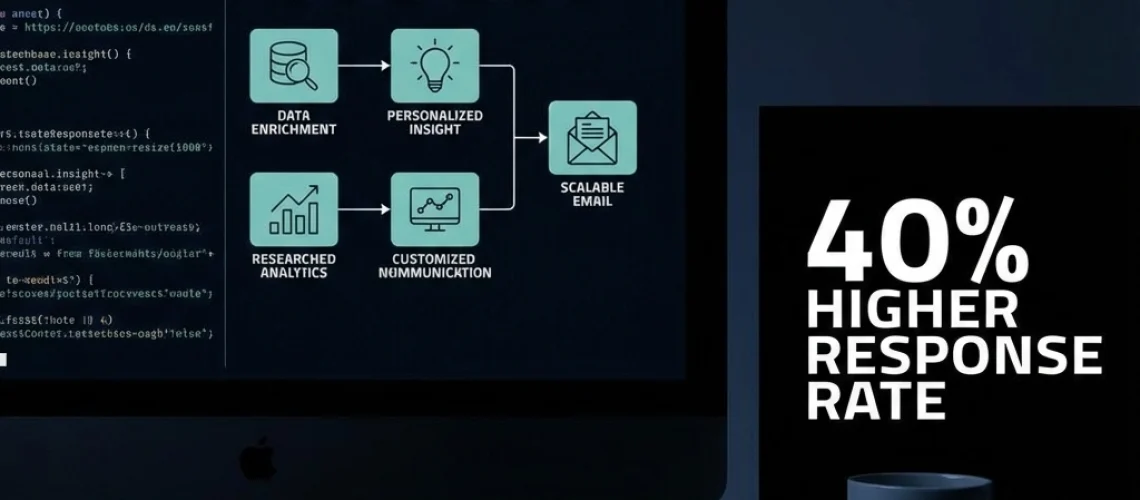
You send 200 "personalized" emails mentioning the prospect's company name and industry. You get 3 replies, all saying "not interested" or "remove me from your list." Sound familiar?
Here's the problem: most founders think they're doing research-based personalization when they're actually running template spam with mail merge variables. There's a massive difference between the two, and understanding it could be the difference between a 1% reply rate and a 15% reply rate.
Let me break down what research-based personalization actually means, and why most people get it completely wrong.
The Template Spam Problem
Most "personalized" outbound looks like this:
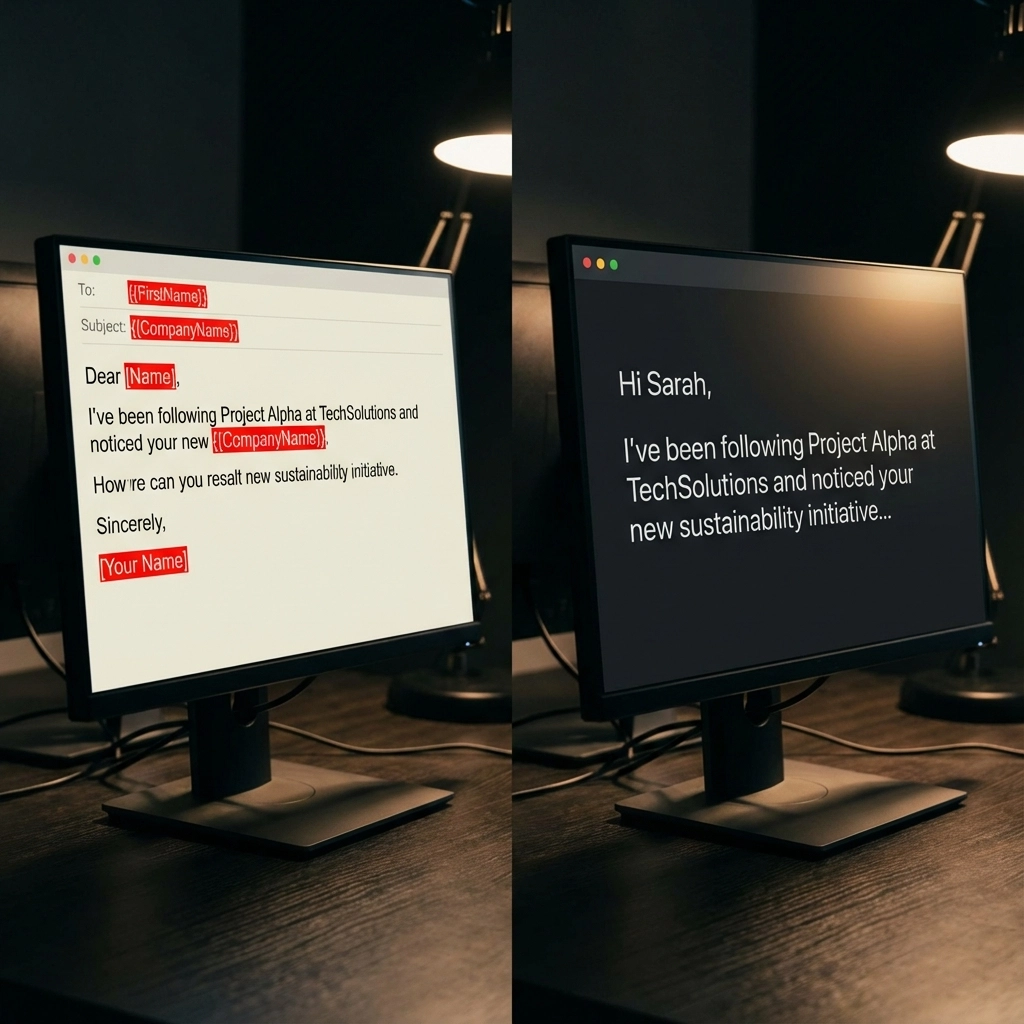
"Hi {{FirstName}}, I noticed {{CompanyName}} is in the {{Industry}} space. We help companies like yours {{Generic Value Prop}}."
This isn't personalization. This is mail merge. You're taking a generic template and swapping in database fields. Every recipient can tell you sent this exact email to 500 other people.
The dead giveaway? You could replace the prospect's name and company with literally any other prospect, and the email would still make perfect sense. That's template spam, not research.
What Research-Based Actually Means
Research-based personalization means you found something specific about this exact prospect that you can only know by actually looking at their situation. It's information that proves you spent time understanding their business, not just their demographic data.
Here's what real research looks like:
Bad (Template): "I see you're a SaaS company looking to grow your revenue."
Good (Research): "I saw your recent ProductHunt launch for your new integration feature, congrats on #3 Product of the Day. I noticed in your launch comments that several users mentioned wanting better reporting capabilities."
The second version proves you actually looked at their specific situation. You can't template that insight across 200 prospects.
The Five Levels of Research Depth
Not all research is created equal. Here's how to think about the spectrum:
Level 1: Basic Company Info
Company size, industry, recent funding. This is still mostly demographic data. Better than nothing, but barely.
Level 2: Recent Trigger Events
New hires, funding announcements, product launches, office moves. These create natural conversation starters and indicate timing.
Level 3: Published Content
Blog posts, podcast appearances, LinkedIn articles. This shows you understand their thinking and challenges.
Level 4: Specific Business Context
Competitive analysis, recent customer reviews, job postings, tech stack changes. This is where you start proving real understanding.
Level 5: Cross-Referenced Intelligence
Combining multiple data points to form insights. "I saw you're hiring SDRs while also posting about improving conversion rates, sounds like you're scaling outbound but want to maintain quality."
Most founders stop at Level 1 or 2. The reply rates start getting interesting at Level 3 and above.
Scaling Without Losing Quality
Here's where most people think they have to choose: either send personalized emails to 10 people per day, or send templates to 200. That's a false choice.
The key is building research systems, not doing research manually for every single prospect.
Smart Prospect Filtering
Instead of researching random prospects, filter for trigger events first. Recent funding, new executive hires, product launches, expansion announcements. These prospects are more likely to be in buying mode, so your research time has higher ROI.
Research Templates (Not Email Templates)
Create a research checklist you follow for every prospect. Company website, recent news, LinkedIn activity, job postings, customer reviews. This ensures consistent research quality without starting from scratch each time.
Time-Boxing Research
Spend exactly 3-5 minutes researching each prospect. Set a timer. If you can't find something interesting in that window, skip them. Not every prospect deserves an email.
Batch Similar Industries
Research 20 fintech companies in one session rather than jumping between industries. You'll start recognizing common patterns and challenges, making research faster.

The Human-in-the-Loop Reality
Here's something most AI email tools won't tell you: even the best AI research needs human oversight. AI can pull data and identify patterns, but it can't always connect the dots in ways that create genuine conversations.
The winning approach? Use AI to gather the research, but have a human review and craft the actual message. This gives you the speed benefits of automation with the quality control of human judgment.
At Ramen, every email gets human approval before sending. You're not trusting a robot to represent your company, you're using AI to do the legwork so you can focus on crafting messages that actually start conversations.
Examples That Actually Work
Let me show you the difference in practice:
Template Approach:
"Hi Sarah, I help SaaS companies like TechCorp improve their sales processes. Would love to show you how we've helped similar companies increase revenue by 30%."
Research-Based Approach:
"Hi Sarah, I saw TechCorp just added three new enterprise clients in Q3 (congrats!). I noticed on your careers page you're hiring two more customer success managers. We've helped similar companies manage that growth without their existing team burning out, would be worth a quick conversation about what you're seeing."
The second email proves you understand their specific situation and growth challenges. It's not about your product, it's about their business.
When Research-Based Doesn't Work
Research-based personalization isn't magic. It won't work if:
- Your product doesn't actually solve a real problem
- You're targeting the wrong people
- Your value proposition is weak
- Your follow-up sequence is garbage
Good research amplifies everything else, but it can't fix fundamental product-market fit issues.
Also, some industries and roles just don't respond well to cold outbound, period. No amount of research will change that.

The Time Investment Reality
Here's the math that stops most founders: if you spend 5 minutes researching each prospect and send 50 emails per day, that's over 4 hours of research time. Who has 4 hours for email research when you're also building product, managing customers, and trying to raise money?
This is exactly why most founders default to template spam. The time investment feels impossible.
But here's the thing: would you rather send 50 researched emails with a 15% reply rate, or 200 template emails with a 2% reply rate? Same number of responses, but the researched emails start better conversations with higher-quality prospects.
The goal isn't to send more emails. It's to send better emails to better prospects.
Building Your Research Process
If you're going to do this right, you need a repeatable system:
- Filter First: Use trigger events and ideal customer profile criteria to identify prospects worth researching
- Research Checklist: Company news, LinkedIn activity, recent content, hiring patterns, tech stack, customer reviews
- Insight Capture: Write down one specific, non-obvious thing you learned about their business
- Message Craft: Reference that insight naturally, connect it to a relevant challenge, suggest a conversation
- Track Results: Which research sources led to the best reply rates?
Most importantly: if you can't find something genuinely interesting about a prospect in 5 minutes, skip them. Not every company deserves your email.
The Bottom Line
Research-based personalization at scale isn't about mentioning their company name or industry. It's about proving you understand their specific situation well enough to start a relevant business conversation.
Yes, it takes more time upfront. Yes, you'll send fewer emails. But you'll get better replies from better prospects, and you won't burn your domain reputation with template spam.
The founders winning at outbound aren't the ones sending the most emails. They're the ones starting the most real conversations.
If you're tired of Sunday night email sessions that generate nothing but unsubscribes, it might be time to try actual research instead of mail merge. Your future self will thank you for building real relationships instead of just burning through prospect lists.