
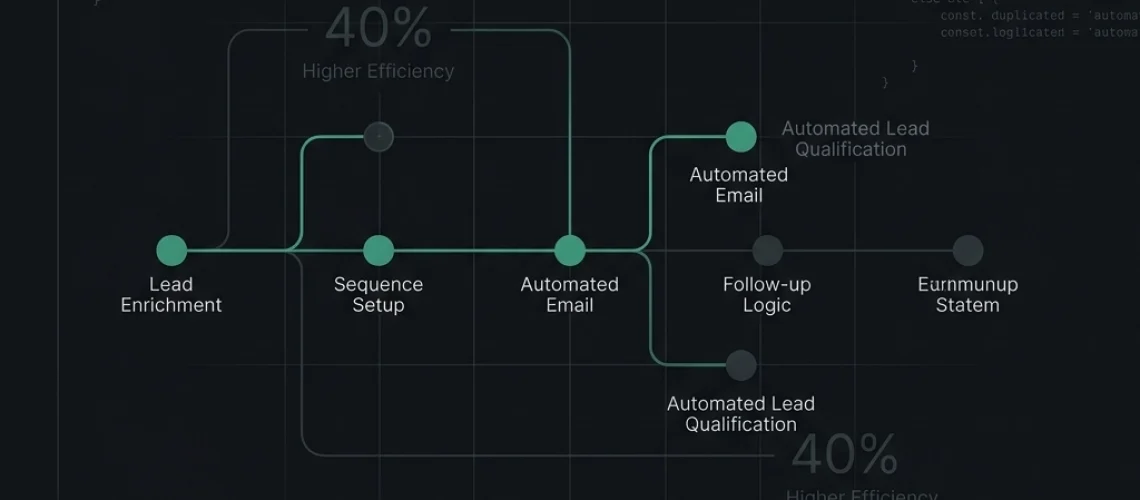
You just raised your seed round, or maybe you finally hit enough MRR to feel the "scale itch." Your first instinct is probably to head over to LinkedIn, post a job description, and hire your first Sales Development Representative (SDR). You figure that if you pay someone $60,000 a year plus commission, they’ll handle the cold emails, book the meetings, and you can finally get back to building the product.
It sounds like a logical step. In reality, it’s often a $100,000 mistake that kills more startups than it saves.
Most founders jump to hire their first SDR too early. They think hiring a person will solve their growth problem, only to end up with a high burn rate, a frustrated employee, and a pipeline that’s still bone-dry six months later. If you haven’t automated your research and outreach first, you aren't hiring a salesperson: you’re hiring a very expensive experiment.
The SDR Trap: Why "People First" Fails in 2026
The old playbook was simple: hire a hungry 22-year-old, give them a list of leads from Apollo, and tell them to send 100 emails a day. In 2026, that playbook is a recipe for getting your domain blacklisted and your LinkedIn account restricted.
When you hire an SDR before you have a proven, repeatable outbound system, you are delegating the most difficult part of your business: finding message-market fit: to the least experienced person on your team. You expect them to figure out which angles work, which personas respond, and what the "hook" is.
But they can't do that effectively if they are spending 80% of their day manually scraping data, cleaning spreadsheets, and writing "I saw your profile and noticed we both like coffee" emails.

Visual: A dark, editorial-style shot of a clean, minimalist workspace with a single laptop, symbolizing the shift from heavy headcount to lean automation.
The result? You spend three months "ramping" them. You pay for their seat, their tech stack, their benefits, and their base salary. By month four, when they still haven't booked a qualified demo, you realize the problem wasn't the person: it was the process. But by then, you’ve already burned $30k-$40k.
The hidden risks of hire SDR roles in 2026
Hiring an SDR is about more than just the salary. There are hidden risks that most founders don’t account for until they’re in the thick of it.
1. The Management Tax
An SDR isn't a "set it and forget it" tool. They need coaching, 1:1s, daily management, and a script that actually works. If you haven't figured out the script yourself, you’ll spend your Sunday nights writing emails for them anyway. You’re essentially paying $8k a month to still do the work yourself.
2. High Churn and Burn
The average tenure for an SDR is about 14 months. It takes 3-4 months to get them fully productive. That means you only get about 10 months of actual value before they either get promoted or quit because they’re tired of being rejected 98 times a day. When they leave, they take all that "tribal knowledge" about what worked and what didn't with them.
3. The Quality Floor
Humans are inconsistent. On a Tuesday morning after a good workout, your SDR might write brilliant, personalized notes. On a rainy Friday afternoon when they’re dreaming of the weekend, they’re hitting "send" on generic templates that hurt your brand. In 2026, your prospects are more sensitive to "templated" outreach than ever. If it looks like a bot wrote it: even if a human did: it goes to the trash.
How to build a predictable pipeline for $499/mo
Before you even think about looking at resumes, you need to prove that your outbound can work. This is where research-first outbound comes in.
Instead of hiring a human to do manual labor, you use an AI SDR to do the deep research that a human simply doesn't have the time to do. Think about it: a human SDR can maybe research 20 prospects deeply in a day. An AI can research 2,000 in an hour.
The $499/mo Math
Let’s look at the AI SDR pricing breakdown. A typical entry-level SDR costs roughly $8,000 per month when you include taxes, software, and commissions. Ramen costs $499/mo.
For the price of a single human SDR, you could run Ramen for 16 months. In those 16 months, you will have tested a hundred different niches, thousands of different subject lines, and tens of thousands of personalized icebreakers.

Visual: A minimalist, dark-themed comparison chart showing the cost of a traditional SDR ($100k+ OTE) vs. an AI SDR ($499/mo).
By the time you actually need to hire SDR talent, you won't be asking them to "figure out sales." You'll be handing them a proven machine and saying, "Here is the exact message that gets a 5% reply rate. Your job is to handle the objections and close the deal."
Automation as Your Message-Market Fit Lab
Outbound is a feedback loop. You send a message, you see if they reply, you adjust.
When you do this manually, the feedback loop is slow. It takes weeks to gather enough data to know if a campaign is failing. With an AI SDR, you get that data in days. You can see which industries are biting and which ones are ghosting you.
Ramen doesn’t just "blast" emails. It acts as an autonomous agent that looks at a prospect's LinkedIn, their recent news, and their company website to find a genuine reason to reach out. This level of research-first outbound is what separates modern growth teams from the "spam cannons" of the past.
Objection: "Don't I need a human to manage the AI?"
This is the most common concern I hear from founders. They worry that if they turn on an AI, it will go rogue and start emailing their biggest target accounts with hallucinated nonsense.
Here’s the thing: Ramen is designed with a "human-in-the-loop" philosophy. It is self-sufficient in doing the grunt work: finding the leads, doing the research, drafting the personalized email: but you stay in control.
You don’t just "set it and forget it." You review the drafts. You see the research. You hit "approve."
This turns your role from "Sales Manager" to "Editor-in-Chief." You aren't wasting time finding email addresses; you’re spending 15 minutes a day making sure the tone is perfect before the emails go out. It gives you the power of a full sales team without the $10,000/month overhead.
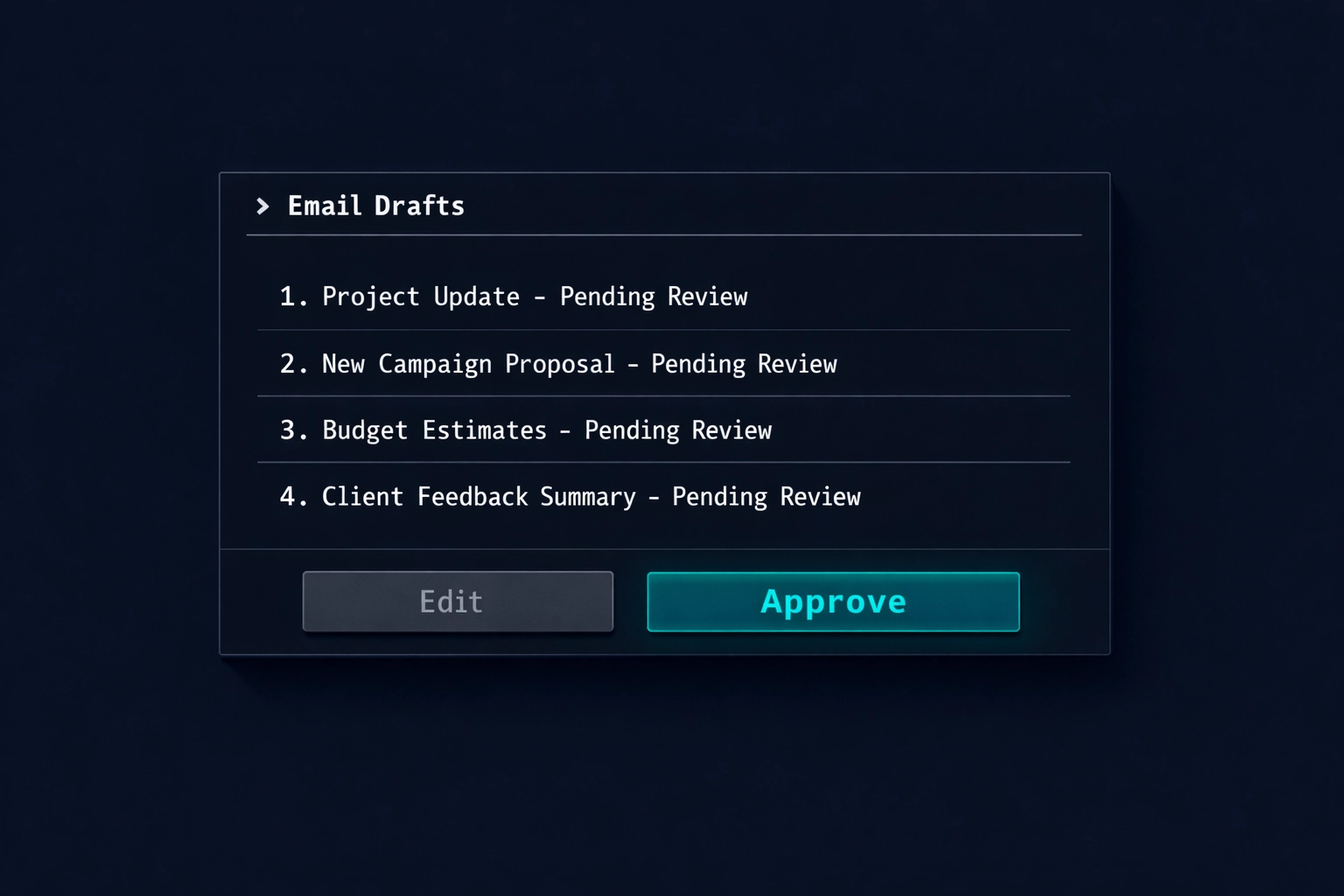
Visual: A simple UI mockup showing an "Approve/Edit" interface, highlighting the human-in-the-loop control.
When is the right time to hire an SDR?
I’m not saying you should never hire an SDR. I’m saying you shouldn't hire one first.
The right time to hire a human is when:
- You have a proven message that consistently books meetings via automation.
- Your calendar is so full of demos that you literally cannot handle the follow-ups and CRM admin yourself.
- You need someone to handle complex, multi-stakeholder objections that require high-level human intuition.
If you hire before that point, you’re just subsidizing someone else’s education on your dime.
Why Ramen?
We built Ramen specifically for the founder who is tired of the "hire and hope" strategy. We know you don't have $80k to gamble on a new hire who might not work out. We know you’ve probably tried agencies that promised the world and delivered zero leads.
Ramen is built to be the AI SDR agent that actually books demos. It’s for the founder who wants to scale outbound without the drama of a massive sales team.
If you’re ready to stop the "hire SDR" cycle and start building a predictable, research-backed pipeline, it’s time to look at automation first.
You don't need a bigger team. You need a better system.
See how Ramen works and start booking demos on autopilot for $499/mo.