
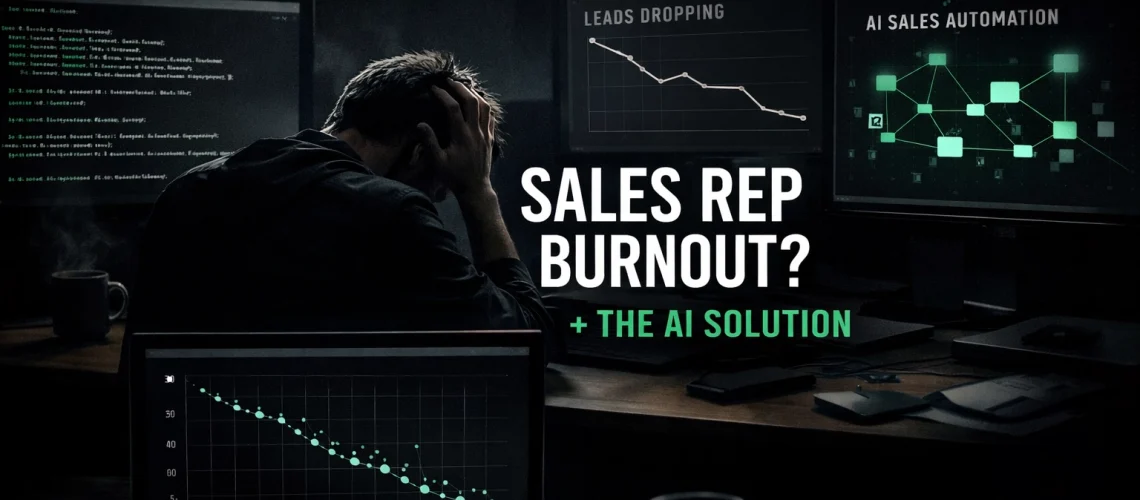
Most startup SDRs burn out within six months. It’s a predictable, painful cycle. You hire someone young, hungry, and relatively affordable. You give them a LinkedIn Navigator seat, an outreach tool, and a list of targets. Then you tell them to go "build pipeline."
Fast forward 12 weeks. That same person is staring at a spreadsheet for eight hours a day, manual-tagging leads and trying to find a "hook" for their 50th email of the morning. They’re exhausted, your domain is probably one step away from a blacklist, and the only replies they’re getting are "Unsubscribe" or "Stop emailing me."
The reality of being a sales development rep for startup in 2026 is that the traditional playbook is broken. If you’re still asking a human being to do manual data entry and basic research, you aren't just wasting their time: you’re burning your most precious capital.
The burnout cycle of manual outbound prospecting
The job of an SDR used to be about volume. If you sent enough emails, you’d eventually hit a vein of interest. But the bar for "enough" has moved. Today, everyone has access to automated sequencing. Your prospects are being hit with 50+ generic cold emails a day.
To stand out, your SDR has to do "deep research." They need to listen to a prospect’s recent podcast appearance, read their latest 10-K, or find a specific tweet they wrote. Doing this properly takes 15–20 minutes per prospect.
If your SDR spends 20 minutes researching every lead, they can only reach out to maybe 20 people a day. At a 2% reply rate (which is standard for high-quality outbound), they’re getting one reply every twond or third day. That isn't a pipeline; it’s a hobby.
So, under pressure to hit quotas, they stop researching. They revert to templates. They start "spraying and praying." The reply rates drop further. The rejection gets louder. This is where the burnout happens. You’re paying an $80k–$120k loaded cost for a human to act like a poorly programmed robot, only to get results that don't cover their own salary.

Why "research-first" outreach is the only way to stand out in 2026
We are living in the post-template era. If an email looks like it was written for 500 other people, it gets deleted in 0.5 seconds. The only emails that get a second look are the ones that prove the sender actually knows who the recipient is and what they care about.
This creates a paradox for the sales development rep for startup. They need to be personalized to get a reply, but they need to be high-volume to fill the funnel.
Research-first outreach means every message starts with a specific observation about the prospect’s business. It’s not "I saw you’re the VP of Sales." It’s "I saw your team just expanded into the DACH region and you’re hiring three new SDRs in Berlin: I’m curious how you’re handling the localized training for those new hires."
That level of detail used to require a human brain. In 2026, it requires a system that can scan the web, ingest data points, and synthesize them into a coherent thought faster than a human can even open a new Chrome tab.
The hidden costs of the "Human-Only" approach
When founders think about outbound, they usually only look at the SDR’s base salary. They forget the hidden costs:
- The Ramp Time: It takes 3–4 months for an SDR to fully understand your ICP and start booking meetings reliably.
- The Management Overhead: You (or a sales manager) have to spend hours every week reviewing their drafts, checking their activity, and keeping them motivated.
- The Opportunity Cost: Every day your SDR spends doing manual research is a day they aren't on the phone or handling warm leads.
- The Churn Cost: When they burn out and quit after 6 months, you lose all that institutional knowledge and have to start over from zero.
If you’re a seed-stage founder, you can’t afford to spend $10k a month on a "maybe." You need a system that works on day one.
Handling the complexity: "Our process is too complex for AI"
The biggest pushback we hear from founders is that their product or their niche is "too complex" for AI to handle. They worry that an AI will say something stupid, hallucinate a feature, or burn a bridge with a high-value prospect.
This is a valid concern if you’re using a "set it and forget it" automation tool. But that isn't how modern outbound works. The "Human-in-the-loop" model is the safeguard.
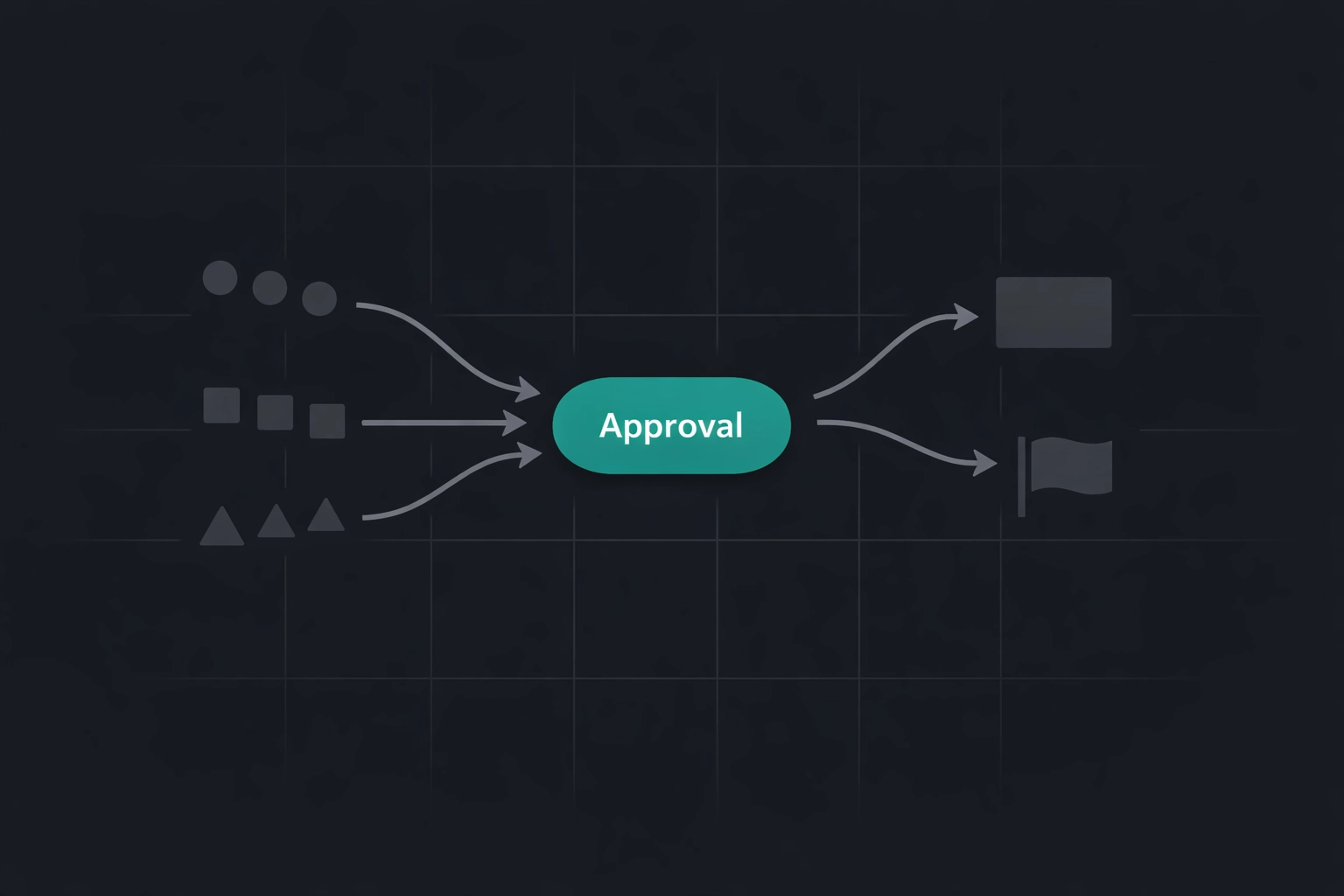
In this model, the AI does the heavy lifting: it finds the leads, scrapes the news, reads the LinkedIn profiles, and writes a highly personalized draft based on your specific value proposition. But it doesn't hit "send."
Your SDR (or you, if you’re a solo founder) acts as the editor. You spend 30 seconds reviewing the AI’s work, making a quick tweak if needed, and then approving it. This gives you the scale of automation with the quality and safety of a human touch. You’re no longer asking your sales development rep for startup to be a researcher; you’re asking them to be a strategist.
Giving your SDR (and yourself) their Sundays back
Outbound shouldn't be a grind that drains your team's soul. It should be a repeatable engine that generates meetings while you sleep.
The founders who are winning in 2026 aren't the ones hiring the most people; they’re the ones giving their lean teams the best tools. They’re moving away from the "body shop" model of sales and toward an AI-assisted model that prioritizes research over volume.
If you’re tired of seeing your SDRs struggle with manual tasks, or if you’re a founder doing your own outbound on Sunday nights because you can't afford a $100k hire yet, there is a better way.
At Ramen, we built a platform specifically for this. We handle the deep research and the draft writing, and you maintain total control. We use a "Bring Your Own Key" (BYOK) model so you aren't paying a massive markup on API costs, and every single email goes through a human approval process.
It’s about making outbound feel like a conversation again, rather than a numbers game. You can stop worrying about burnout and start focusing on closing deals.

Ready to see how AI can handle your research while you keep the control? See how Ramen works.