
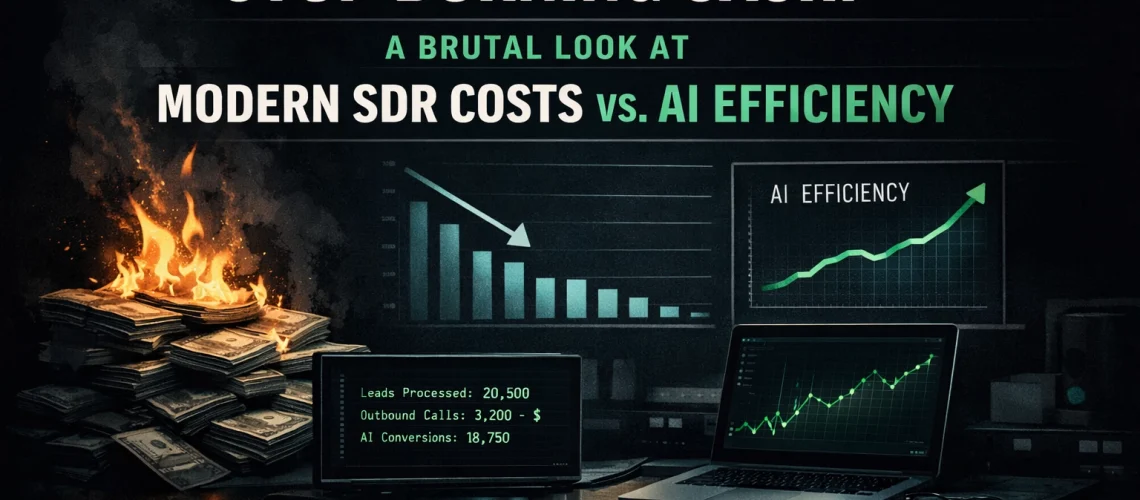
It's 11 PM on a Sunday. You're staring at your bank account and your burn rate spreadsheet. You've got maybe 8 months of runway left, and you're spending more time recruiting SDRs than building product. The last candidate ghosted you after the third interview. The one before that wanted $75K base for an entry-level role in a market they'd never sold into.
You know you need pipeline. You can't raise your next round without traction. But hiring a full-time SDR feels like betting $100K+ on someone who might book three qualified meetings in their first quarter.
Here's what nobody tells you about SDR costs in 2026, and why the math might be fundamentally broken for early-stage companies.
The Real Cost of a Human SDR: It's Not Just Salary
Let's start with the number everyone quotes: $51,244 average SDR salary in the United States. Sounds manageable, right?
Wrong.
That's just base salary. Here's what you're actually paying:
Base compensation: $50,000-$60,000 (fixed)
Variable compensation: $20,000-$30,000 (commission/bonus)
Payroll taxes and benefits: Add 25-30% on top
Tools and software: $3,000-$5,000 annually (LinkedIn Sales Nav, Apollo, Outreach, ZoomInfo)
Onboarding and training: 2-3 months before they're productive
Management time: You're spending 10+ hours/week coaching them
Fully loaded first-year cost: $90,000-$120,000
And that's assuming they work out. If they churn after 6 months (which happens more often than anyone admits), you're starting over.

What You're Actually Paying For
Let's be honest about what a human SDR does all day:
30% research: Finding prospects, reading LinkedIn profiles, checking company websites
40% writing emails: Crafting personalized messages, following up
20% list building: Scraping contacts, verifying emails, updating CRM
10% actual conversations: Calls, meetings, qualification
That means 90% of what you're paying for is repetitive research and writing. The kind of work that doesn't require human creativity or judgment, just consistency and volume.
The remaining 10%? That's where humans actually add value. The discovery calls. The objection handling. The relationship building.
But you're paying six figures for someone to spend most of their day doing work that AI can handle for pennies on the dollar.
The Geographic Lottery
Location makes this even more painful. If you're hiring in a major market, those numbers go way up:
Los Angeles SDRs: $59,000-$83,000 base
Massachusetts: $66,156 average
Alaska: $71,945 (yes, really)
Remote work opened up the talent pool, but it also means you're competing with companies that can pay top-of-market rates. You're a pre-seed founder bootstrapping or living off a small round. They're Series B companies with $20M in the bank.
You're not winning that bidding war.
Enter AI SDRs: The Math That Changes Everything
Here's where the conversation gets interesting.
A best AI SDR platform typically costs $500-$2,000 per month. Let's say you go mid-tier at $1,000/month.
Annual cost: $12,000
But what do you actually get for that?
- Unlimited prospect research (the AI reads company websites, LinkedIn profiles, news, job postings)
- Personalized email writing at scale
- Campaign management and sequencing
- Follow-ups that actually reference previous emails
- A/B testing built in
- No sick days, no vacation, no turnover
The AI doesn't get burned out after sending 100 emails. It doesn't forget to follow up. It doesn't need you to review its work every morning (well, the good ones do, but we'll get to that).
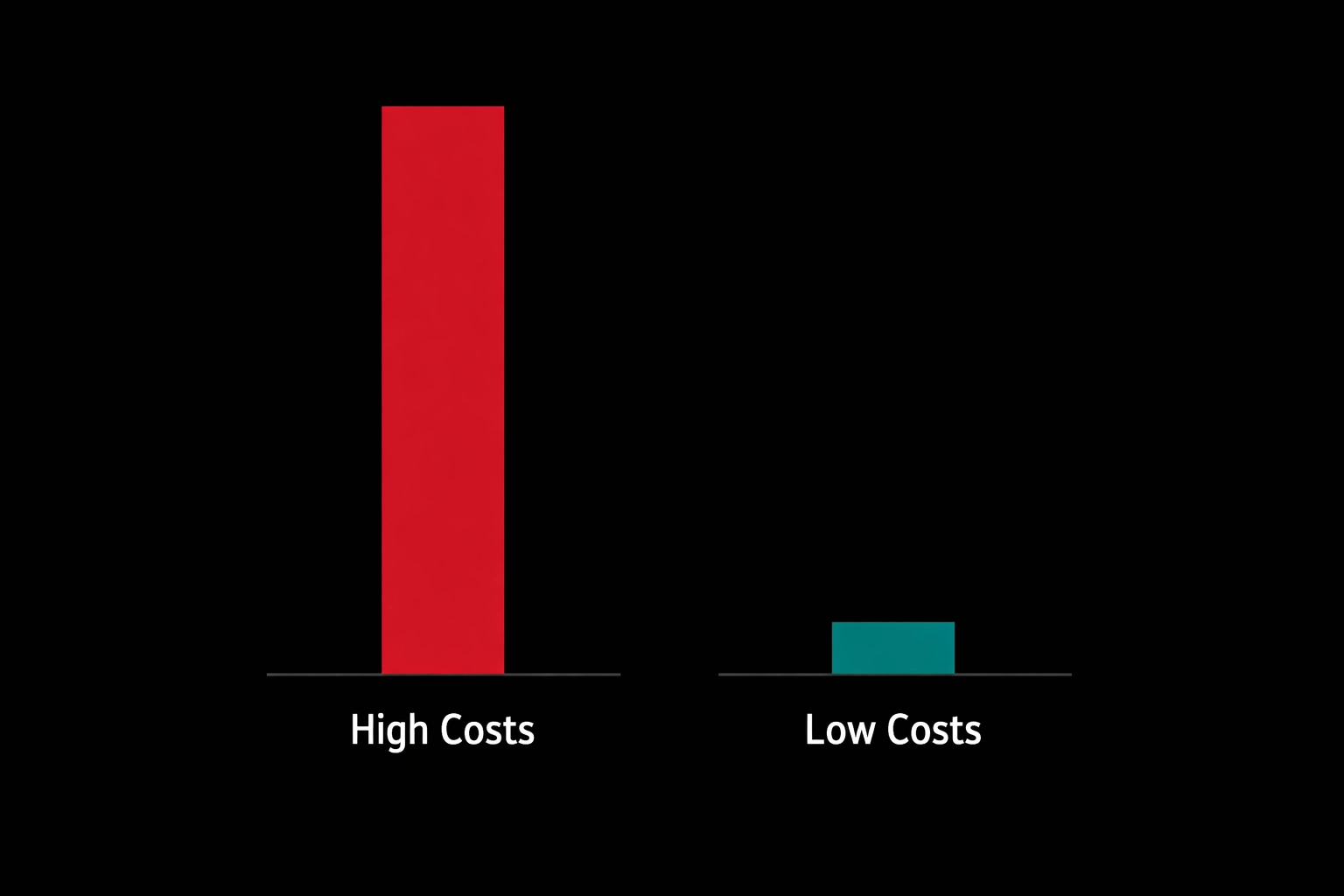
Cost per conversation started: With a human SDR sending 50 emails/day and getting a 2% reply rate, you're paying roughly $180 per conversation. With AI sending 200+ personalized emails/day at a similar reply rate, you're paying under $15 per conversation.
"But AI Emails Are Just Spam, Right?"
Let's address the elephant in the room.
Yes, 90% of "AI-powered" outbound is garbage. Templates with a first name swapped in. Generic "I noticed you work in [INDUSTRY]" intros. The kind of emails you delete without reading.
But that's not an AI problem: that's a lazy implementation problem.
The best AI SDR tools in 2026 do actual research. They read recent company news. They analyze job postings to understand pain points. They reference specific details that prove a human (or a very good AI) actually looked at the prospect.
The difference between spam and good outbound isn't human vs. AI. It's lazy vs. thoughtful.
Bad human SDRs send templated garbage too. They just do it slower and cost 10x more.
The Objection You're Thinking Right Now
"If I use AI, I'll lose the personal touch. Prospects will know it's automated."
Here's the truth: prospects don't care if a human or an AI wrote the email. They care if the email is relevant to them.
A well-researched AI email that references their recent product launch and explains exactly why your solution matters to them will get a response. A human-written template that says "I saw you're in SaaS, we help SaaS companies" will get deleted.
The personal touch isn't about who wrote it. It's about whether you did your homework.
The Hybrid Reality: Human-in-the-Loop
The best approach isn't "replace all humans with AI." It's this:
Let AI do the research and drafting. Let humans do the judgment and relationship building.
This is the model that actually works for early-stage companies. The AI generates personalized emails based on deep research. You review and approve them before they send. You jump in when someone replies.
You're still in control. You're still building real relationships. You're just not spending 6 hours a day researching prospects and writing first drafts.
Think of it like this: would you rather pay someone $100K to spend 90% of their time on research and email drafting, or pay $12K for AI to handle that and spend your time on actual conversations with interested prospects?

The Ramp Time Reality
Here's something nobody talks about: SDR ramp time.
A new SDR takes 2-3 months to become productive. That's 2-3 months of full salary and benefits while they're learning your ICP, your messaging, your product, your tools.
An AI SDR? You're running campaigns on day one.
For a founder with limited runway, those 3 months matter. That's the difference between having pipeline when you need to raise and scrambling to manufacture traction.
When Human SDRs Still Make Sense
To be clear: there are scenarios where hiring a human SDR is the right move.
If you're post-Series A with predictable revenue and you need someone to own the entire sales development function: building process, managing tools, iterating on messaging: a senior SDR or SDR manager is worth it.
If you're doing complex enterprise deals where every prospect needs a custom research project and multi-threaded outreach, humans add massive value.
But if you're pre-seed or seed stage? If you're doing founder-led sales and just need consistent top-of-funnel activity? If you're bootstrapped and every dollar matters?
The math doesn't work for a full-time SDR. Not yet.
What This Means for Your Business
You're trying to do the impossible: build product, manage a team, talk to customers, fundraise, AND generate pipeline.
Spending $100K+ on an SDR who takes 3 months to ramp and might churn after 6 months isn't just expensive: it's a strategic risk. That's 3 months of runway you can't get back.
AI SDRs don't solve every problem. They're not going to close deals for you. They're not going to build relationships on their own. But they solve the problem you actually have right now: you need consistent, personalized outreach at scale, and you need it yesterday.
A Different Way Forward
What if you could get the research and writing done for $12K/year instead of $100K? What if you could review every email before it sends, keeping full control? What if you could spend your time talking to prospects who are actually interested instead of sending 100 cold emails a day?
That's what the best AI SDR tools make possible. Not replacing humans: augmenting what founders can do when they're resource-constrained and time-starved.
At Ramen, we built this specifically for founders who can't justify six-figure SDR costs but need pipeline to survive. Deep research on every prospect. Human-in-the-loop approval. Bring your own API keys so you control costs.
It's not magic. It still requires your judgment and oversight. But it means you're not spending Sunday nights manually researching prospects or trying to hire an SDR you can't afford.
If you're tired of burning cash on outbound that doesn't work, see how it works. No commitment, no sales pitch. Just a clear look at whether this makes sense for where you are right now.