
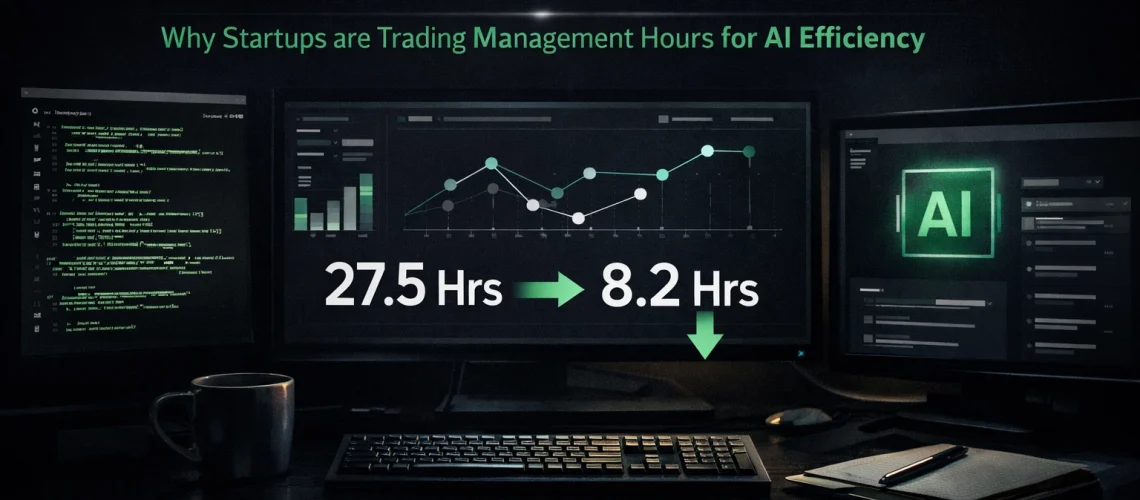
You finally pulled the trigger. Hired a remote SDR. $60K base plus commission, way cheaper than the $80K+ you'd pay locally. You're thinking you just saved 30% on your sales budget.
Then reality hits.
Week one: Three Zoom calls to explain your ICP. Week two: Daily Slack messages about edge cases. Week three: You're rewriting their emails at 9 PM because they still don't understand your positioning. By month two, you're spending 15+ hours a week managing someone who was supposed to free up your time.
This is the remote SDR management tax. And it's why more founders are cutting the middleman entirely and letting AI handle the grunt work while they focus on the strategy.
The Hidden Cost Nobody Talks About When You Hire SDR
When you budget for an SDR, you think about salary, commission, maybe some software licenses. What you don't budget for is the hours you'll spend managing them.
Here's what that actually looks like:
Onboarding and training: 20-30 hours in the first month. You're teaching product, ICP, messaging, objection handling, your CRM workflow, and the seventeen other things that live in your head but nowhere else.
Daily oversight: 30-60 minutes per day reviewing their activity. Checking emails before they send. Answering questions about whether a prospect fits your ICP. Explaining why "just checking in" doesn't count as a follow-up.
Performance management: Weekly 1-on-1s. Monthly reviews. Course corrections when they drift off-message or start chasing unqualified leads because they need to hit their activity metrics.
Firefighting: The occasional disaster when they send a poorly timed email, alienate a prospect you were warming up, or use your CEO's name in a template without asking.
Add it up: You're spending 12-15 hours per week managing an SDR. That's 25-30% of your work week spent supervising someone who was supposed to handle outbound so you could focus on product and fundraising.
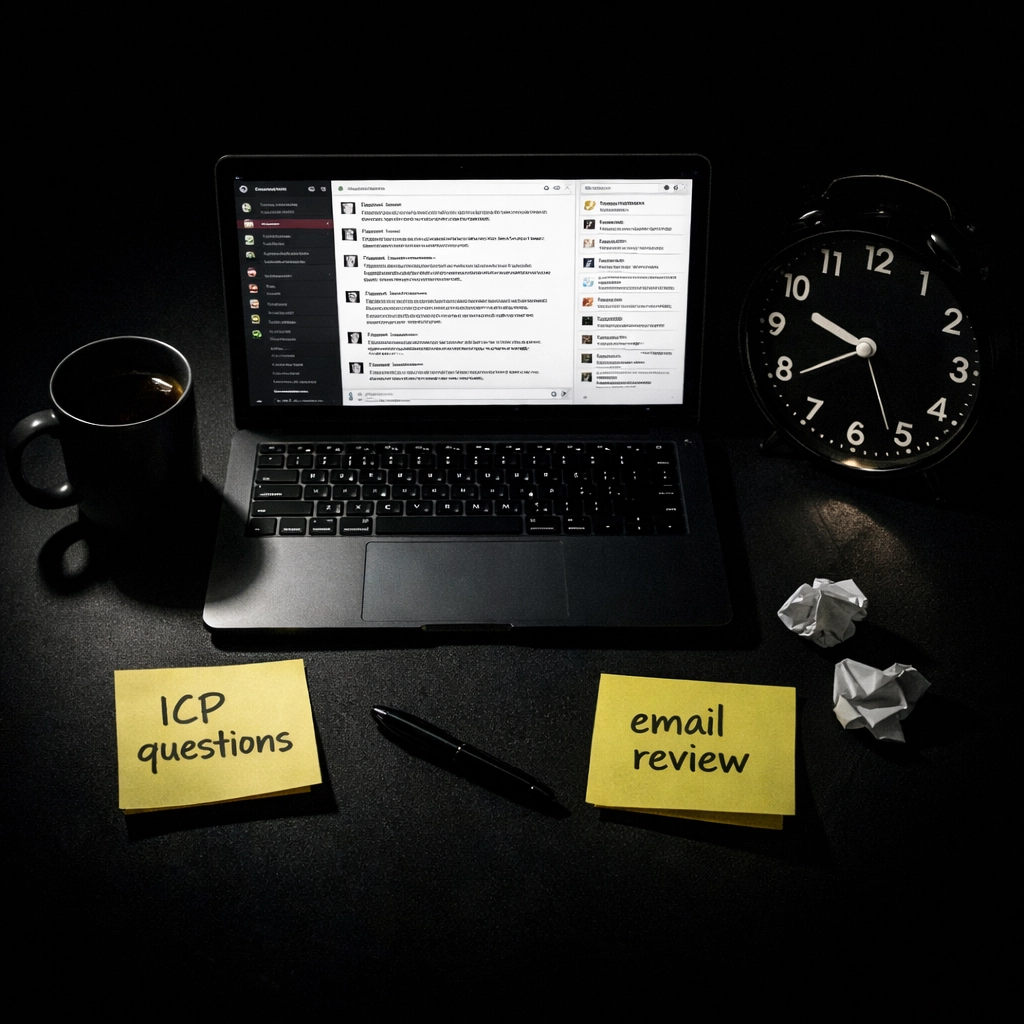
The fully loaded cost of that SDR isn't $60K. It's $60K plus your time, which, if you're a founder doing outbound, is worth way more than you're paying them.
Why Remote Makes the Management Tax Worse
Remote SDRs come with an extra layer of friction that in-house teams don't.
Timezone mismatches. Your SDR is five hours ahead or eight hours behind. Questions sit in Slack for hours. By the time you review their draft emails, they're already offline. Feedback loops stretch from minutes to days.
Context gaps. They're not in your office overhearing customer calls. They're not watching you demo the product or listening to how you handle objections. Everything you'd communicate osmotically in person has to be explicitly documented or scheduled.
Quality control delays. You can't just walk over to their desk and course-correct in real time. You're doing async reviews, which means mistakes compound before you catch them.
The result: You're spending even more time managing them than you would if they were sitting ten feet away.
And here's the kicker, you still need someone with judgment. Remote SDRs who truly "get it" and can run independently? They cost $80-100K+, not $60K. The affordable ones need heavy oversight.
So you're back where you started: trading money for time, except now you're also managing timezone logistics.
What Founders Are Actually Buying with AI SDR Tools
This is where the trade starts making sense.
You're not replacing an SDR with AI because AI can do everything an SDR does. You're replacing 80% of the grunt work, prospect research, email drafting, sequence management, so you can focus on the 20% that actually requires human judgment.
Here's what that looks like in practice:
AI handles research. It pulls data on every prospect: their company, their role, recent news, funding events, tech stack. No more paying someone $30/hour to scroll LinkedIn and guess which prospects fit your ICP.
AI drafts personalized emails. Not templates with merge tags. Actual personalized emails based on research. You review and approve them before they send, keeping the human oversight without the hours of drafting from scratch.
AI manages the sequence. Follow-ups, timing, A/B testing. The operational overhead that normally eats 60% of an SDR's day happens automatically.
What you're left with is the strategic work: reviewing the research, approving emails, deciding which accounts to prioritize, handling inbound replies. The work that actually moves deals forward.
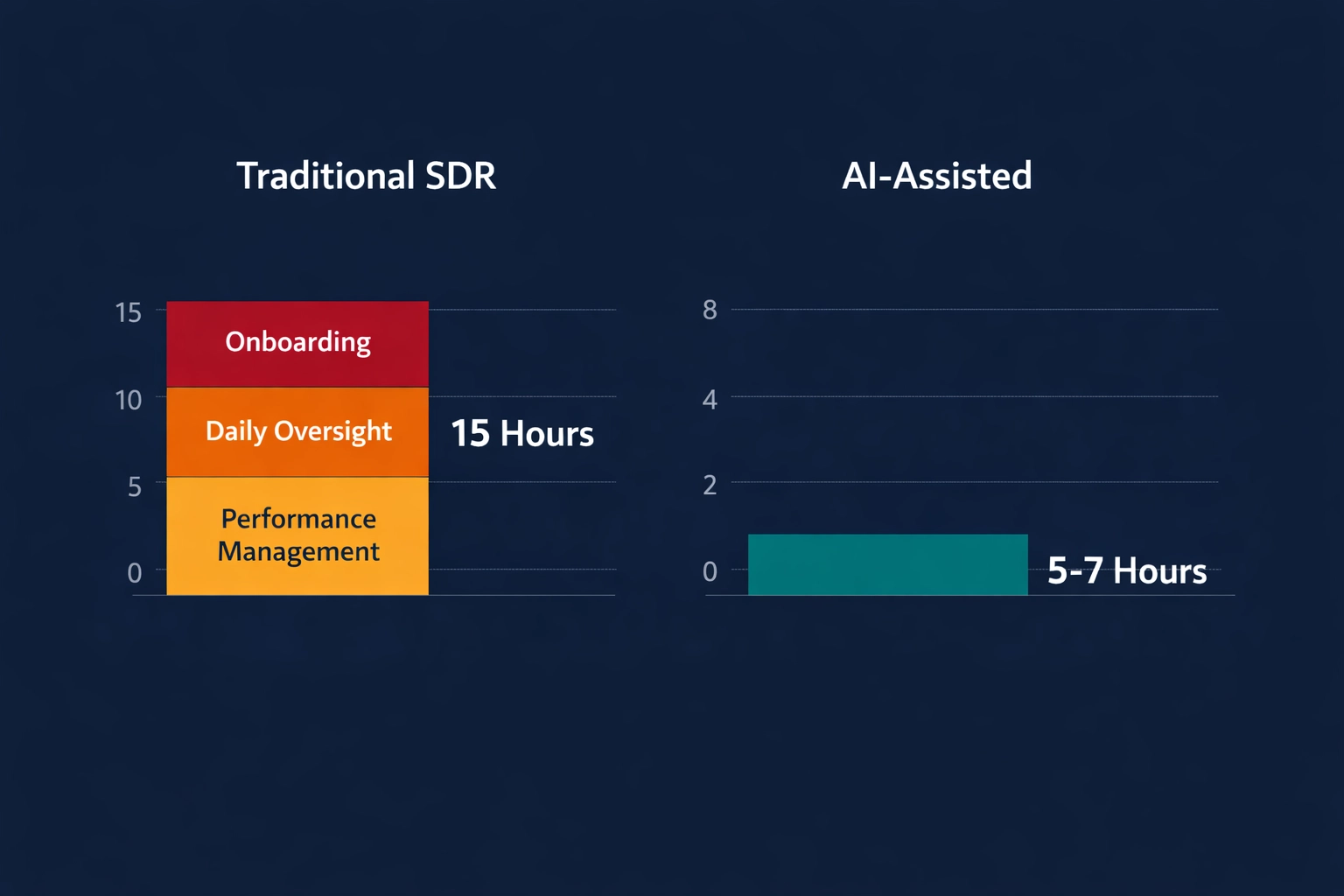
The time commitment drops from 15 hours/week managing an SDR to maybe 5-7 hours/week reviewing and approving AI output. That's a 50%+ reduction in management overhead.
And you're not sacrificing control. You're still approving every email. You're still the one deciding what gets sent. You're just not spending hours on the manual work that doesn't require your judgment.
"But AI Emails Are Generic and Spammy"
This is the objection everyone raises, and it's fair, most AI SDR tools do blast generic templates at scale.
But here's the nuance: The problem isn't AI. It's the model.
If you're using a tool that generates 500 emails from a template and auto-sends them without human review, yeah, those emails are going to suck. But that's not how thoughtful founders are using AI.
The better approach: AI does the research and drafts. You review and approve. Every single email.
This is the human-in-the-loop model, and it changes everything. You're getting the efficiency of AI without the quality drop because you're still the final check.
Compare that to a remote SDR: They're also drafting emails. You're also reviewing them. But now you're also managing their workload, answering their questions, and hoping they don't go rogue while you're heads-down on a product sprint.
With AI, there's no personality management. No timezone friction. No explaining the same thing five different ways. Just: review, approve, send. Or: review, edit, send.
The Real Trade: Management Overhead for Strategic Control
Here's what founders get wrong about the hire SDR decision: They think the trade is money for pipeline.
It's not. The trade is management hours for output.
When you hire an SDR: especially remote: you're committing 15+ hours a week to managing them. That's the price of entry. If you have that time and want to build a sales team, great. Hire away.
But if you're a solo founder or pre-seed team where everyone's wearing six hats? Those 15 hours are brutal. That's half your outbound time gone just managing the person who's supposed to be doing outbound.
AI flips the equation. You're trading some of the flexibility and judgment of a human SDR for dramatically lower management overhead. You're getting 70-80% of the output for 30-40% of the time investment.
And here's what most people miss: You're actually gaining strategic control. With an SDR, you're one layer removed from the work. You're reviewing their output, but they're the ones in the trenches. With AI, you're approving every email, which means you're closer to the actual outbound motion.
For founders who are still defining their ICP, testing messaging, or iterating on positioning? That's valuable. You're learning faster because you're in the loop on every touchpoint.

When It Makes Sense to Hire SDR vs. Use AI
To be clear: AI isn't always the answer.
Hire a remote SDR if:
- You have 15+ hours/week to manage them
- Your ICP, messaging, and process are locked in
- You need someone who can handle complex inbound follow-up or multi-thread deals
- You're ready to build a sales team and this is the first hire
Use AI if:
- You're doing outbound yourself and drowning
- Your ICP or messaging is still evolving
- You need volume but can't justify $80K+ for an SDR
- You want to test outbound before committing to a full-time hire
Most pre-seed and seed founders are in the second bucket. You're not ready to hire a sales team. You just need to generate pipeline without spending every Sunday writing cold emails.
That's where the AI trade makes sense. Lower output ceiling, but massively lower time investment. And for founders where time is the constraint: not money: that's the right trade.
The Bottom Line
The remote SDR management tax is real. You think you're saving money by hiring someone at $60K instead of $80K, but you're paying the difference in management hours.
For some founders, that's fine. You have the bandwidth. You want to build a team. Go for it.
But if you're a solo founder or small team trying to do outbound without it consuming your life? The AI efficiency trade is worth considering. Not because AI is magic, but because it shifts the time equation in your favor.
You're still in control. You're still approving emails. You're just not spending 15 hours a week managing someone when you could be spending 5 hours reviewing output and the other 10 building product.
That's not a compromise. That's strategy.
If you're curious what the human-in-the-loop model actually looks like in practice, Ramen is built exactly for this: AI does the research and drafting, you approve before anything sends. No management overhead, no hoping your SDR doesn't go rogue. Just efficient outbound that doesn't eat your weekends.