
You need pipeline. Your product is solid, you've got early traction, but you're doing all the outbound yourself between product calls and investor updates. Everyone says to hire an SDR, but the math doesn't work. Base salary of $50-60K, plus commission, benefits, onboarding, training, tools: you're looking at $80-120K loaded cost for someone who takes 3-4 months to ramp and might quit after 16 months.
There's a better way. Here's how startups are filling the SDR function in 2026 without the full-time price tag.
The Real Cost Everyone Ignores
Before we jump into alternatives, let's talk about what hiring a sales development rep for startup actually costs beyond the salary line.
You'll spend 4-8 weeks recruiting and interviewing. Then another 2-3 weeks onboarding. Your new SDR needs tech stack access, CRM setup, messaging training, ICP workshops, and shadowing time with you. They'll send their first emails around week 6, and those emails will be rough. By month 3, they're maybe hitting 50% of quota. By month 4, they're either hitting their stride or updating their LinkedIn to "open to work."
The average SDR tenure is 16 months. Turnover runs 34% annually. You're not hiring an SDR once: you're hiring an SDR every 18 months and repeating this whole cycle.
That $80K salary? It's really $120K+ when you factor in the time cost, replacement cost, and opportunity cost of deals you didn't close while ramping.
Alternative 1: Outsourced SDR Companies
Outsourced SDR teams ramp 3× faster than internal hires. You're working with experienced reps who've run thousands of campaigns and know what converts. They're producing qualified meetings within weeks, not months.
The math works differently here. Instead of a fixed $80K+ annual cost, you're paying for meetings booked or a monthly retainer that's usually 40-60% less than a full-time hire. You skip recruitment, skip training, and skip the turnover problem entirely.

These teams launch new campaigns roughly 40% faster than internal hires because they're not learning on the job. They've already tested your messaging angles in similar verticals. They know which subject lines die in spam and which get 8% open rates.
The downside? Less control. You're not in the same Slack channel giving real-time feedback. The reps aren't immersed in your product the way an internal hire would be. For some founders, that's a dealbreaker. For others, it's a feature: you get to focus on product while someone else handles the outbound grind.
Alternative 2: Fractional Recruiting + Contract SDRs
Here's a model that's catching on with seed-stage teams: bring in a fractional recruiter to source 2-3 contract SDRs who work 20 hours per week each.
Fractional recruiters charge hourly or project-based rates. You're paying for 10-20 hours of recruiting work instead of a full-time salary. They source candidates faster because they do this all day, and they can tap networks you don't have access to.
Once you've got contract SDRs in place, you're paying for output, not presence. A good contract SDR working 20 hours per week costs $2,500-4,000 per month depending on experience level. Two of them give you 40 hours of outbound coverage for less than one full-time hire, and you can scale up or down based on results.
This model shines during specific hiring sprints:
Post-funding build-out: You just closed your seed round and need to hire an AE, SDR, and RevOps person in under 90 days. A fractional recruiter brings proven playbooks and moves fast.
Seasonal ramp: You're launching into a new vertical or prepping for a big product release. You need outbound capacity for 3-6 months, then you'll reassess.
The catch is coordination. You're managing multiple people instead of one. You need clear processes, shared dashboards, and regular syncs to keep everyone aligned.
Alternative 3: AI-Powered SDR Tools
The elephant in the room: do you need a human SDR at all?
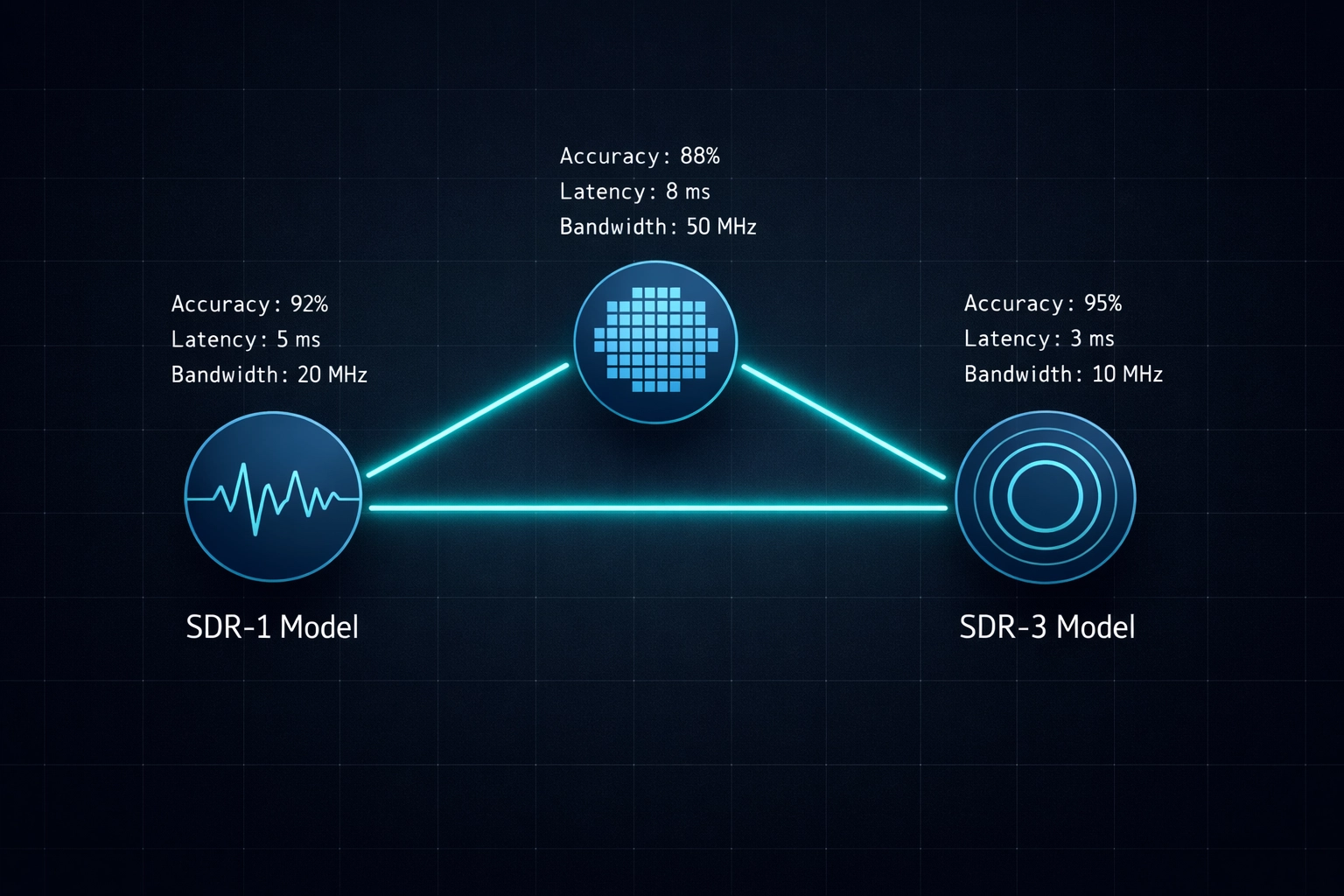
AI BDRs can create roughly 25% of pipeline in 90 days according to early data from companies running these tools. That's not replacing a top-performing human SDR, but it's filling the gap between "doing all outbound myself" and "hiring a full team."
Here's what AI actually handles well:
- Lead qualification based on firmographic and intent data
- Prospect research (funding rounds, tech stack, recent hires)
- Follow-up sequencing
- Pre-call prep and context gathering
- Time zone optimization for send times
Here's what AI still struggles with:
- Reading nuance in replies ("not right now" vs. "never")
- Pivoting mid-conversation based on new information
- Building actual relationships over multiple touchpoints
- Knowing when to escalate vs. nurture
The best AI SDR setups in 2026 aren't fully autonomous. They're human-in-the-loop: the AI does the research and drafts the emails, but you review and approve before anything sends. This gives you 80% of the efficiency gains while keeping quality high and your domain reputation intact.
The Decision Framework: Which Path Makes Sense?
Your best option depends on three variables: budget, timeline, and how hands-on you can be.
Choose outsourced SDRs if:
- You need meetings in the next 30-60 days
- You can't afford 3-4 months of ramp time
- You want to test outbound viability before committing to a full-time hire
- You're okay with less day-to-day control
Choose fractional recruiting + contract SDRs if:
- You're planning to build an internal sales team eventually
- You need flexibility to scale up or down quickly
- You have someone internally who can manage and coach SDRs (even part-time)
- You want more control over messaging and process
Choose AI-powered tools if:
- You're pre-product-market fit and still iterating on ICP
- You have limited budget but can invest time in reviewing AI output
- You're technical enough to set up integrations and workflows
- You're willing to be the human escalation point for conversations
Most early-stage teams aren't picking one: they're mixing. AI tools for top-of-funnel prospecting, a contract SDR for mid-funnel follow-ups, and founder-led closing. Or outsourced SDRs for one vertical while testing AI in another.
The 90-Day Test
Here's the move: commit to one approach for 90 days and track three metrics obsessively.
Cost per qualified meeting: Total spend divided by meetings where the prospect fits your ICP and showed up. Target: under $400.
Time to first meeting: How long from launch to your first qualified conversation. Target: under 3 weeks.
Your time investment: How many hours per week are you spending managing this? Target: under 5 hours.
If the numbers work after 90 days, you keep going. If they don't, you pivot. You're not locked into an $80K decision that takes 6 months to unwind.
What Actually Works in 2026
The companies winning at outbound right now aren't the ones with the biggest SDR teams. They're the ones who figured out how to test quickly, fail fast, and allocate resources to what converts.
That might mean an AI tool that helps you personalize emails at scale without burning your domain. It might mean a contract SDR who works 15 hours a week but has deep expertise in your vertical. Or it might mean an outsourced team that books 20 meetings a month while you focus on product.
If you're stuck doing all the outbound yourself and wondering if there's a better way, there is. You don't need $80K to start. You need a clear 90-day test, tight metrics, and the willingness to adjust based on what the data tells you.
That's how you hire SDR capacity without the SDR price tag.