
You're three months post-seed. You finally have budget to hire a sales development rep for startup growth. You post the role, sift through applications, run interviews, and settle on someone who seems hungry. Two weeks in, they're still setting up their tech stack. Six weeks in, they're sending 50 emails a day that get 1.2% replies. Three months in, you're debugging why your domain reputation tanked. Fourteen months in, they quit for an AE role at a Series B.
The average SDR tenure is 14 months. The loaded cost is $65,000–$90,000. And by the time they're actually good at the job, they're gone.
Here's the thing no one says out loud: the traditional SDR role is a talent mismatch for most startups. You don't need someone who can smile and dial 80 prospects a day. You need someone who can architect a system that does research at scale, personalize intelligently, and turn your outbound motion into a repeatable engine: not a grind.
The Death of the Dialer
The classic SDR playbook was built for a different era. Find a list. Load it into a sequencer. Blast emails. Track opens. Celebrate a 2% reply rate like it's a win.
That model worked when inboxes weren't flooded and buyers actually read cold emails. In 2026, it's spam. Not because the intent is bad, but because the execution is lazy. When your SDR is manually researching 10 prospects a day and templating the rest, you're not doing outbound: you're doing volume theater.

The bottleneck isn't effort. It's information architecture. A human SDR can research 10-15 prospects deeply per day. An AI system can research 500. The question isn't whether AI can write an email that sounds human: it's whether your SDR has the skills to design, operate, and optimize that system.
Most early-stage founders hire SDRs who know how to use Outreach or Apollo. What you actually need is someone who thinks like an engineer: someone who can define the inputs (what makes a good prospect for us?), design the logic (how do we tailor messaging by persona and intent signal?), and tune the system based on reply data.
That's not a dialer. That's an architect.
Building Your AI Prospecting Engine
If you reframe the sales development rep for startup role as AI system design, the job description changes completely. You're not hiring someone to send emails. You're hiring someone to build and operate an engine that does this:
Prospect identification at scale. Instead of manually scrolling LinkedIn or buying stale lists, your system pulls leads from multiple sources, enriches them with intent data, and scores them based on fit. A human can process 50 leads a week. A well-designed AI engine can process 5,000.
Deep research automation. The best cold emails reference something specific: a recent funding round, a job posting, a LinkedIn post. Doing that manually for 100 prospects takes all day. An AI agent can scan company websites, parse job boards, summarize recent LinkedIn activity, and surface the hooks your messaging needs: then write the first draft.
Personalization logic, not templates. Templates fail because they're static. "Hey {{FirstName}}, I noticed {{CompanyName}} is hiring for {{Role}}…" is still a template. Real personalization is dynamic: if they just raised a Series A, the message is different than if they posted about scaling challenges. Your AI architect designs those branches and tests what converts.
Human-in-the-loop review. This is where most AI SDR tools fail. They send emails on autopilot, and you wake up to a burned domain and angry replies. The right model is approval-based: AI drafts, human reviews and edits, then it sends. You stay in control. Your AI architect manages that workflow.
The output isn't "more emails sent." It's higher reply rates with less manual grunt work. Organizations using AI-driven SDR systems report 2–3x increases in qualified meetings while cutting the time spent on research and sequencing by 70%.
Why Strategy Beats Hustle in 2026
The old sales development model rewarded activity. Dials made. Emails sent. Touches logged. The new model rewards system intelligence.
Here's why that matters for startups: you don't have the budget to hire three SDRs and hope one works out. You need to get outbound right with one person: and that person needs to be focused on leverage, not volume.
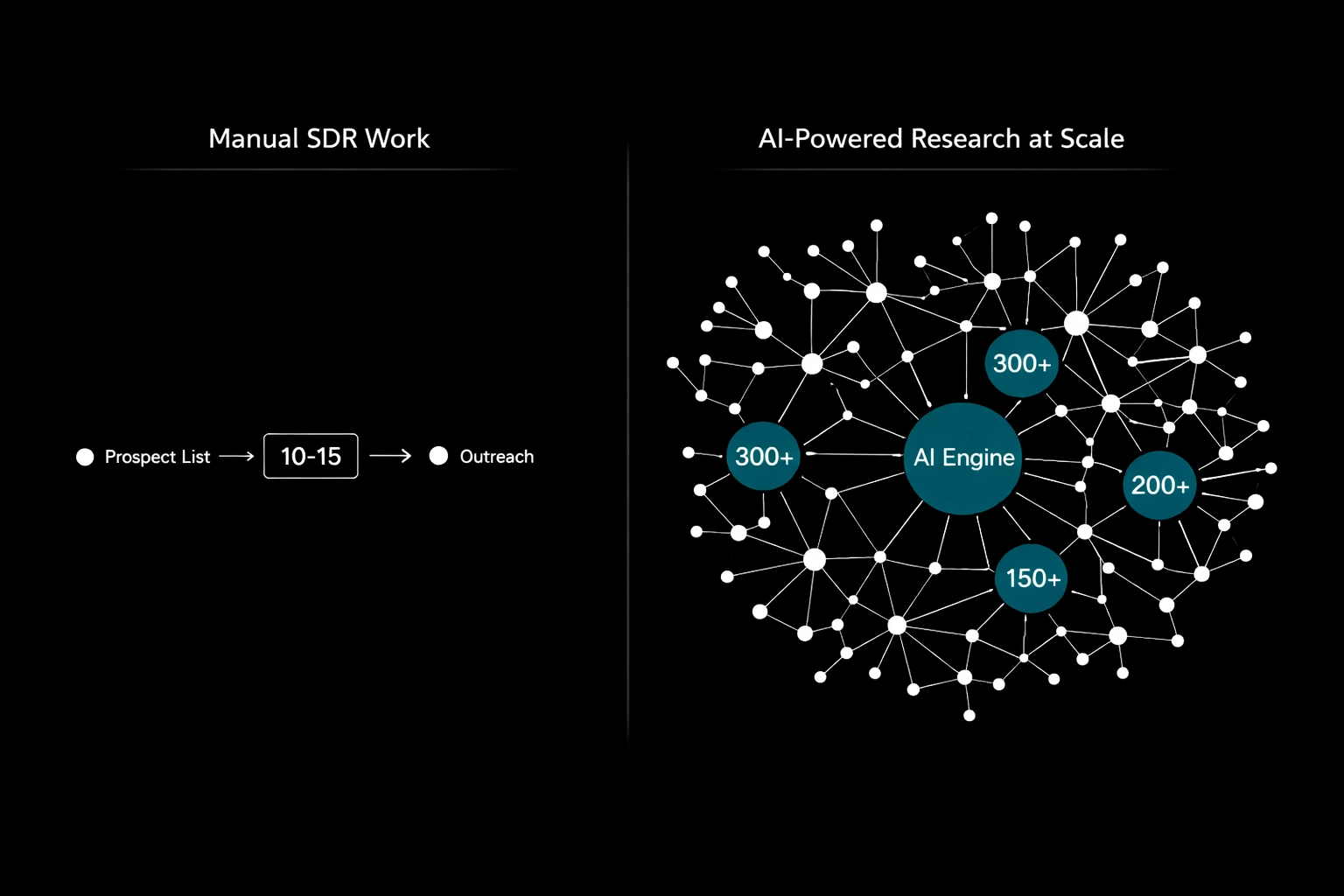
A traditional SDR grinds through 50–80 prospects a day and burns out by month six. An AI architect designs a system that touches 200+ prospects a day with research-backed personalization, then spends their time analyzing what's working, tweaking messaging angles, and expanding into new segments.
The skill set is different. You're looking for someone who:
- Understands your ICP deeply and can translate it into filtering logic
- Can write messaging frameworks (not just templates) that adapt to different personas and pain points
- Knows how to measure what matters: reply rate, meeting-booked rate, show rate: not just emails sent
- Can troubleshoot why a campaign is underperforming and iterate fast
This isn't a junior role anymore. It's closer to a growth operator than a cold caller. And if you hire for the old model, you'll get the old results: high churn, low output, and a pipeline that stalls every time someone quits.
The startup that figures this out first: treating the sales development rep for startup role as systems design, not manual labor: will outpace competitors still hiring dialers.
But What About the Personal Touch?
The most common objection: "AI emails feel robotic. We'll lose the personal touch."
Let's be honest. Your current SDR isn't writing 50 deeply personal emails a day. They're using templates with merge tags and calling it personalization. The "personal touch" you're worried about losing doesn't exist at scale.
What AI actually does is make real personalization possible. A human can't research 100 prospects deeply in a day. AI can. A human can't A/B test five different messaging angles per segment in real time. AI can. A human can't remember which prospects engaged with your pricing page versus your case studies and adjust follow-up accordingly. AI can.
The real question isn't whether AI removes the personal touch: it's whether you're using AI to do the research and drafting so your team can focus on the interactions that actually matter. When a prospect replies, that's when human judgment, empathy, and relationship-building kick in.
You're not replacing humans. You're giving them leverage.
And here's the thing most founders miss: buyers don't care if AI helped write the email. They care if the email is relevant, timely, and respectful of their attention. A well-researched AI-drafted email beats a lazy human-templated one every time.
What This Means for Your Next Hire
If you're hiring a sales development rep for startup pipeline generation, stop optimizing for "hungry and coachable." Start optimizing for systems thinkers who can operate AI tools like a product.
Ask them:
- How would you design an outbound system that researches 200 prospects a day?
- What signals would you use to decide if a prospect is worth reaching out to?
- How would you measure whether our messaging is working, and what would you change if reply rates dropped?
If they talk about dials and touches, they're stuck in the old model. If they talk about inputs, logic, and iteration, you've found someone who gets it.
The reality is this: you can't afford to hire an SDR who takes three months to ramp, stays for 14 months, and then leaves. You need someone who can build a system that outlasts their tenure: one that keeps running, keeps learning, and keeps generating pipeline even when you're heads-down on product or fundraising.
That's not a cold caller. That's an architect.
If you're ready to shift from manual SDR grind to a high-leverage AI system, Ramen is built for exactly this. It handles deep prospect research, drafts personalized emails, and keeps you in the loop with human-in-the-loop approval. You stay in control. The system does the heavy lifting. See how it works at ramen.so.