
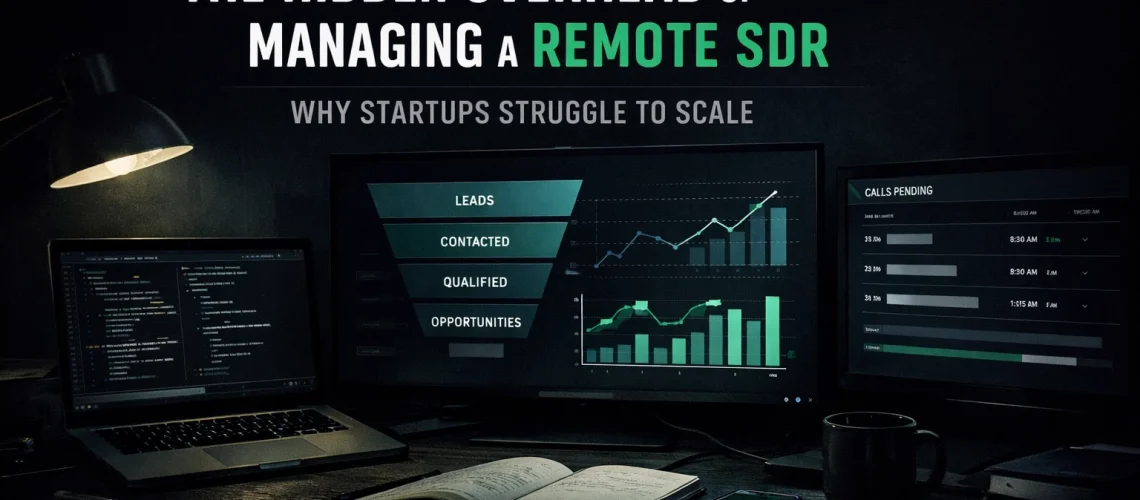
You hired a remote SDR at $55K. You did the math: it was cheaper than an agency, and you'd finally get someone focused on outbound full-time.
Three months in, you're spending 8-10 hours a week managing them. The Slack messages start at 9 AM their time (7 AM yours). The "quick sync" on Monday turned into a standing hour-long call. You're reviewing every campaign, debugging their CRM workflow, and explaining why their 2% reply rate isn't cutting it.
The salary was $55K. The actual cost? Closer to $120K when you factor in tools, taxes, recruiting, and the most expensive line item that never shows up on a P&L: your time.
Here's what most founders miss about remote SDRs: the overhead isn't the salary. It's the constant context-switching, timezone juggling, and management friction that turns your Tuesday into a series of interruptions instead of deep work on product or fundraising.
The Weekly Sync Trap
Remote SDRs need management. That's not their fault: it's the nature of the role. Outbound is repetitive, metrics-driven work that requires feedback loops to improve. But those feedback loops cost you something no early-stage founder has: uninterrupted time.
The "quick Monday sync" becomes an hour because you're reviewing last week's numbers, setting this week's targets, troubleshooting why their Apollo credits ran out, and walking through why their subject lines sound like spam. Then there's the Thursday check-in to make sure they're on track. The Friday pipeline review to see what actually moved.
You're now spending 6-8 hours per week in scheduled calls, plus the Slack thread that runs all day. Questions about messaging. Requests to review a new sequence. "Should I reach out to this lead or is it too soon?"

Every interruption costs you 23 minutes to get back into flow state. That Monday sync at 10 AM just wiped out your entire morning of product work.
The math gets worse when you add a second remote SDR. Now you're managing two people across potentially different timezones, duplicating the same feedback, and trying to create consistency across sequences you barely have time to review yourself.
This is the hidden tax of remote SDR management: it doesn't scale linearly. Two SDRs don't take twice the time: they take 3x because you're now coordinating between them, comparing performance, and making sure they're not stepping on each other's territories.
The 'Ramp-Up' Reality
Every SDR hiring guide tells you to expect 60-90 days of ramp time. What they don't tell you is that during those 60-90 days, you're doing two jobs: yours and theirs.
Month one is onboarding. You're walking them through your ICP, your positioning, your value prop, your CRM setup, your tech stack. You're writing the first sequences with them because they don't know your product well enough yet. You're reviewing every single email before it goes out because you can't afford to burn your domain with bad copy.
Month two is training. They're sending emails now, but the reply rate is terrible. You're debugging their approach: too aggressive, too vague, wrong pain points, bad timing. You're rewriting subject lines at 11 PM because you can't let garbage hit inboxes tomorrow morning.
Month three is when they might start performing. If you're lucky. If they don't quit because they realized outbound is harder than the job description suggested. If they don't get poached by a competitor offering $10K more.
The cost of this ramp isn't just the $15K-$20K you paid them during those 90 days. It's the 100+ hours you spent getting them there. At a $150/hour opportunity cost (conservative for a founder), that's another $15K in management time before they sent a single qualified meeting your way.
And if they quit at month four? You're starting over. New recruiting fees ($6K-$10K), new onboarding, new ramp period. The cost of SDR churn for an early-stage startup isn't $100K in lost pipeline: it's $100K in lost pipeline plus another 100 hours of founder time you'll never get back.
Why 24/7 Output Beats 9-5 Availability
Here's the thing about remote SDRs that nobody talks about: they work 40 hours a week. That sounds reasonable until you realize your competitors are running AI agents that work 168 hours a week.
Your SDR sends 50 emails a day. An AI agent sends 200: thoughtfully researched, personalized, and approved by you in 30 minutes on Sunday night instead of micromanaged throughout the week.
Your SDR works 9-5 EST. Your prospects check email at 6 AM PST, noon CST, and 10 PM when they finally close their laptop. AI agents send when prospects are most likely to engage, not when it's convenient for your SDR's schedule.
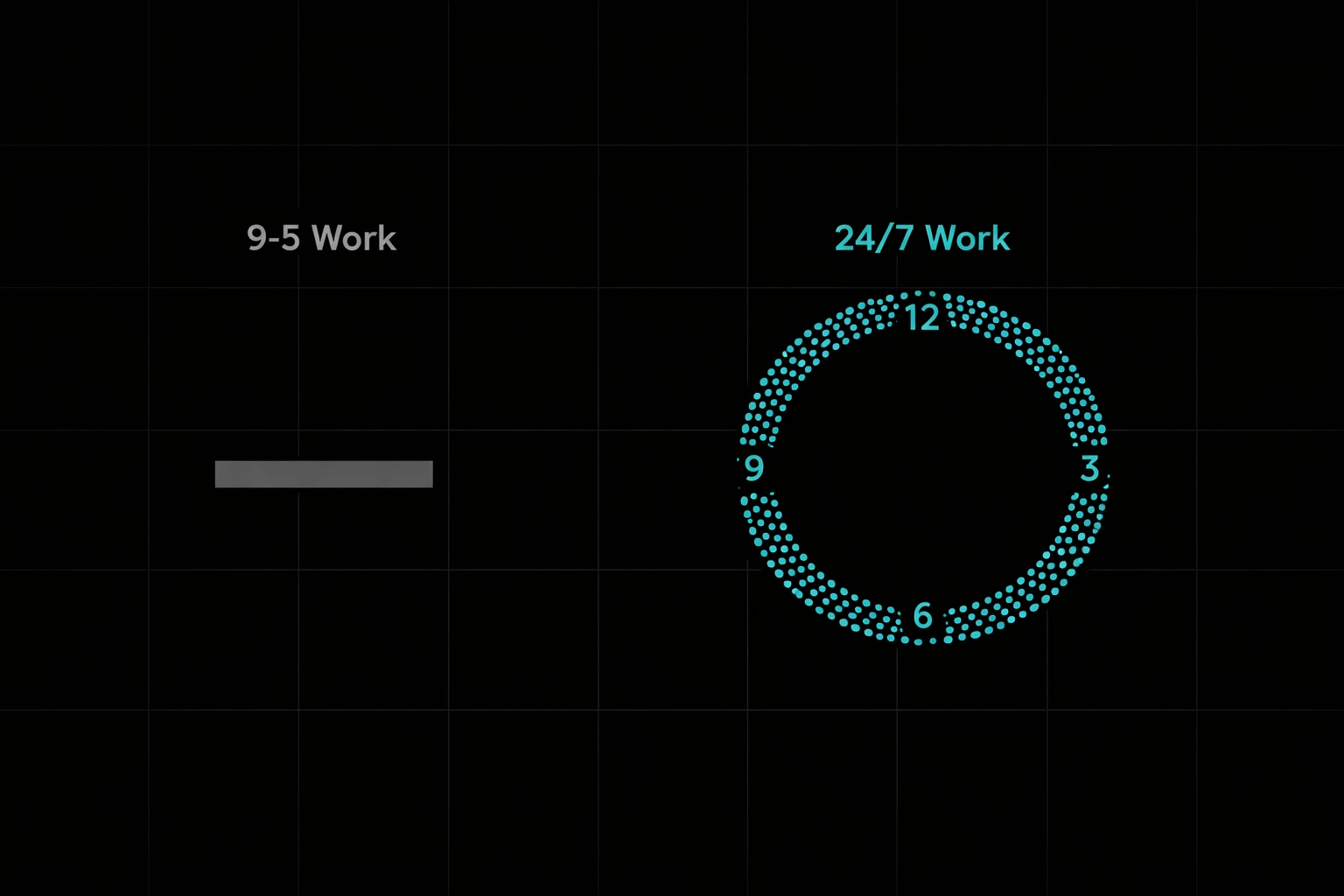
Your SDR takes PTO, gets sick, has off days where they're phoning it in. AI agents run consistently, every day, without variance in quality or effort.
The argument against AI has always been "but you need a human touch." And that's true: in the conversations that matter. But the research phase? The list building? The first touch email that 98% of people will ignore anyway? That's not where human creativity adds value.
Where humans add value is in the reply. The conversation. The qualification call. The demo. But you can't get to those conversations if you're spending 10 hours a week managing someone to send the first email.
The shift isn't about replacing humans: it's about redeploying your most expensive resource (you) away from managing repetitive tasks and toward the conversations that close deals.
"But What About the Human Touch?"
This is the objection every founder raises, and it's worth addressing head-on.
AI-generated emails are terrible when they're built on templates and spray-and-pray tactics. But so are human-written emails when your SDR is hitting send on 50 generic outreach messages before lunch to hit their daily quota.
The "human touch" isn't about who pressed send. It's about whether the email demonstrates you understand the recipient's specific problem. Whether you've done the research. Whether the message feels like it was written for them, not for everyone in their job title.
A human SDR working at scale (50-100 emails/day) can't do deep research on every prospect. They're pulling from templates, swapping in company names, and hoping for a 2% reply rate.
An AI agent with human oversight can do deep research on every prospect: pull recent funding announcements, job changes, competitor moves, tech stack signals: and draft personalized emails that you review and approve. The research is automated. The quality control is human.
You're not removing the human from the process. You're removing the human from the repetitive parts of the process so you can focus on the parts that actually matter: strategy, messaging, and closing the deals that come through.
The Math That Changes Everything
Let's put the full picture on the table:
Remote SDR (Year 1):
- Base salary: $55K
- Taxes and benefits: $16K
- Tools and data: $6K
- Recruiting and onboarding: $11K
- Management time (8 hrs/week × 50 weeks × $150/hr): $60K
- Total: $148K
AI Agent (Year 1):
- Platform cost: ~$3K-$5K/year (bring your own API keys)
- Your time (30 min/week × 50 weeks × $150/hr): $3,750
- Total: $8,750
The difference isn't just $139K in cash. It's getting your Sundays back. It's not waking up to Slack messages about why the sequence paused. It's spending 30 minutes a week reviewing and approving emails instead of 8 hours managing someone else's output.
For a pre-seed founder running on $500K in the bank and 12 months of runway, that $139K difference is another 3-4 months of runway. It's the difference between making it to your next fundraise or running out of cash while your remote SDR is still ramping.
What Actually Scales
The promise of hiring a remote SDR is that you'll finally have someone "owning" outbound so you can focus on product. The reality is that outbound still lives in your head: the messaging, the ICP, the positioning: and now you're just paying someone else to execute your strategy slower than you could yourself.
AI agents don't remove you from outbound. They remove the parts that don't require you: the research, the list building, the repetitive first-touch emails that need to go out at scale.
What remains is what you're actually good at: refining the message, closing the deals, and building a company worth buying from.
If you're spending 8-10 hours a week managing a remote SDR and still not seeing the pipeline you need, the problem isn't the person. It's the model.
Ramen handles the research, drafting, and sending: you approve every email before it goes out. No ramp time. No management overhead. Just outbound that runs while you build. See how it works.