
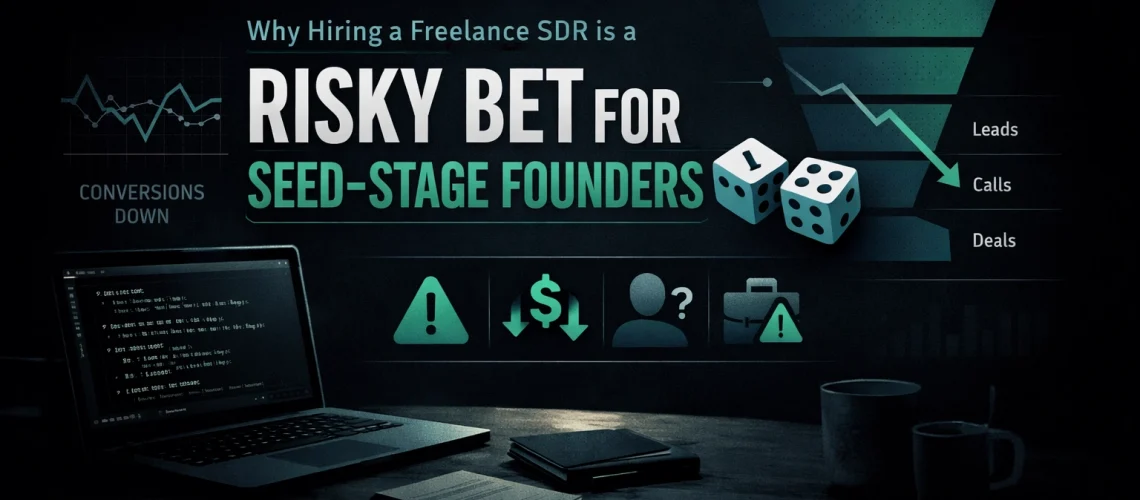
You need pipeline. Your runway is getting shorter. A full-time SDR costs $80-120K loaded, and you don't have that budget yet. So you start looking at freelance SDRs: $3-5K a month, no commitment, they bring their own tools. Sounds perfect, right?
Here's the reality: hiring a freelance SDR at seed stage is throwing money at a structural problem, not solving it. Most founders who take this path end up three months later with burned domains, zero qualified meetings, and the same pipeline problem they started with: except now they're also out $15K and have lost momentum.
The issue isn't that freelancers are bad at what they do. It's that what you need at seed stage and what freelance SDRs are built to deliver are fundamentally mismatched.
The Freelancer Knowledge Gap
SDRs are a scaling function, not a creation function. They're designed to execute a proven motion, not figure one out for you.
When you hire a freelance SDR, you're expecting them to understand your product deeply enough to have credible conversations, identify your ideal customer profile better than you do, craft messaging that resonates, and iterate based on what's working. That's not an SDR role: that's a founding sales role.
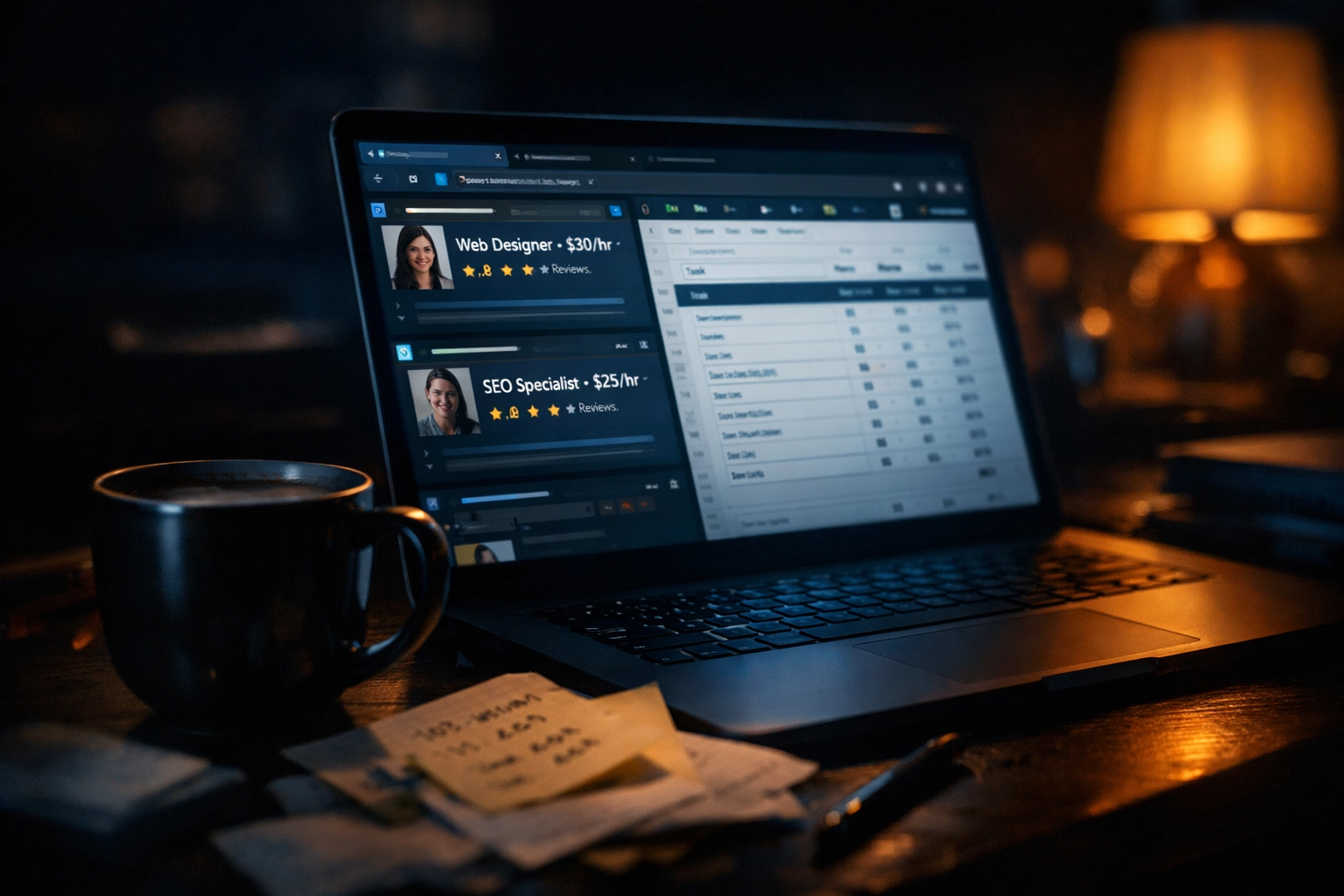
Most seed-stage founders don't yet have a repeatable sales process. You haven't validated your ICP. Your positioning is still evolving. You're learning what resonates in conversations. This means any SDR you hire: freelance or not: is walking into a situation where they lack the foundational inputs they need to succeed.
Here's what actually happens: The freelancer uses their standard templates. They target companies that fit a generic profile based on your industry. They book meetings. Your calendar fills up with prospects who sound interesting on paper but have zero intent to buy. You waste hours on discovery calls that go nowhere.
Three months later, you realize you've crowded your calendar with meetings that have no hope of converting to customers. The freelancer blames your product-market fit. You blame their execution. Both are partially right, but the core issue is that you hired a scaler before you had something to scale.
Domain Reputation Risks
Freelance SDRs typically work with multiple clients at once. That's their business model: spread risk, maximize revenue. But this creates a problem you might not see until it's too late: your domain reputation is in their hands, alongside five other clients' domains.
When a freelancer is managing outbound for multiple companies, they're juggling different tools, different sender profiles, different warming strategies. If they burn through their sending limits on another client's campaign, they might push harder on yours to hit their monthly numbers. If they're not carefully segmenting their sending infrastructure, a deliverability hit on one account can cascade to others.
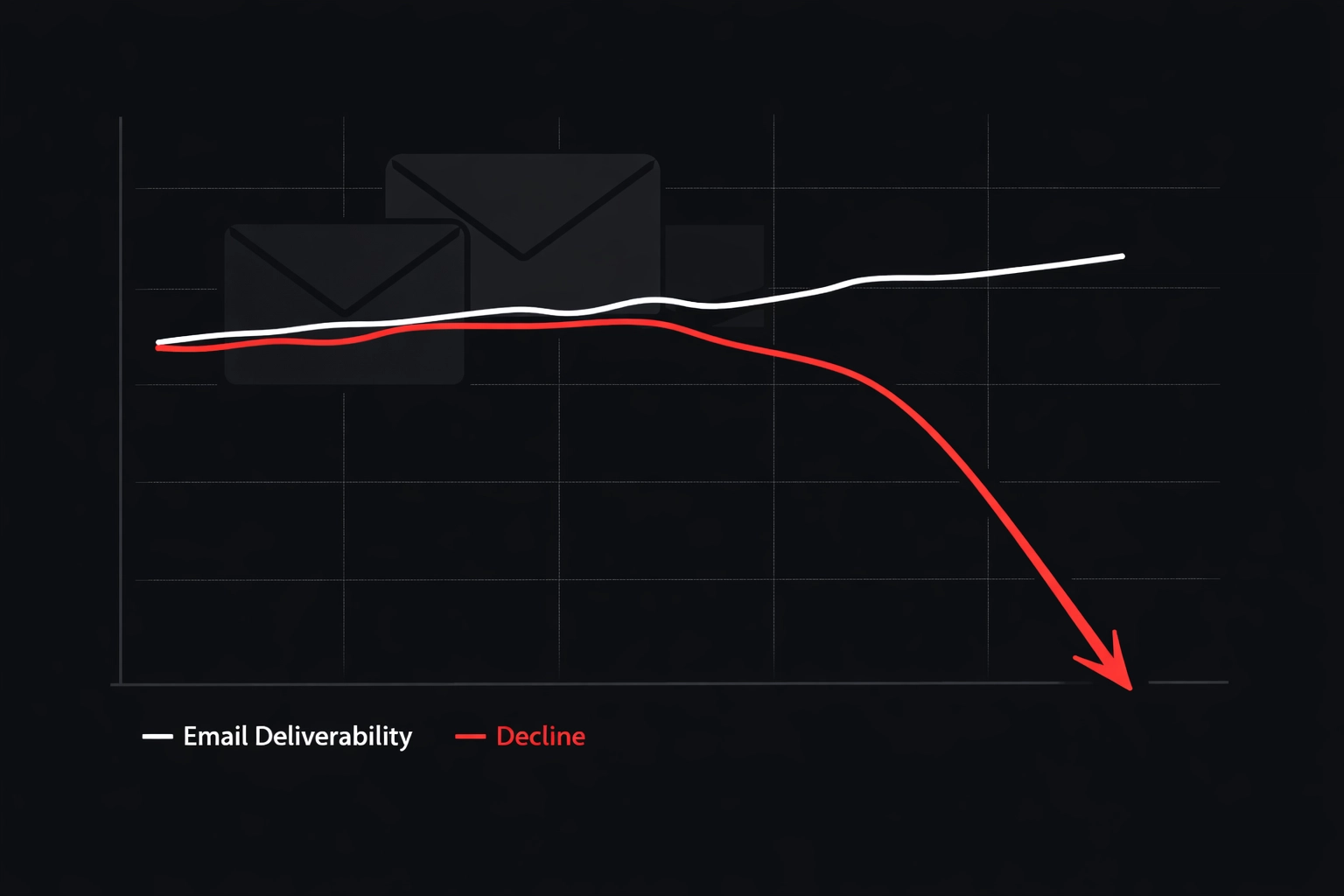
You won't know your domain is damaged until it's already happening. Your emails start landing in spam. Your reply rates drop from 2% to 0.3%. By the time you realize something's wrong, you're looking at weeks or months of domain rehabilitation: if it's even salvageable.
And here's the uncomfortable truth: a freelance SDR has no long-term stake in your domain health. If they burn your domain, they move on to the next client. You're the one left explaining to investors why your primary outbound channel is dead.
Why Consistency Beats 'Hired Guns'
The promise of hiring a freelance SDR is flexibility. The reality is inconsistency.
Freelance SDRs work when you've already proven the motion and need short-term support. They're a risk mitigation tool for companies who have a repeatable process and need to scale it temporarily: maybe during a product launch or when a full-time SDR is ramping.
That's the opposite of most seed-stage situations. You need someone who's going to iterate with you daily. Someone who'll test five different subject lines, analyze what's working, adjust messaging based on prospect feedback, and refine targeting based on which segments are responding.
A freelance SDR working 10-15 hours a week across multiple clients doesn't have the bandwidth for that level of iteration. They're executing a playbook, not building one with you.
Consistency matters more than experience at this stage. You need someone (or something) that's fully dedicated to your outbound motion, learning from every reply, every bounce, every conversation. A part-time freelancer can't deliver that, no matter how talented they are.
The Management Overhead You're Not Counting
Here's the part most founders underestimate: even a junior SDR requires structured weekly 1:1s, consistent coaching, and detailed performance feedback. That's true whether they're full-time or freelance.
With a freelance SDR, the management burden is often higher, not lower. You're coordinating across time zones. You're explaining context that a full-time person would absorb naturally. You're trying to give feedback on emails that were sent three days ago because they batch their work for efficiency.

The math breaks down quickly. If you're spending 5-7 hours a week managing the freelancer: reviewing their work, providing context, analyzing results, adjusting strategy: you're not actually saving time. You're just paying someone else to do the execution while you still own all the strategic overhead.
And measurement becomes nearly impossible. The metrics that matter: cost per lead, cost per opportunity, actual ROI: require tight integration with your CRM and a level of reporting rigor that most freelance arrangements don't support. You end up tracking activity metrics (emails sent, calls made) instead of actual results, which means you don't know if it's working until months later when you realize you've burned budget with nothing to show for it.
The Control Problem (And Why It's Not What You Think)
The biggest objection to alternatives like AI SDR platforms is usually about control. Founders worry that automation means giving up oversight, that they won't be able to review every email or adjust messaging on the fly.
But here's the irony: you have less control with a freelance SDR than you think.
When you hire a freelancer, you're trusting them to represent your brand in hundreds of conversations you'll never see. You're relying on their judgment about which prospects are worth pursuing. You're hoping they'll flag important feedback or insights from replies. Most of the actual work happens in a black box.
What you actually need at seed stage isn't a freelancer who operates independently: it's a system that keeps you in the loop without drowning you in execution. You need to approve messaging before it goes out. You need to see every prospect that's being targeted. You need the ability to course-correct based on what's working.
What Actually Works at Seed Stage
The path forward isn't hiring a cheaper version of an SDR. It's building a system that handles the execution layer while keeping you in control of the strategy and quality.
Start with founder-led sales. Validate your ICP. Build a repeatable process. Once you know what works, then you can think about scaling it: whether that's through a full-time hire, a more structured engagement, or tools that help you do more without the overhead.
If you're considering a freelance SDR because you can't justify $80-120K for a full-time hire, you're solving for the wrong constraint. The real constraint isn't budget: it's time and focus. You need a way to scale outbound that doesn't require you to manage someone else's workflow or gamble your domain reputation on a part-time arrangement.
That's exactly why we built Ramen. Every email gets your approval before it sends. The research is handled for you: deep, specific insights on every prospect, not template blasting. You control the costs through your own API keys, no markup. And most importantly, you're not managing another person's schedule or wondering if they're prioritizing your company over their other clients.
It's the consistency and dedication of an SDR, without the flight risk, the management overhead, or the $100K price tag. See how it works.