
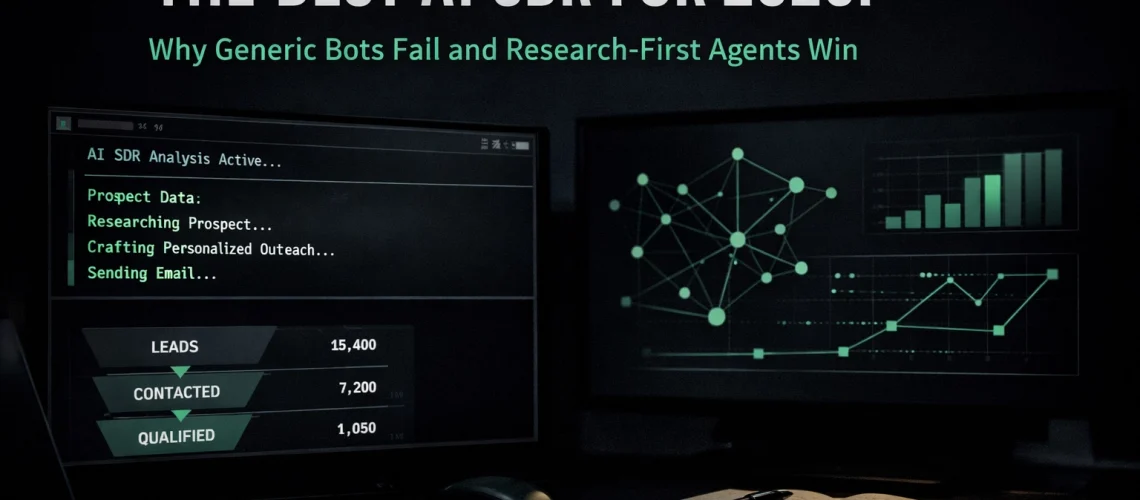
You've seen the LinkedIn ads. The founder testimonials. The dashboards showing thousands of emails sent. Every AI SDR tool promises to replace your sales team, automate your outreach, and flood your calendar with demos.
Here's what they don't show you: the 0.8% reply rate, the spam complaints, and the burned domains.
The AI SDR market in 2026 is flooded with generic bots that optimize for activity metrics instead of actual meetings. They blast templates, track open rates, and call it personalization because they scraped a prospect's job title from LinkedIn.
Real AI SDRs work differently. They research first, reach out second, and keep humans in the loop. Here's what actually separates the best AI SDR tools from the spam machines.
What to Look For in an AI SDR (Buyer's Guide)
Before we talk about what fails and what wins, here's what you should evaluate when choosing an AI SDR platform:
Meeting conversion rate, not email volume. The best AI SDRs book actual meetings, not just generate activity. Top performers deliver 70% more conversions than generic bots because they focus on quality over quantity.
Research depth before outreach. Does the tool identify buying signals like hiring spikes, tech stack changes, funding announcements, or website traffic surges? Or does it just pull job titles from a database and call it targeting?
Human approval workflow. The best platforms don't send emails without your review. They draft, research, and prepare: but you approve. This isn't a limitation, it's how you maintain quality at scale.
Multi-channel execution with context. Your prospects aren't just on email. The best AI SDRs manage conversations across email, LinkedIn, and phone while maintaining continuity. They don't reset the conversation every time the channel changes.
Learning from your sales cycle. Does the tool improve over time based on what actually converts for your business? Or does it run the same playbook for every customer forever?
Pricing transparency. Watch out for platforms that lock you into high monthly fees while keeping API costs hidden. The best tools let you bring your own keys and control your spend.
Why Generic Bots Fail
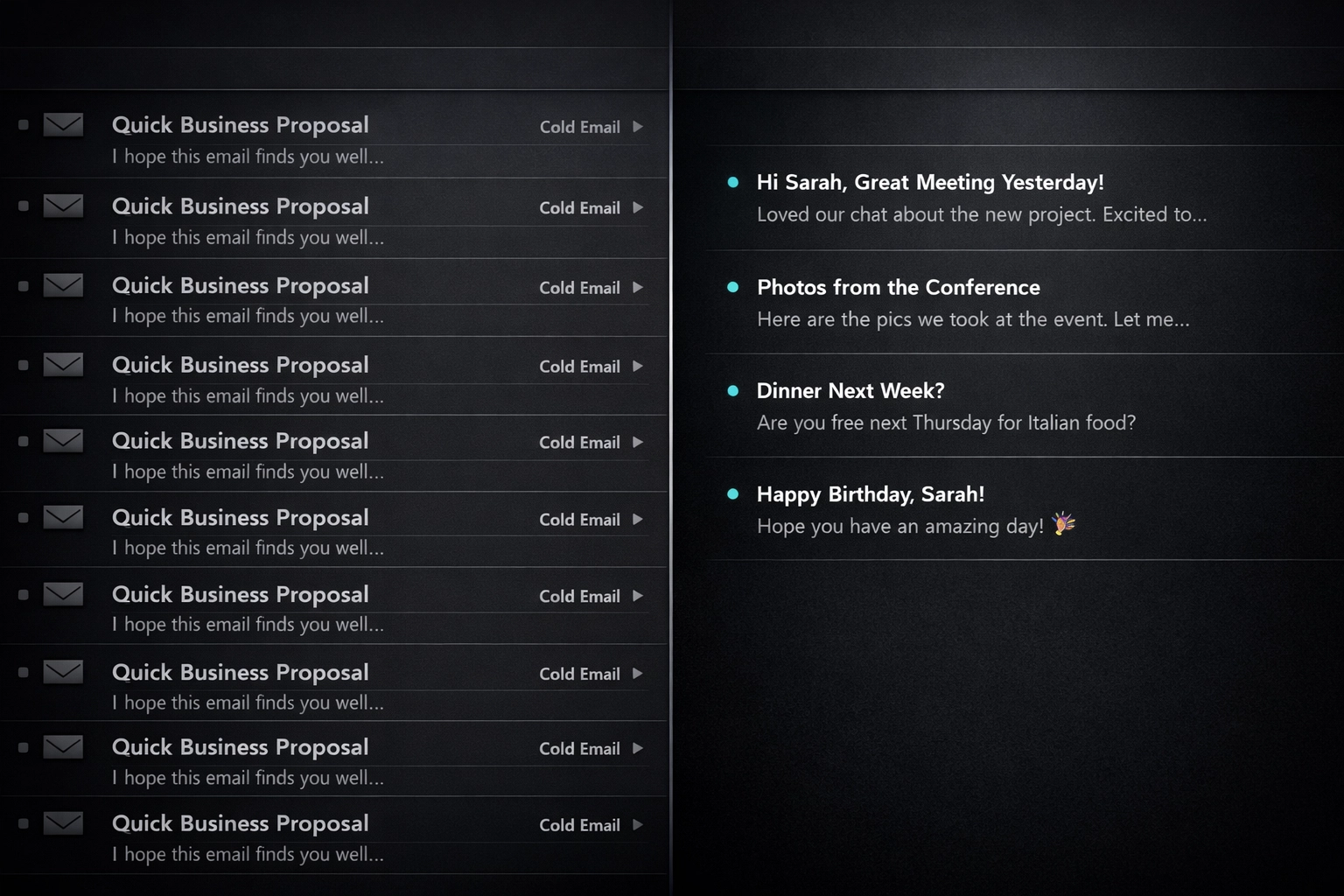
Generic AI sales assistants fail because they optimize for vanity metrics.
They track emails sent. Sequences completed. Opens and clicks. All activity, zero outcomes.
Here's the problem: activity doesn't equal pipeline. You can send 10,000 emails and book zero meetings if you're reaching the wrong people with the wrong message at the wrong time.
Generic bots work from templates. They personalize by inserting a company name or job title. They blast everyone who matches a demographic filter. They have no concept of intent, timing, or readiness to buy.
The result? Your prospects get yet another "I noticed you're a VP at [COMPANY]" email that sounds like every other AI-generated pitch they received that week.
Even worse, these bots burn your domain reputation. High volume + low engagement = spam folder. Once you're flagged, even your best emails don't land.
The platforms that survived pilot programs in 2025-2026 weren't the ones generating the most activity. They were the ones booking actual meetings. Because at the end of the quarter, your board doesn't care how many emails you sent: they care about pipeline.
Why Research-First Agents Win
Research-first AI SDRs flip the script. They start with intent, not volume.
Instead of blasting everyone in your target demographic, they identify high-intent prospects before reaching out. They look for buying signals:
- Company just raised a Series A and is hiring aggressively
- Tech stack changed to include tools that typically precede your solution
- Leadership team posted about a problem you solve
- Website traffic spiked after a product launch
These signals matter because timing is everything in outbound. Reaching someone who's actively looking for a solution beats reaching 100 people who aren't.
The best AI SDRs build prioritized prospect lists with context. They don't just tell you who to contact: they explain why each account matters right now. That context becomes the foundation for outreach that actually resonates.
Research-first agents also personalize at a depth that templates can't match. They're not inserting variables. They're writing emails based on specific company situations, recent news, and genuine relevance.
The data backs this up. Platforms using research-first frameworks report 317% annual ROI and book 70% more meetings than generic activity-based tools. The difference isn't the AI: it's the approach.
The Human-in-the-Loop Advantage
Here's where most AI SDR vendors get defensive: the best platforms don't send emails without human approval.
They position this as a limitation. "Our AI is so good, you don't need to review anything!"
That's not a feature. That's how you end up in spam folders or sending tone-deaf emails that damage your brand.
Human-in-the-loop isn't a bottleneck: it's quality control at scale. The AI does the research, writes the draft, and identifies the best prospects. You review, adjust, and approve.
This workflow lets you maintain your voice while operating at scale. The AI handles the time-consuming research and drafting. You handle the judgment calls that require context the AI doesn't have.
It also means you can catch edge cases. Maybe the prospect just left a competitor and isn't ready to hear from you yet. Maybe they're dealing with a PR crisis and now isn't the time. Maybe the AI drafted something technically accurate but slightly off-tone for your brand.
Human approval doesn't slow you down: it prevents the mistakes that would force you to start over with a new domain and a burned reputation.
The founders who succeed with AI SDRs treat them as research assistants, not replacement salespeople. The AI scales your effort. You scale your judgment.
Why Configuration Beats Templates
Templates assume all prospects are the same. Configuration assumes every sales motion is different.
Most AI SDR tools give you email templates with merge tags. You pick a sequence, customize a few lines, and hit send. It's fast to set up, but it's rigid. Every prospect in that sequence gets the same message structure, the same follow-up timing, the same call-to-action.
Configurable agents work differently. Instead of templates, you define the research criteria, the messaging strategy, and the decision logic. The agent adapts based on what it finds.
For example:
- If a prospect just raised funding, the message focuses on growth stage challenges
- If they're hiring for specific roles, the message addresses team scaling
- If they posted about a problem on LinkedIn, the message directly references that pain point
This isn't "personalization" in the traditional sense: inserting a job title or company name. It's adaptive messaging based on real context.
Configuration also means you can run multiple motions simultaneously. You're not locked into one sequence for all prospects. You can have different approaches for different segments, all running in parallel, all learning from what converts.
The setup takes longer than clicking through a template library. But the results are night and day. Configured agents book meetings. Template bots generate activity reports.

"But Isn't This Complex to Set Up?"
Yes. And that's actually a good thing.
The AI SDR tools that promise "works out of the box, no setup required" are the ones sending generic spam. Because good outbound requires specific understanding of your market, your ICP, and your value proposition.
The best AI SDR platforms make configuration straightforward, not automatic. They guide you through defining:
- Which buying signals matter for your prospects
- What messaging angles resonate with your ICP
- How to structure multi-touch sequences that feel natural
- When to use which channel based on prospect behavior
This takes a few hours upfront. In exchange, you get an agent that actually understands your business instead of running a one-size-fits-all playbook.
The complexity isn't in using the platform day-to-day. Once it's configured, the AI handles research and drafting while you handle approvals. The complexity is in the initial setup: and that's where quality gets built in.
If you're a founder doing your own outbound, you're already spending Sunday nights researching prospects and writing cold emails. Research-first AI SDRs don't eliminate that work: they scale it. You spend those hours configuring the agent instead of manually researching prospects.
The ROI math is simple. If you're spending 10 hours a week on outbound research and writing, a properly configured AI SDR gives you that time back while improving output quality.
What This Means for Early-Stage Teams
If you're pre-seed or seed stage, you probably can't afford an $80-120K SDR who takes three months to ramp. You're doing your own outbound between product builds and fundraising calls.
The best AI SDR for you isn't the one with the most features. It's the one that matches how you already work:
You research prospects manually today → Research-first agent finds high-intent leads for you
You draft personalized emails → Agent writes drafts based on deep research, you approve
You can't afford to burn your domain → Human-in-the-loop prevents spam and maintains quality
You need meetings, not metrics → Agent optimizes for conversions, not activity
Ramen is built for this exact scenario. Research-first AI that identifies prospects showing buying signals, drafts personalized outreach based on deep context, and puts you in the approval seat before anything sends. You bring your own API keys, so you control costs. The agent learns from what converts for your business specifically.
It's not fully autonomous. It's not zero-setup. But it books meetings instead of generating activity reports. And if you're a founder who can't justify a full-time SDR yet, that's what actually matters.
Start your free trial and see how research-first outreach changes your conversion rates.