
You've finally got enough runway to hire SDR. Maybe it's $60K base plus commission, maybe it's $50K for someone hungry. You post the role, run interviews, and three weeks later you've got your first sales development rep.
Then comes month one: onboarding, setting up their stack, teaching them your ICP. Month two: they're writing emails, but the reply rate is 3%. Month three: they're finally getting the hang of it, booking a few demos. By month four, you've spent $30K and have maybe 8 qualified meetings to show for it.
Here's what nobody tells you about that first hire SDR: the cost isn't just salary. It's the 90-day ramp where you're still doing half the work yourself.
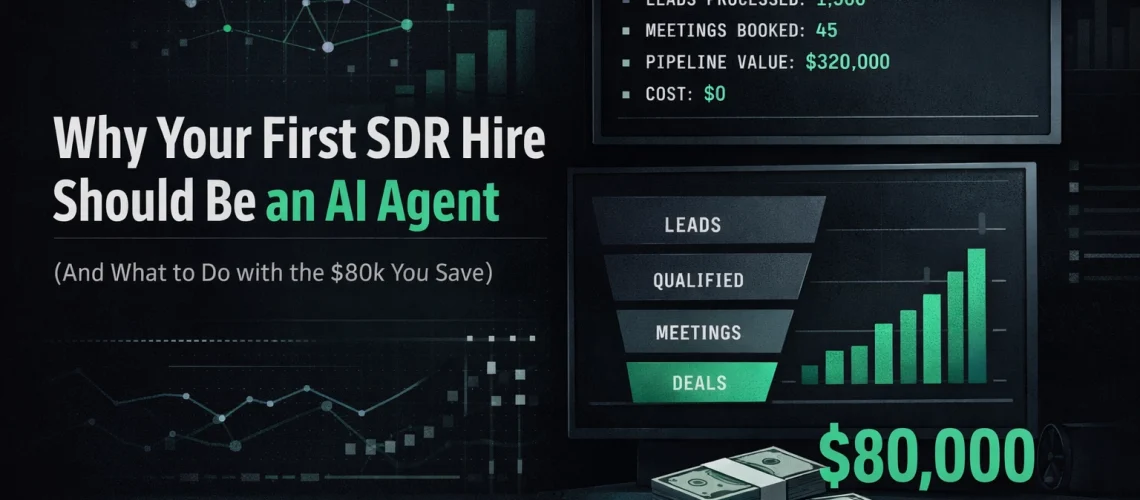
The Real $80K Math
When you hire SDR, the loaded cost isn't what you put in the offer letter. Here's what you're actually signing up for:
Base salary: $55K (conservative for a junior SDR)
Commission structure: $15K-25K if they hit quota
Payroll taxes + benefits: 25-30% on top ($16K-20K)
Software stack: $3K/year (Apollo, Outreach, LinkedIn Sales Nav)
Training time: 60 hours of your time at $150/hour founder cost = $9K
Ramp period cost: 3 months at half productivity = $15K in lost opportunity
Total first-year cost: $113K-128K
And that's assuming they work out. If they don't, add recruiting costs and start over.
AI agents flip this model completely. You're live on day one. No ramp period. No hope that someone "gets it" by month four. You configure the research parameters, approve the first 20 emails to calibrate tone, and you're running.
The cost? Your API keys (typically $200-400/month for OpenAI + data enrichment) and the platform fee. Call it $6K for the year. You just saved $107K.

Training an Agent vs. Training a Human
When you train a human SDR, you're teaching them:
- Your ICP (which they'll misunderstand for the first month)
- Your value prop (which they'll butcher in their own words)
- Your competitors (which they'll mention at the wrong time)
- Email cadence strategy (which they'll either overdo or underdo)
- When to call vs. when to email (which they'll get wrong 60% of the time)
- How to research accounts (which they'll skip when they're behind on quota)
This process takes 6-8 weeks if they're good. Longer if they're not.
Training an AI agent means writing clear instructions once. Here's what that actually looks like:
ICP definition: You write the exact criteria. Company size, tech stack, funding stage, buyer title. The agent doesn't "interpret" it: it follows it.
Research depth: You set the parameters. Pull the last funding round, identify the tech stack, find recent job postings, scan their blog for pain signals. It does this for every single prospect, every single time.
Personalization framework: You define the structure. Reference a specific pain point, tie it to a recent company event, explain how you solve it. The agent generates variations, you approve the angle.
Messaging consistency: An SDR rewrites your value prop in their voice. An agent uses your exact framing, every time.
The difference? An SDR's quality degrades when they're tired, behind on quota, or distracted. An agent's quality is consistent across email 1 and email 1,000.
One founder using AI-enhanced SDR workflows saw response rates jump from 12% to 28% because the research quality stayed high across every single email. Their human SDRs used to spend 70% of their time on research and writing: now they spend it on high-value conversations.
What to Do With the $80K You Save
This is where most founders miss the point. Saving $80K isn't about pocketing it. It's about redeploying it into things that actually move the business forward.
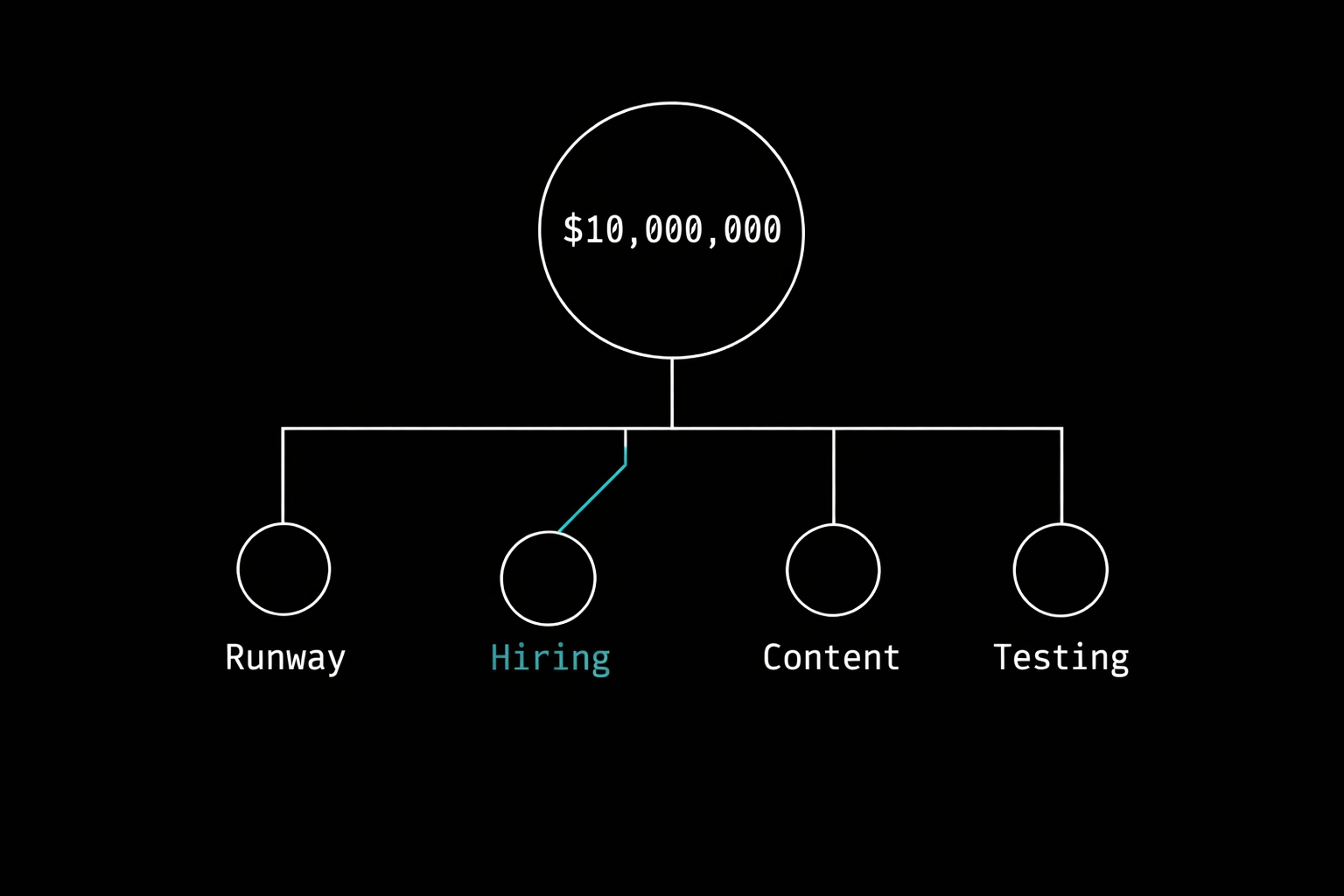
Extend your runway by 4 months. At the seed stage, every month matters. Four extra months means four more chances to hit the metrics that unlock your next round. You're not just saving money: you're buying time.
Hire a product person instead. If you're drowning in outbound while trying to build, the bottleneck isn't more outreach capacity. It's that you're doing two jobs badly. An AI agent handles the outbound. You hire the PM or engineer who ships the feature that closes deals.
Invest in content or brand. Outbound gets you meetings. Content gets you inbound. The founders who win aren't picking one or the other: they're doing both. Take half that $80K and hire a contractor who writes content that ranks. Now you've got both engines running.
Test three ICPs instead of one. Human SDRs are expensive to retrain when you pivot. AI agents reconfigure in an afternoon. Want to test enterprise vs. mid-market? Run both motions simultaneously. One founder ran three separate outbound motions: vertical SaaS, fintech, and healthcare: and discovered their best ICP wasn't the one they expected.
Run paid pilots with early customers. The fastest way to prove value isn't a free trial. It's a paid pilot where the customer has skin in the game. Use the savings to offer a discount that gets them to commit, then prove ROI.
"But What About Research Quality?"
This is the objection that stops most founders from considering AI agents as their first SDR hire: "Won't the research be surface-level? Won't prospects smell the automation?"
Fair question. Here's the reality.
Bad AI outreach is obvious. It's the "I noticed your company is doing interesting things in the [INDUSTRY] space" email. It's generic, it's lazy, and it doesn't work.
Good AI outreach is indistinguishable from human research. It pulls the prospect's latest LinkedIn post, references a recent funding announcement, identifies the tech stack from job postings, and connects those signals to a specific pain point.
The quality gap isn't AI vs. human. It's configured vs. lazy.
A human SDR who's behind on quota will skip the deep research. They'll send 80 emails with surface-level personalization because they need to hit volume. An AI agent doesn't get behind on quota. It does the same depth of research on email 80 as it did on email 1.
Here's what good research looks like in practice:
- Pulling the prospect's GitHub activity to see what they're building
- Scanning their company blog for pain signals (hiring posts, product updates, pivot announcements)
- Cross-referencing their tech stack with your integration list
- Identifying recent leadership changes that signal budget availability
- Finding mutual connections or investors for warm intro angles
The founders who say "AI emails feel automated" are usually the ones who haven't seen what's possible when you configure it right. Response rates don't lie. One company saw technical validation calls increase by 65% and sales cycles shorten by 40% when they used AI agents to pre-qualify leads based on deep technical fit.
The First-Hire Decision
Here's the framework: hire SDR when you need judgment. Deploy AI agents when you need capacity.
If your sale is complex, relationship-heavy, and requires reading the room on a discovery call, you need a human. But that human shouldn't be spending 70% of their time on research and email writing.
If your bottleneck is pipeline volume, getting in front of enough qualified buyers, and testing messaging across multiple segments, you need capacity. AI agents give you full capacity on day one.
For most seed-stage founders, the answer is obvious. You don't have pipeline. You have 47 other things on your plate. You can't afford to spend $113K and three months hoping someone "gets it."
You need meetings this month, not next quarter.
Most founders hire SDR because that's what you're supposed to do at this stage. You've got a little bit of funding, you need pipeline, so you hire someone to build it.
But the math doesn't work anymore. Not when AI agents can do the research, write the emails, and book the meetings: starting today, not in 90 days.
The question isn't whether AI agents can replace your first SDR hire. It's what you're going to build with the $80K you save. See how Ramen works and get your first campaign live this week.