
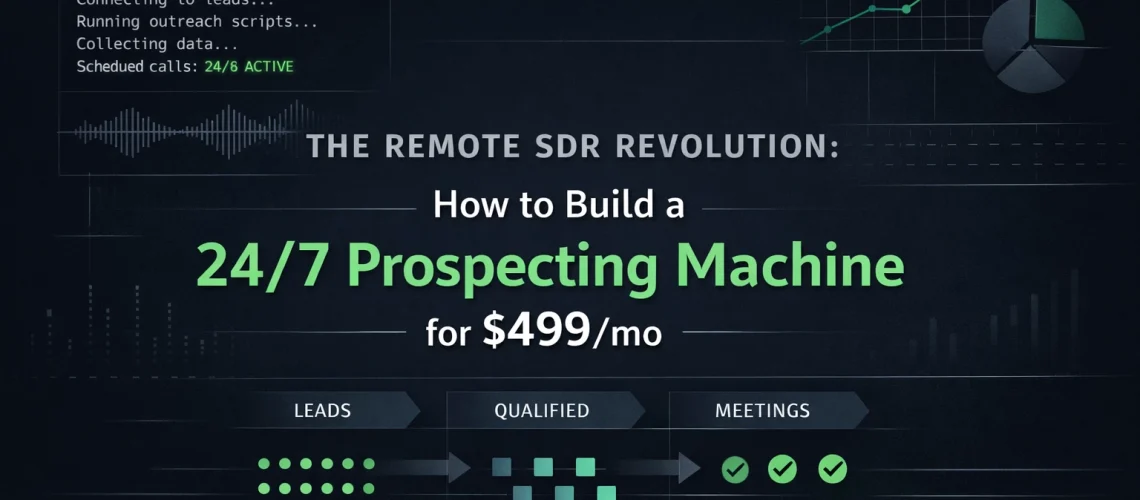
You hired a remote SDR in the Philippines. Great rates, $2,500/month instead of $6,000. You're feeling smart about this.
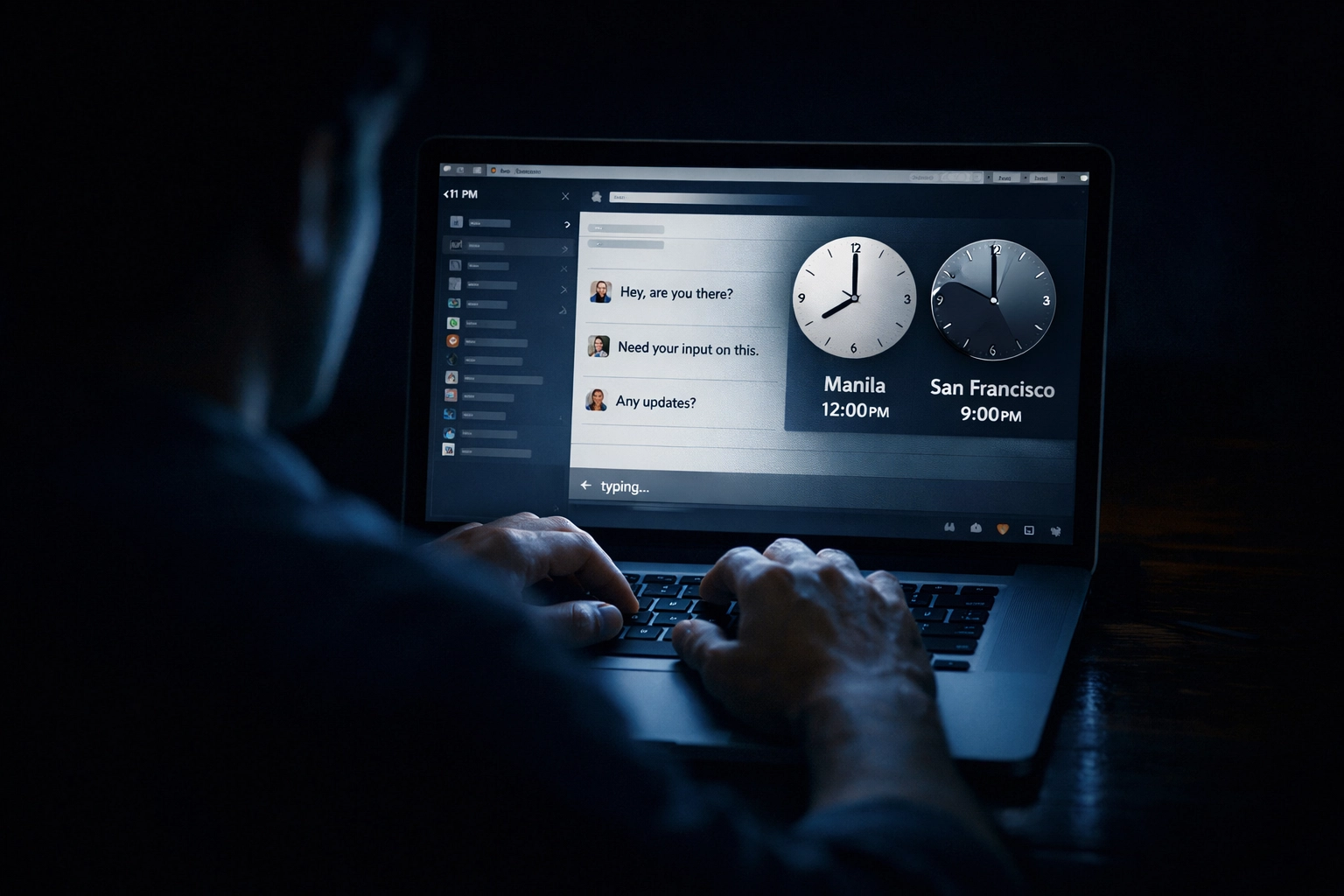
Then reality hits. They're 13 hours ahead. Your morning standup is their midnight. When you need to review email copy urgently, they're asleep. When they have questions about a prospect, you're asleep. You end up spending 90 minutes every evening doing handoffs and quality checks because you can't just tap them on the shoulder.
Oh, and they quit after four months because they got a better offer. Now you're back to square one, posting on Upwork, screening candidates, training someone new for six weeks before they can even touch your CRM.
This is the offshore remote SDR trap. You save money on salary but pay in management overhead, time zone friction, and the constant threat of turnover. The math stops making sense when you factor in your time.
The Actual Cost of a Remote SDR
Let's break down what you're really paying for when you hire a remote SDR:
$2,500-4,000/month base salary for a decent overseas rep. Add another $500-800 for tools (LinkedIn Sales Navigator, email verification, sequence software, CRM seats). Factor in your time: two hours per day minimum for management, review, and training. If your time is worth $100/hour, that's $4,000/month in opportunity cost.
Total real cost: $7,000-8,800/month for one remote SDR who works eight hours in a time zone that doesn't overlap with yours.
Now add the 90-day ramp time. The first month, they're learning your product and ICP. Month two, they're fumbling through objections and writing bad email copy you have to rewrite. Month three, they're finally hitting stride: and that's when they start interviewing elsewhere because they've built marketable skills on your dime.
The remote SDR model works for companies with sales managers who can dedicate 20+ hours per week to oversight. For a solo founder building product and running the company? It's a time black hole.
Time Zones vs. 24/7 Operation
Here's what most founders don't realize until they've lived it: time zone arbitrage sounds great until you need real-time collaboration.
Your remote SDR sends 50 emails in their morning. By the time you wake up and check results, 12 hours have passed. Three prospects replied with questions. Your SDR answered them: but used the wrong positioning because they don't have your deep product knowledge. Now you're doing damage control with a warm lead who got confused messaging.
Or worse: a prospect replies saying they want to book a demo. Your SDR is offline. By the time they wake up and respond 14 hours later, that prospect has moved on or booked with a competitor who responded in two hours.
AI agents don't have this problem. They monitor replies in real-time. When a prospect engages, the system flags it immediately for your review. You can jump in while the conversation is hot, not 12 hours later when the moment has passed.
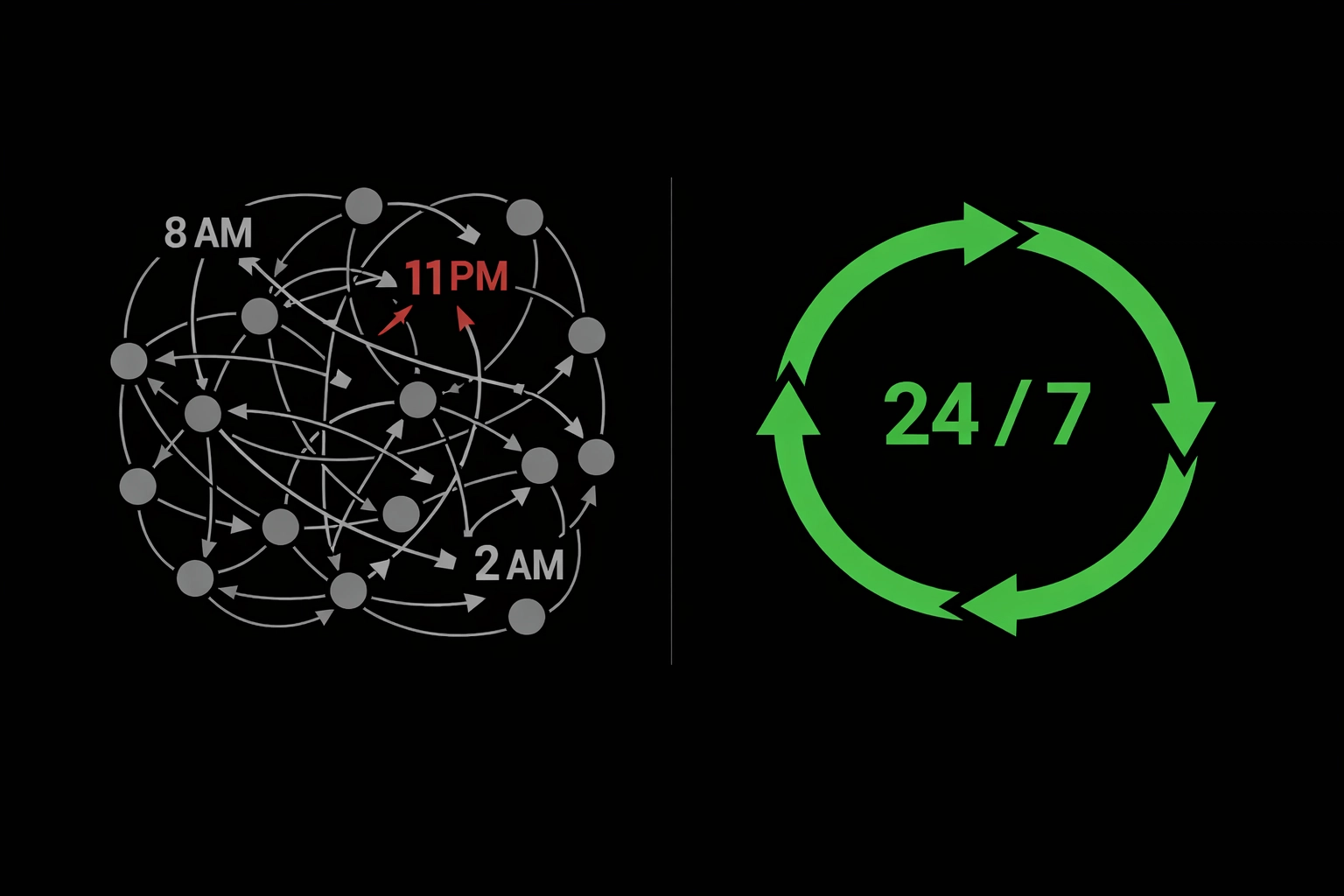
And they don't stop working when you close your laptop. An AI SDR continues researching prospects, crafting personalized emails, and monitoring responses at 2 AM, on Sundays, during holidays. No time zone coordination. No waiting for someone to wake up. Just continuous prospecting that matches your business rhythm, not someone else's schedule.
The $499/mo Breakthrough
Traditional remote SDR math: $7,000-8,800/month for one rep working eight hours in their time zone.
AI SDR math: $499/month base + your own API costs (roughly $100-200/month for OpenAI and email infrastructure). Total: $600-700/month for unlimited prospecting capacity.
But here's what makes this a real breakthrough instead of just a cost swap: you're not managing a person, you're configuring a system.
No daily standups where you explain the same ICP criteria for the third time. No handoff meetings at midnight your time. No rewriting email sequences because your SDR didn't capture your voice. No panic when they give two weeks' notice right before your big push.
Instead, you spend two hours upfront configuring your AI agent: defining your ICP, setting your outreach parameters, approving your messaging. Then it runs. You review flagged conversations and approve emails before they send (because you should never fully automate outbound), but you're not explaining basic concepts or managing someone's workload.
The time arbitrage is real. A remote SDR costs you 10-15 hours per week in management. An AI SDR costs you 3-5 hours per week in review and optimization. That's 20-40 hours per month you get back to build product, close deals, or fundraise.
For a solo founder, that's the difference between drowning and staying afloat.
But What About Quality?
Here's the objection everyone raises: "AI emails are generic spam. A human SDR will write better, more personalized outreach."
In theory, sure. In practice? Most remote SDRs are running the same template playbook as everyone else. They personalize the first line with a generic observation from LinkedIn ("I saw you recently posted about hiring…") and blast the same pitch 50 times a day.
The quality ceiling for remote SDRs is lower than you think. Unless you're paying $6,000+/month for a senior US-based SDR, you're getting someone who's learning on the job. They don't have deep sales experience. They're following your scripts and your training, which takes months to sink in.
AI agents built for research-first outreach are doing something different. They're analyzing each prospect's company, recent activity, and pain points before crafting a message. No template blasting. No generic first lines that could apply to anyone.
The catch: and this is critical: is that you still need to be in the loop. The best AI SDR systems show you each email before it sends. You approve the research, refine the messaging, and make judgment calls a machine can't make. This isn't full automation. It's augmentation.
That human-in-the-loop model means you get AI's scale and consistency with your judgment and voice. A remote SDR gives you their judgment (probably worse than yours) with human limitations on volume.

When Remote SDRs Still Make Sense
This isn't about replacing every sales hire with AI. There are scenarios where a human remote SDR is still the right call:
If you have a sales leader who can manage them full-time. Someone who's done SDR management before, has the time to train and QA daily, and can build a proper onboarding program. If that's you, great: hire two remote SDRs and build a team.
If you're doing high-touch, complex sales cycles where every conversation needs deep customization and discovery. AI excels at volume plays where messaging can be researched and personalized but doesn't require extensive back-and-forth before booking.
If you've already validated your outbound motion and know exactly what works. You have proven sequences, clear ICP criteria, and a dialed-in process. Now you just need hands to execute at scale.
But if you're a solo founder still figuring out your ICP, testing messaging, and trying to get to 10 demos a month without spending 40 hours on outbound? The remote SDR model is overkill: and a time trap.
What This Actually Looks Like
Here's what 24/7 prospecting looks like in practice:
Monday morning: You review the 15 prospects your AI agent researched over the weekend. You approve 12, refine messaging on 3, and hit send. Total time: 20 minutes.
Tuesday afternoon: A prospect replies with questions. Your AI flags it immediately. You jump in, answer directly (because this is a warm lead worth your time), and book the demo. If you'd been waiting for a remote SDR to wake up and relay the message, you'd have lost 12 hours.
Thursday evening: You want to test a new angle for enterprise buyers. You adjust your agent's research parameters and messaging template. It starts testing immediately: no need to schedule training or explain the new approach three times.
Saturday night: You're not doing outbound. Your AI agent is. It's researching prospects, queuing personalized emails, and preparing Monday's batch. You're watching a movie.
This is what gets your Sundays back. Not full automation where you set-and-forget, but a system that works on your schedule instead of forcing you onto someone else's.
The Real Question
The real question isn't "Can AI replace a remote SDR?" It's "Do you need the overhead of managing a person right now?"
If you're pre-seed or seed, burning runway, and trying to get to product-market fit while building pipeline: you probably don't. You need something that moves at your pace, doesn't require 15 hours of management per week, and costs $700/month instead of $8,000.
A 24/7 AI prospecting system won't solve bad positioning or a broken ICP. But if you know who you're selling to and need to reach them consistently without hiring a team you can't afford yet? That's where the math changes.
You get your time back. You keep control of your messaging. And you stop waking up to a Slack backlog from someone 13 hours ahead asking questions you already answered twice.
Human SDRs aren't going anywhere. But for solo founders in the earliest stages, the remote SDR trap: cheap on paper, expensive in reality( might not be the move anymore.)