
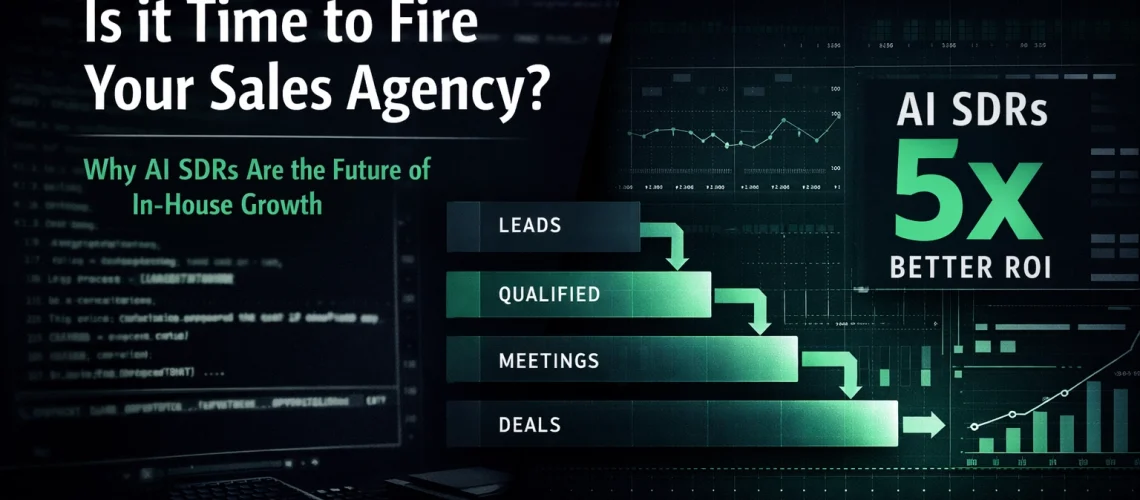
You're paying $8,000 a month for "qualified leads" and getting three discovery calls. Two ghost you after the intro. The third tells you they're "just exploring options" and goes dark for six months.
Your agency contact says the ICP needs adjustment. Or maybe it's your messaging. Or the market's just tough right now. Meanwhile, you have zero visibility into what they're actually doing with your $96K annual retainer.
Sound familiar?
Most lead gen agencies operate in a black box by design. You pay for activity: emails sent, calls made, "touches" logged: but you never own the data, the relationships, or the infrastructure. The moment you stop paying, everything evaporates.
The Real Cost of Agency SDRs Goes Beyond the Retainer
Let's talk actual numbers. A typical B2B lead gen agency charges $6,000-$12,000 per month with a 3-6 month minimum commitment. That's $18,000-$72,000 before you see any meaningful results.
But the hidden costs hurt more:
Zero data ownership. The prospect lists they built? Gone when you leave. The email sequences that finally started working? Agency property. The domain reputation they've been warming up for months? Not transferable.
Misaligned incentives. Most agencies get paid whether your demos convert or not. They're optimized for email volume and response rates, not actual pipeline. You need deals closed. They need activity metrics that justify their invoice.
SDR costs that compound over time. If you ever want to bring this function in-house, you're starting from scratch. New domains, new infrastructure, new prospect research. The agency didn't build anything for you: they built it for themselves and rented you access.
A human SDR hire costs $66,260 annually in salary alone, before benefits, taxes, training, or tools. They handle 50-100 leads per day. They stay in the role an average of 14 months, meaning you're constantly hiring and ramping new people.
Agencies know this math. That's why they position themselves as the "easier" option. No hiring headaches, no management overhead, just plug and play.
Except you're not playing. You're renting someone else's game.

Why Agencies Resist Giving You Transparency
Here's what most agencies won't tell you: deep transparency makes them replaceable.
If you could see exactly how they're researching prospects, which messaging angles work, which sequences get responses, and which data sources convert best: you'd realize you could replicate it yourself.
So they give you surface-level dashboards. Emails sent: 4,287. Responses: 73. Calls booked: 12. But they won't show you:
- The actual prospect research criteria that separates good leads from garbage
- Which personalization tactics are driving replies
- The specific pain points that resonate in intro emails versus follow-ups
- How they're handling objections in real-time conversations
The model depends on information asymmetry. You pay for their "expertise," which really means you're paying for your own ignorance of the process.
The AI SDR Alternative: Control + Data Ownership
AI SDRs flip this entire equation.
Instead of renting access to someone else's operation, you build your own prospecting infrastructure from day one. Every lead researched belongs to you. Every email sequence you test becomes part of your institutional knowledge. Every insight about your ICP gets captured in your system, not theirs.
The economics are fundamentally different. An AI agent can process thousands of leads daily at a fraction of traditional SDR costs. Not because it's "replacing humans": it's not: but because it's handling the repetitive research and initial outreach that burns out human SDRs in the first place.
Sales teams using AI in their workflows report higher win rates and more closed deals. In documented pilots, reps handled 20 qualified leads per day after AI agents pre-qualified them, compared to sifting through 50-100 raw leads manually.
The best part? Every lead gets personalized outreach within seconds of showing intent. Not hours. Not "next business day when the agency SDR logs on." Seconds.
That speed advantage alone reduces competition from other vendors who are still working 9-5 schedules.
Setting Up Your Own Prospecting Machine
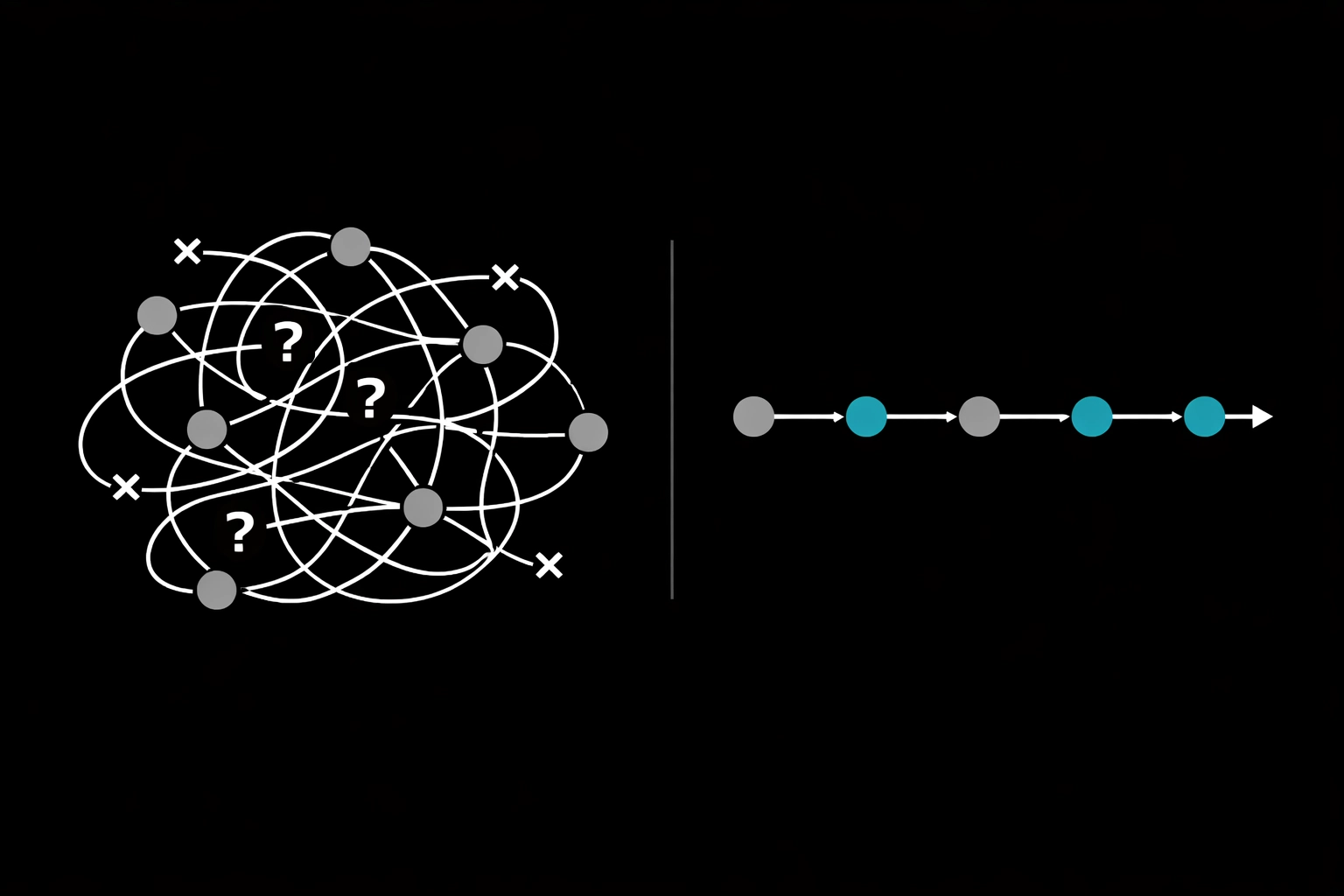
Building in-house AI-driven prospecting isn't as complex as agencies want you to believe.
The core components:
Deep research automation. Instead of templated spray-and-pray, modern AI SDRs analyze each prospect individually: company news, recent hires, funding announcements, tech stack, pain points mentioned in public content. This is the research a great human SDR would do, just automated at scale.
Human-in-the-loop approval. This is crucial. You're not letting AI send thousands of emails blindly. Every message gets reviewed before it goes out. You maintain quality control, brand voice, and strategic direction. The AI handles the grunt work.
BYOK infrastructure. Bring your own API keys for email providers, data enrichment tools, and language models. You control the costs directly instead of paying agency markups. Want to throttle email volume to protect domain reputation? You can. Want to pause entirely while you refine messaging? Your call.
Continuous learning. When a prospect replies, you see it immediately. When a sequence fails, you adjust it. The feedback loop is direct and fast because you own the entire system.
The operational benefits compound over time. Test new market segments by deploying AI agents first before committing to expensive local hires or agency contracts. Enter a vertical, gather data for 30 days, decide if it's worth pursuing: without burning tens of thousands of dollars to find out.
Market entry flexibility that agencies simply can't offer because their model requires multi-month commitments to justify their overhead.

The Learning Curve Myth
"But I don't know how to set this up" is the most common objection, and agencies love hearing it.
Here's the truth: setting up AI SDR infrastructure is easier than managing a human SDR team. You're not dealing with training schedules, performance reviews, motivation issues, or turnover.
The technical setup: domains, email infrastructure, data sources: is a one-time configuration that takes days, not months. Most founders doing their own outbound already understand the basics: targeting, messaging, deliverability.
AI SDRs don't replace that knowledge. They amplify it.
The real learning curve isn't technical. It's strategic. You need to know your ICP, your value proposition, and what pain points resonate. But if you don't know those things, an agency won't save you either. They'll just charge you to discover them slowly.
The founders seeing 2-3x increases in qualified meetings aren't more technical than you. They're just willing to own the process instead of outsourcing it to a black box.
What In-House Actually Looks Like
You're not firing your agency to work 80-hour weeks sending emails manually.
You're firing your agency to build an asset you own. A system that learns your market, captures institutional knowledge, and gets better with every interaction.
The AI handles prospect research, initial personalization, and message sequencing. You handle strategy, approval, and actual conversations with qualified leads. Your time gets spent where it matters: talking to prospects who are ready to buy, not manually personalizing intro emails for cold leads.
Sunday nights stop being email writing sessions. You're not in the trenches doing grunt work. You're coaching a system that scales your expertise instead of renting someone else's mediocre process.
The best sales teams aren't choosing between agencies and DIY chaos. They're building AI-powered systems that give them agency-level scale with in-house control and data ownership.
You can test new messaging angles in days instead of waiting for monthly agency reports. You can see exactly which prospect research criteria drive responses. You can pivot your ICP targeting in real-time based on actual data, not agency opinions.
And when something works, you own it. Forever.
If you're tired of paying for activity metrics while your actual pipeline stays flat, it might be time to bring prospecting in-house. Not by hiring expensive SDRs or grinding through manual outreach yourself, but by building AI-powered infrastructure that scales your efforts without scaling your costs.
Ramen gives founders back their Sundays by automating the research and initial outreach that kills momentum. You still approve every email. You still own the strategy. But you stop paying agencies to keep you in the dark about your own sales process.
Human oversight. Machine efficiency. Your data. See how it works.