
You've probably tried three AI SDR tools already. Maybe you burned $2,000 on one that sent 500 emails with a 0.4% reply rate. Or you signed up for another that promised "hyper-personalization" but really just scraped LinkedIn headlines and stuck them in the first sentence.
The AI SDR market in 2026 is crowded, noisy, and full of tools that overpromise and underdeliver. Most founders end up in the same cycle: sign up, get excited about automation, watch mediocre results trickle in, cancel after two months.
Here's what actually matters when you're evaluating AI SDR tools this year: cost control and research quality. Everything else is table stakes.
What to Actually Look for in an AI SDR
Forget the marketing fluff. When you're comparing AI SDR platforms, you need to ask three questions:
Can I control my costs? Most AI SDR tools charge flat monthly fees that hide the real burn rate. You're paying $500-2,000/month, but you have no idea what's happening under the hood. Are they using GPT-4 for every email draft? Are they burning through API credits on prospects who'll never convert? You're flying blind.
Does it actually research prospects, or just scrape data? There's a massive difference between pulling a company's industry from Clearbit and understanding why they might need your product right now. The best AI SDRs in 2026 identify buying signals: hiring spikes, tech stack changes, funding announcements, website traffic surges. They don't just personalize. They prioritize.
Who's in control: you or the algorithm? Some tools send emails automatically. That sounds great until you realize it's blasting 200 prospects with a message you never approved. The best setup is human-in-the-loop: the AI drafts, researches, and suggests. You approve before anything goes out.
The Cost Control Problem No One Talks About
Let's do the math. A typical AI SDR tool charges $800/month flat rate. Sounds reasonable compared to hiring someone at $5,000/month, right?
Here's what they don't tell you: behind the scenes, they're using OpenAI, Anthropic, and enrichment APIs that charge per request. If they're inefficient with those calls, they eat the cost. If they're efficient, they pocket the difference. Either way, you have no visibility.
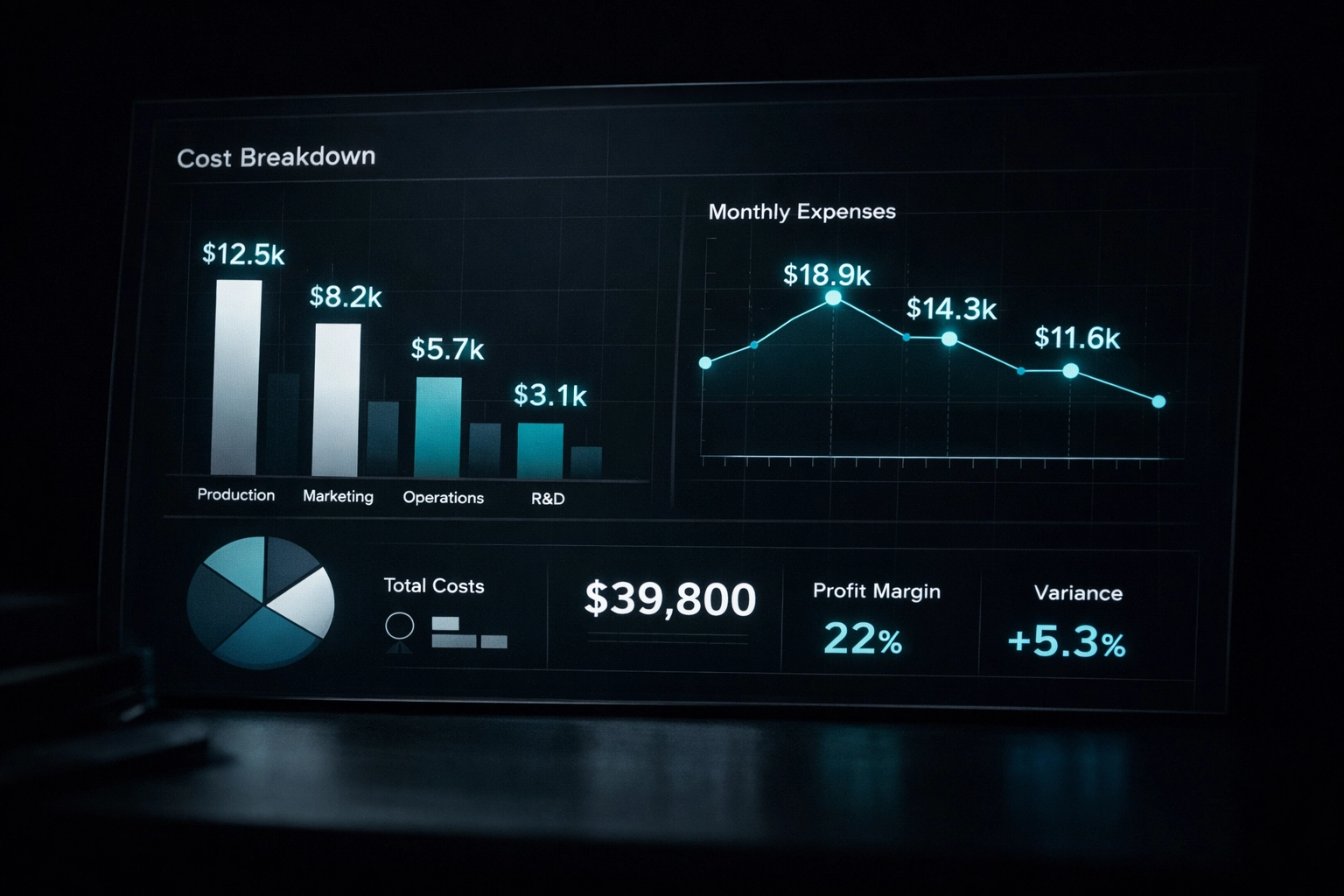
The BYOK model: bring your own API keys: changes this completely. You connect your own OpenAI account, your own Apollo or Clay credits, your own email sending infrastructure. Now you can see exactly what you're spending per prospect, per email, per enrichment call.
Here's a real example: one founder switched from a flat-rate AI SDR to a BYOK model and dropped their per-lead cost from $12 to $3.50. Same volume. Better results. The difference? Transparency. When you control the keys, you control the burn rate.
This matters even more if you're pre-seed or bootstrapped. You can't afford to blow $2,000/month on a black box. You need to see where every dollar goes and optimize as you learn.
Research Quality: The Make-or-Break Factor
Most AI SDRs fail because they optimize for volume instead of relevance. They'll send 1,000 emails to anyone who matches your ICP filter: SaaS companies with 10-50 employees, Series A, based in the US: and call it personalization.
That's not research. That's filtering.
Real research means the AI can answer: Why does this prospect need my product right now? Not in six months. Not theoretically. Right now.
The best AI SDRs in 2026 do this by layering signals:
- Hiring data (are they expanding sales or engineering teams?)
- Funding news (did they just close a round and have budget?)
- Tech stack changes (did they just adopt a tool that creates a need for yours?)
- Website behavior (are they reading content about the problem you solve?)
Then they synthesize that into reasoning you can actually evaluate. "This company just hired 3 SDRs in the last 60 days and posted a job for a Sales Ops Manager. They're scaling outbound and probably hitting process bottlenecks."
That's the kind of research that books meetings. Not "I saw you work in SaaS."
The API Key Security Objection
You're probably thinking: "If I give a tool my API keys, what's stopping them from running up my bill or accessing sensitive data?"
Fair concern. Here's how to evaluate it:
Read-only vs. write access. Some tools only need read access to your CRM to pull account data. Others need write access to log activity. Understand what permissions you're granting and why. If a tool asks for more access than it needs, that's a red flag.
Rate limiting. Your API keys should have spending caps. OpenAI lets you set monthly limits. Apollo lets you control credit usage. If you're using BYOK, set hard caps so even if something goes wrong, you're not staring at a $5,000 surprise bill.
Audit logs. Any tool that touches your API keys should give you a log of every call it makes. How many requests? To which endpoints? What did it cost? If they can't show you this, don't use them.
The BYOK model actually reduces risk because you're not trusting a vendor to manage your spend: you're managing it yourself with visibility into every transaction.
What the 2026 Landscape Actually Looks Like
Tools like MagicBlocks and Topo.io have set the bar higher this year. They're automating full pipelines, not just email sequences. They're using CDP-native memory so context carries across touchpoints. They're delivering 317% ROI with payback periods under six months, according to recent benchmarks.
But here's the catch: most of those tools are built for sales teams with existing infrastructure. They assume you have a CRM that's already configured, a data stack that's already enriched, a process that's already defined.
If you're a solo founder doing outbound for the first time, you don't have any of that. You need something that works out of the box but still gives you control.
Why Founders Are Moving to Human-in-the-Loop Models
The fully autonomous AI SDR sounds appealing. Set it and forget it. Let it send 500 emails while you build product.
In practice, that's where things break. The AI drafts an email that's 90% great but has one line that sounds off. Or it targets a prospect who technically fits your ICP but is actually a terrible fit for reasons the algorithm missed. Or it books a meeting with someone who has no budget or authority.
The best results in 2026 come from hybrid models: AI does the heavy lifting: research, drafting, sequencing, follow-ups: but you approve before anything goes out. It takes 10 minutes a day instead of 3 hours, and the quality stays high because you're the final check.

This also solves the "AI emails feel like AI emails" problem. When you review every message, you can add the nuance, the edge, the personality that makes your outreach feel human. The AI gets you 90% there. You add the final 10% that books the meeting.
What This Means for Your Evaluation Process
If you're shopping for an AI SDR right now, here's the checklist:
Cost transparency. Can you see exactly what you're spending per prospect, per email, per API call? If not, you're gambling.
Research depth. Does it explain why each prospect matters, or just show you a list of companies that match filters?
Control. Can you review and edit before anything sends? Or is it fully autonomous?
Integration. Does it play nicely with your existing tools (CRM, email, enrichment providers), or does it force you into a closed ecosystem?
Speed to value. Can you start seeing results in days, or does it require weeks of setup and training?
Most tools nail two or three of these. Very few nail all five.
The Ramen Approach
We built Ramen because we kept seeing founders stuck in the same trap: they couldn't afford an $80K SDR, but they also couldn't afford to waste time on low-quality automation.
Ramen gives you deep research on every prospect: actual buying signals, not just scraped data. You bring your own API keys, so you control costs down to the cent. And everything runs human-in-the-loop: the AI drafts, you approve, nothing sends without your sign-off.
It's built for founders who need to do outbound but can't treat it like a full-time job. Ten minutes a day to review emails. The AI handles the rest.
If you're tired of tools that overpromise and underdeliver, see how Ramen works. No sales call required. No credit card to start. Just sign up and connect your keys.