
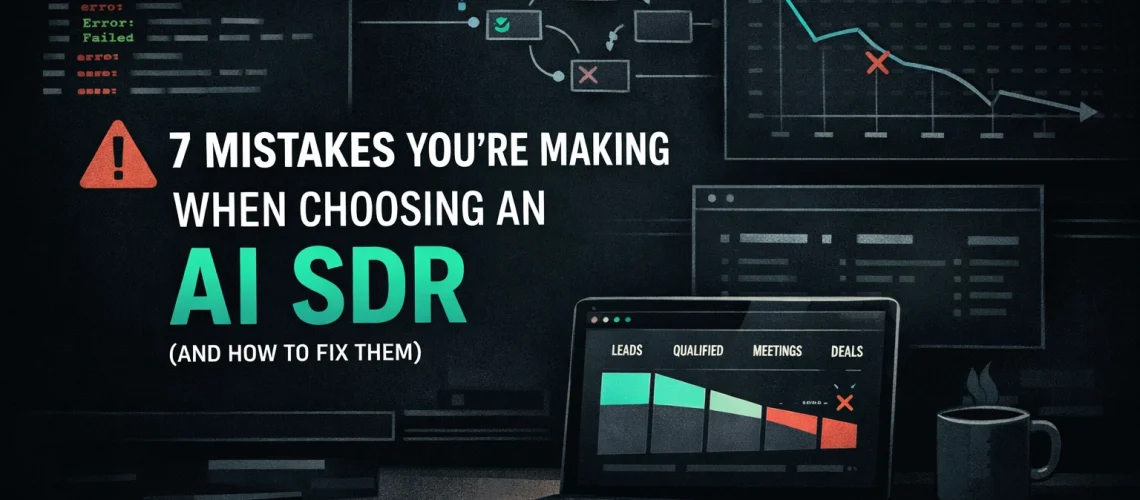
You've tried three AI SDR tools in the last six months. Maybe four. Each one promised to fill your pipeline while you focused on product. Each one delivered a pile of generic emails, a burned domain, and exactly zero qualified meetings.
Now you're wondering if the whole category is broken, or if you're doing something wrong.
Here's the uncomfortable truth: most founders make the same mistakes when choosing an AI SDR. The tools aren't magic, and the vendors aren't going to warn you about the pitfalls. So let me.
Mistake #1: Choosing a Template-Based System
The first AI SDR tool you probably tried was essentially a mail merge with extra steps. Upload a list, pick a template, hit send.
The problem isn't automation. The problem is that your prospects can smell a template from three sentences in. When 200 other founders are using the same "Hey {first_name}, saw you're crushing it at {company}…" opener, you're not standing out. You're adding to the noise.
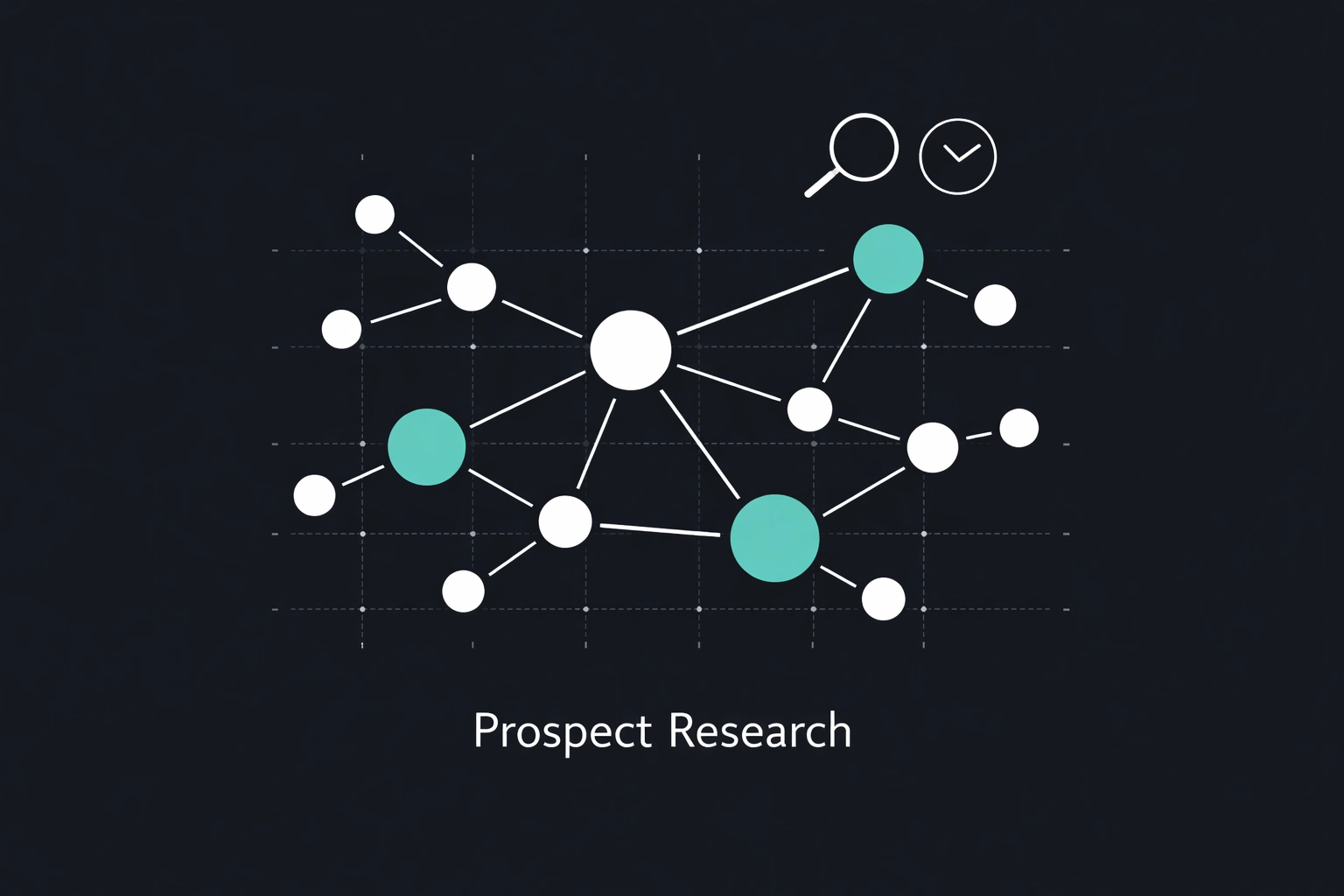
The fix: Look for tools that do actual research on each prospect before writing. Not just pulling their job title from LinkedIn, real context about their company, recent news, specific challenges. The best AI SDR tools generate unique messages based on deep research, not slot-filling.
If you can swap out the prospect name and company and the email still makes sense, the tool isn't doing its job.
Mistake #2: No Human Approval Flow
This one will cost you deals you never knew you lost.
Fully autonomous AI SDRs sound great in the demo. Set it and forget it. But here's what happens in practice: the AI sends a congratulations email about a "growth milestone" the same week the prospect announced layoffs. Or it reaches out to someone you already have a relationship with. Or it follows up on a deal that closed last Tuesday.
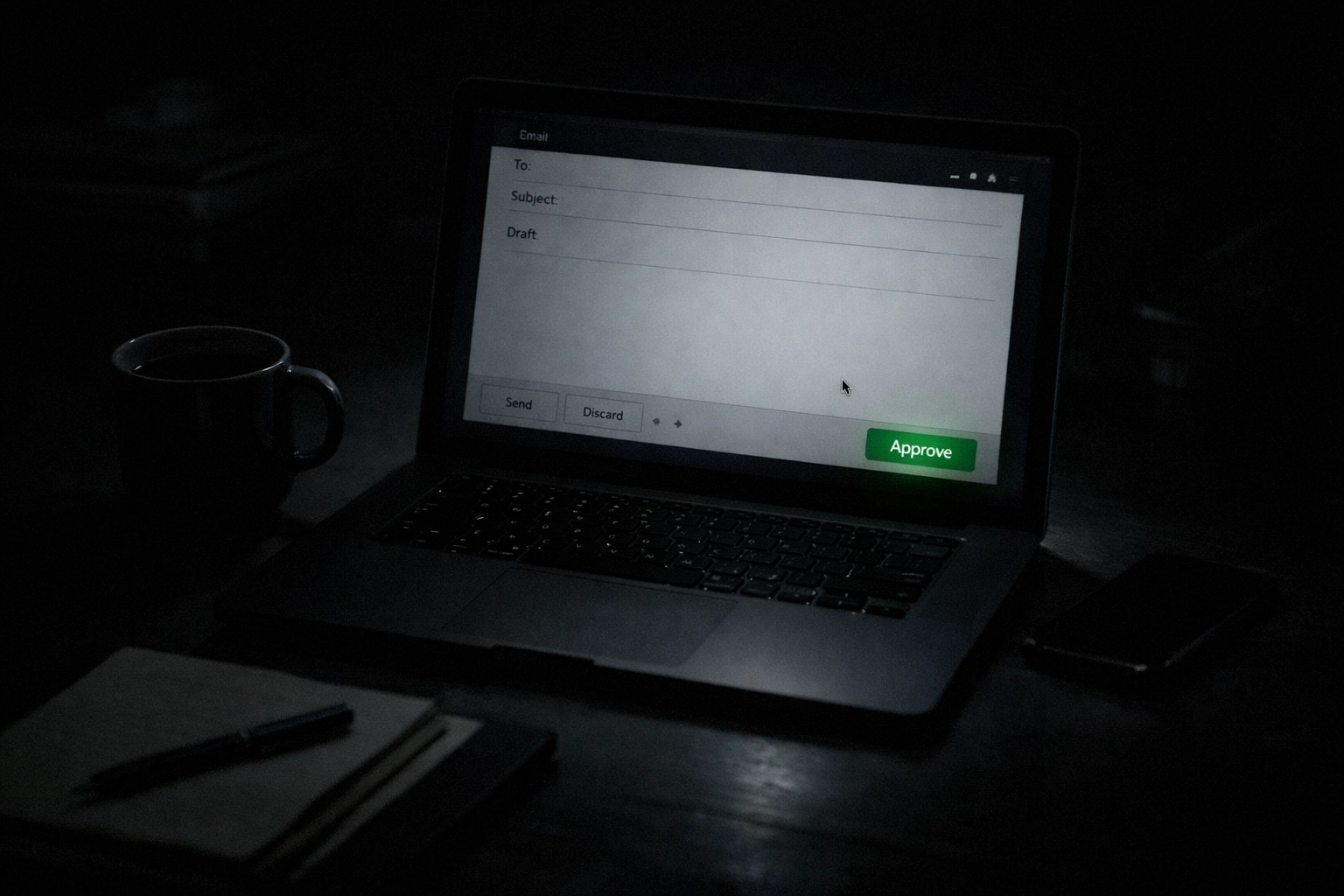
The fix: You need human-in-the-loop. Period. The best AI SDR setup handles the research, drafts the message, and queues it for your approval. You spend 10 minutes reviewing instead of 3 hours writing from scratch, but you maintain control over what actually goes out.
This isn't a limitation. It's how you protect your reputation with a finite market.
Mistake #3: Ignoring the API Cost Model
Most AI SDR platforms charge you a flat monthly fee, then use their own API keys to run the AI models behind the scenes. Sounds simple.
The problem: their margins come from limiting how much research and personalization actually happens. They're incentivized to send more emails with less compute, not to maximize quality per message.
The fix: Look for BYOK (bring your own keys) models. When you control your own API usage, the tool is incentivized to give you the best possible output, not to minimize their costs. You'll also have full visibility into what you're actually spending on AI, which matters when you're watching every dollar.
Yes, it's slightly more setup. But you're a founder. You can handle adding an API key.
Mistake #4: Operating on Stale CRM Data
Your AI SDR treats your database like it's frozen in time. But sales relationships are dynamic. Deals move. Contacts change companies. That "hot lead" from Q3 already signed with a competitor.
When AI operates on outdated information, you get embarrassing outreach: messages to closed deals, existing customers treated like cold prospects, follow-ups to people who asked to be removed.
The fix: Before you connect any AI SDR to your CRM, audit your data. Set up real-time sync so deal stages, notes, and strategic holds actually flow to the AI. Build exclusion lists for existing customers, active deals, and anyone who's opted out.
The AI is only as smart as the data you feed it.
Mistake #5: Tracking Vanity Metrics Instead of Revenue
Open rates. Reply rates. Meetings booked.
These metrics feel good in a dashboard. They're also almost meaningless if those meetings don't convert to pipeline and revenue.
Here's what actually happens: the AI optimizes for engagement, not qualification. You book 15 meetings with people who were never going to buy. You burn your own time on demos that go nowhere. Meanwhile, the tool reports "success."
The fix: Track further down the funnel. Compare AI-sourced leads to your other channels over 60-90 days. Measure qualified pipeline generated, not just meetings set. If your AI SDR is booking calls that never convert, you don't have a pipeline problem, you have a targeting problem.

Mistake #6: Burning Through Your TAM at Scale
AI can send 500 emails before lunch. That's a feature and a bug.
Poor targeting combined with AI speed means you can torch your entire addressable market in weeks. Bad emails, wrong personas, tone-deaf messaging, all delivered at scale to people you'll never get a second chance with.
Your TAM isn't infinite. Every burned contact is a door that's harder to open later.
The fix: Treat your AI SDR like a junior rep on their first week. Start with a small, validated segment. Review outputs manually before scaling. Build in strategic pauses so you can course-correct before the damage spreads.
Slow down to speed up. The founders who win with AI outbound are the ones who resist the urge to blast everyone on day one.
Mistake #7: Skipping Context for Speed
Timing matters more than most founders realize. Reaching out during a product launch? Good. Reaching out the week after layoffs with a "scaling your team" pitch? Catastrophic.
AI doesn't read the room. It doesn't know that your prospect just posted about burnout, or that their company is in the middle of an acquisition, or that they've been publicly critical of cold outreach.
The fix: The AI should do research that catches these signals before drafting. And you should review every message with context in mind. If something feels off, it probably is.
The goal is outreach that feels timely and relevant, not robotic and oblivious.
"This Sounds Too Complex"
I hear this objection constantly. If you have to review every email and manage API keys and audit your CRM data… isn't that just more work?
Here's the reality: the alternative is worse.
Fully autonomous tools that promise zero effort deliver zero results (or negative results, once you count burned domains and damaged reputation). The founders getting ROI from AI SDRs are the ones who treat these tools as leverage, not magic.
You're still doing outbound. You're just doing it in 30 minutes instead of 4 hours. You're sending better messages to better-targeted prospects with your reputation intact.
That's the tradeoff. And it's a good one.
Finding the Right Fit
When you're evaluating the best AI SDR for your startup, here's the short checklist:
- Does it do real research, or just template filling?
- Do you approve messages before they send?
- Can you bring your own API keys?
- Does it integrate cleanly with your CRM?
- Can you start small and scale carefully?
If the answer to any of these is no, you're setting yourself up for the same cycle: high hopes, burned tools, wasted months.
The right AI SDR doesn't replace your judgment. It amplifies it. You stay in control of who gets contacted, when, and with what message. The AI handles the research and drafting that used to eat your Sundays.
If you're tired of cycling through tools that overpromise and underdeliver, Ramen was built for exactly this problem. Deep research on every prospect, human approval on every email, and a cost model that doesn't punish you for wanting quality. Worth a look if you're ready to try something different.