
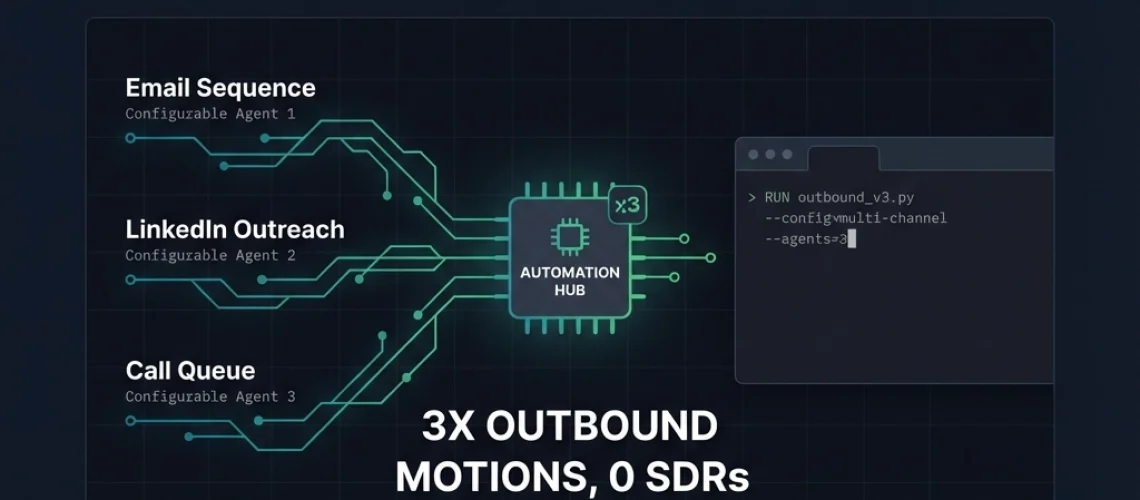
You're trying to hit three different markets. Enterprise prospects who need high-touch, personal outreach. Mid-market accounts that want some personalization but move faster. And SMB leads where volume matters more than white-glove treatment.
The traditional answer? Hire three SDRs. One for each motion. Budget required: $240K-$360K in loaded costs, plus 6-9 months to get them ramped. For a pre-seed founder, that's not math: that's fantasy.
Here's what most founders do instead: pick one motion, ignore the other two, and wonder why their TAM feels so small. Or worse, they try to run all three themselves and burn out by month two.
There's a third option: configurable AI agents that can run different outbound motions simultaneously, each with its own ICP targeting, message sequences, and approval workflows.
What "Configurable Agents" Actually Means
Forget the AI hype for a second. A configurable agent is just automated sales development that you can customize by rules:
- Agent 1: Targets enterprise accounts, sends 3-touch sequences, requires approval on every email
- Agent 2: Handles mid-market prospects, runs 5-touch cadences, auto-sends after you approve the first message
- Agent 3: Manages SMB volume, executes 7-touch sequences, sends automatically unless you flag specific accounts
Each agent has different research depth, personalization levels, and human checkpoints. You're not running three identical email blasts: you're running three distinct sales development processes.
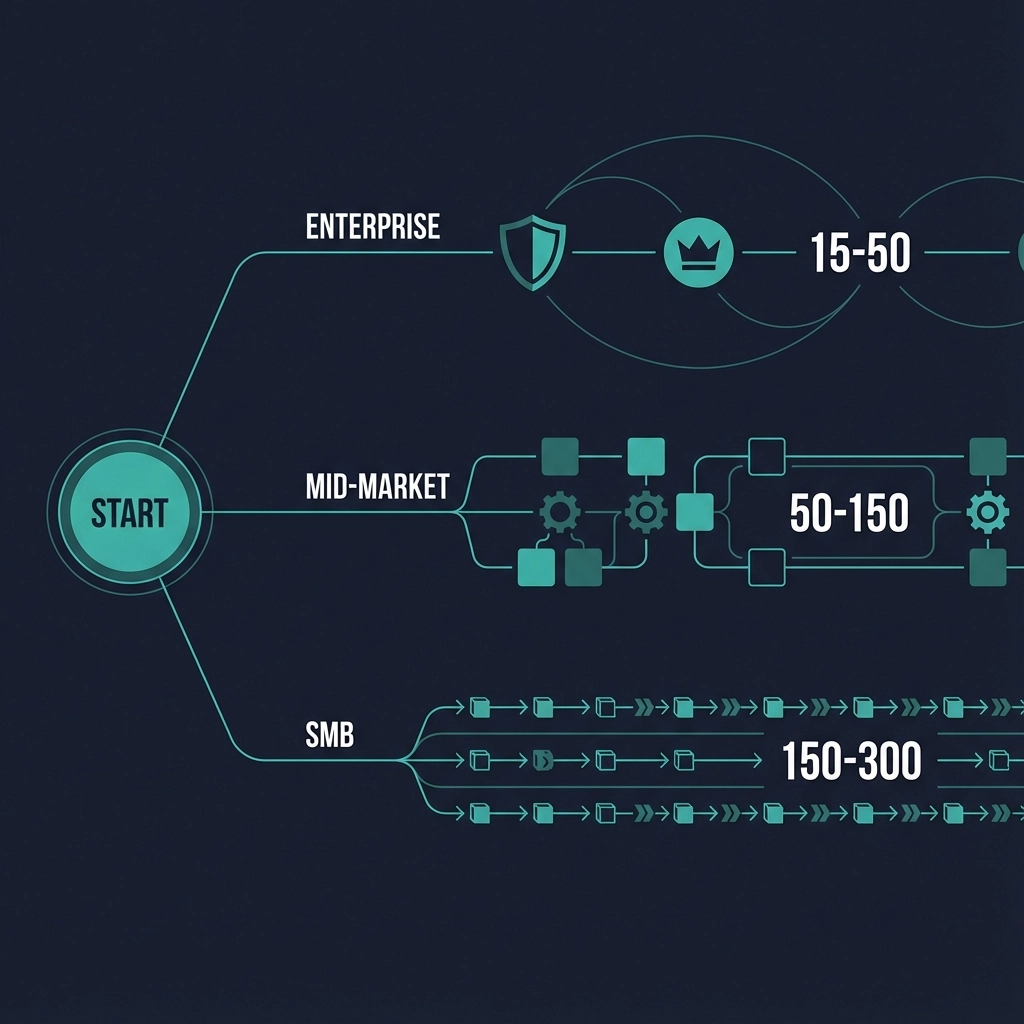
The Three Outbound Motions You Actually Need
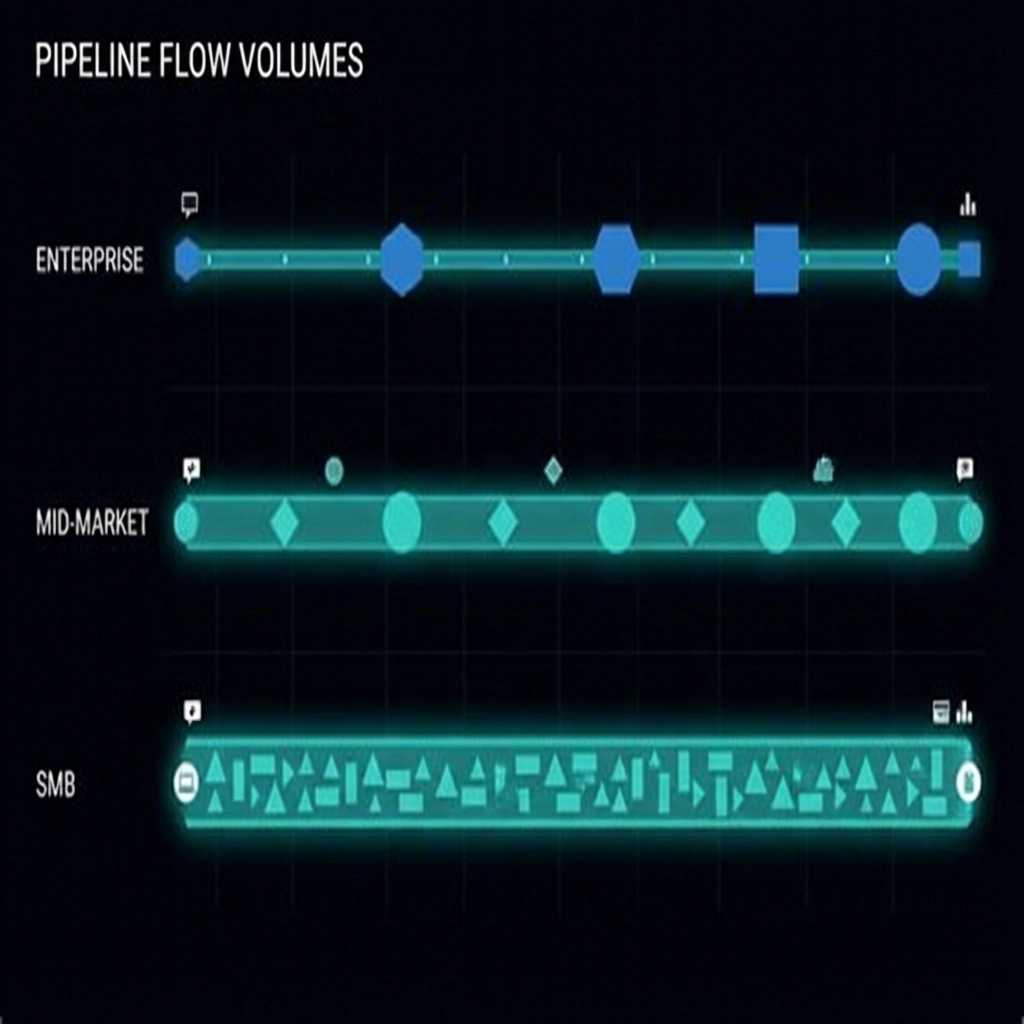
Enterprise Motion (15-50 prospects/month)
Your biggest potential deals, longest sales cycles, highest expectations. These prospects expect Account-Based Marketing treatment: deep research, executive-level messaging, and obvious human involvement.
Your agent configuration: Deep company and person research, mentions specific business triggers or recent news, keeps sequences short (3-4 touches max), requires individual email approval.
Mid-Market Motion (50-150 prospects/month)
Companies that have budget but move faster than enterprise. They want personalization but don't expect white-glove treatment at every touchpoint.
Your agent configuration: Company-level research with some personal details, references industry trends or common pain points, medium-length sequences (5-6 touches), approval required for sequence setup but not individual emails.
SMB Motion (150-300 prospects/month)
Volume play with companies that make decisions quickly. They care more about clear value propositions than deep personalization.
Your agent configuration: Basic company research, persona-based messaging, longer sequences (7-8 touches), minimal approval requirements after initial setup.
How Agents Handle the Full SDR Job Map
Most founders think "SDR" just means "sends emails." Wrong. Here's what an actual SDR does, and how configurable agents cover each piece:
List Building & ICP Targeting
- Traditional SDR: Spends 2-3 hours daily in Apollo/ZoomInfo building lists
- Agent approach: Set targeting criteria once (company size, industry, tech stack), agent pulls fresh lists automatically
Account & Contact Research
- Traditional SDR: 10-15 minutes per prospect researching company news, recent hires, funding
- Agent approach: Different research depth per motion: enterprise gets 5-10 data points, SMB gets 2-3 basics
Email Writing & Personalization
- Traditional SDR: Writes 20-30 emails daily, often falling into templates after week two
- Agent approach: Generates personalized first lines and body copy based on research, maintains consistency at scale
Follow-up Sequence Management
- Traditional SDR: Manually tracks who gets which follow-up when, often drops prospects
- Agent approach: Automated sequence progression with different cadences per motion
Reply Management & Qualification
- Traditional SDR: Monitors inboxes, responds to interest, qualifies prospects for demos
- Agent approach: Flags positive replies for human review, categorizes objections, drafts response suggestions
CRM Hygiene & Reporting
- Traditional SDR: Updates records, tracks activities, reports on metrics (when they remember)
- Agent approach: Automatic logging, real-time dashboards, consistent data entry
The key difference: you're not replacing human judgment, you're replacing human busy work.
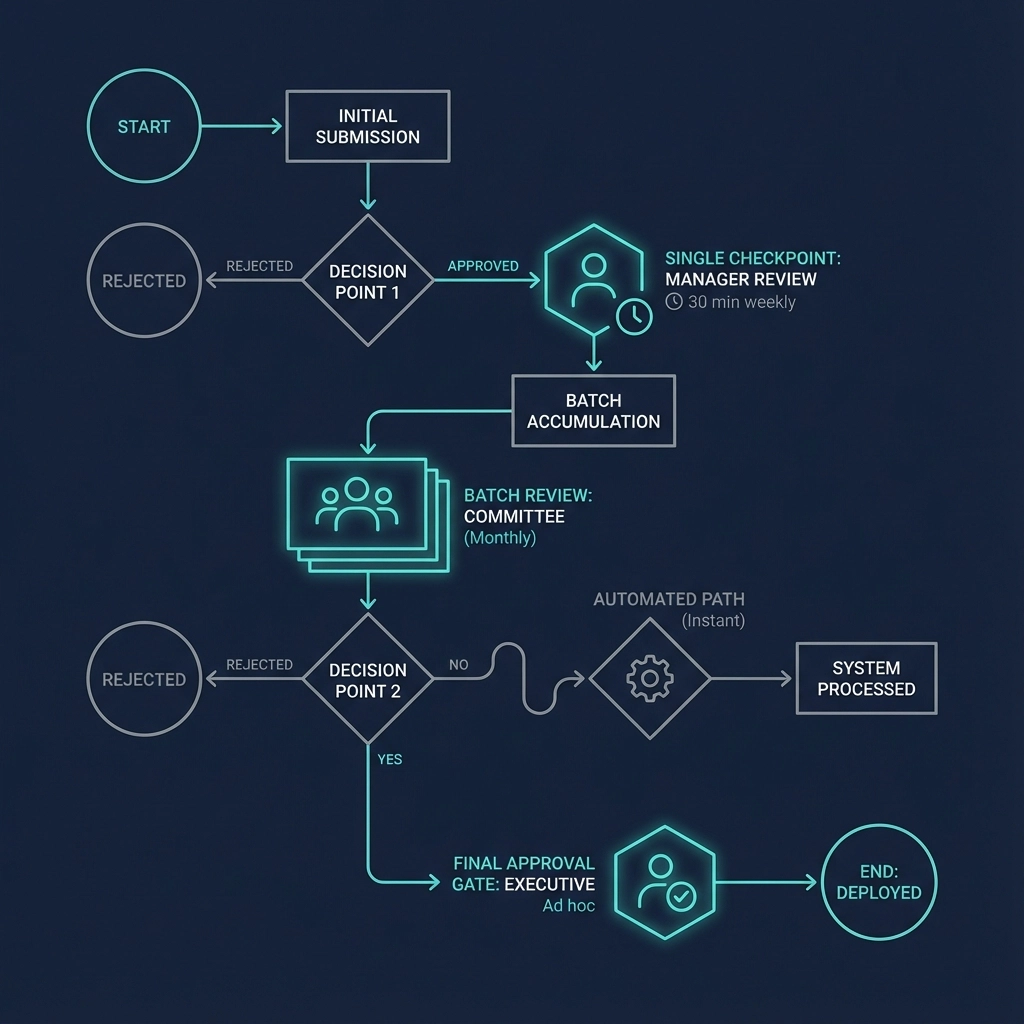
Approval Checkpoints That Actually Matter
You don't need to approve every email from every agent. You need approval at the points where your judgment matters most:
Sequence Setup Approval (All Motions)
Before any agent starts contacting a new ICP or market segment, you review the message framework, targeting criteria, and cadence timing. This happens once per motion setup.
Individual Email Approval (Enterprise Only)
For your biggest potential deals, you approve each email before it sends. Non-negotiable for enterprise accounts where one bad email kills the relationship.
Weekly Batch Review (Mid-Market)
Agent drafts the week's emails, you spend 30 minutes reviewing and approving the batch. Catch any obvious mistakes without micro-managing every message.
Exception Handling (All Motions)
Agent flags emails that mention sensitive topics, recent company layoffs, or other scenarios requiring human review. You set the triggers, agent catches them automatically.
The Real Cost Math
Let's be specific about what you're actually replacing:
Three SDRs (Traditional Approach)
- Base salaries: $180K total ($60K each)
- Benefits & taxes: $54K (30% loaded cost)
- Tools & software: $18K annually
- Management overhead: Your time training, coaching, reviewing
- Ramp time: 3-4 months before full productivity
- Total first-year cost: $252K minimum
Configurable Agent Platform
- Platform cost: $499/month ($5,988 annually)
- Your API keys: ~$300-500/month for email sending, data enrichment
- Setup time: 2-3 hours per motion (you do this once)
- Management time: 2-3 hours weekly for approvals and optimization
- Total first-year cost: $12K
The difference: $240K that stays in your bank account.
More importantly: no hiring risk, no ramp time, no performance management, no equity dilution to fund SDR salaries before you've proven product-market fit.
Why This Works Better Than Human SDRs Early Stage
SDRs are great when you have proven processes, clear ICP definition, and predictable deal flow. Most pre-seed companies have none of those things.
You're still figuring out messaging that resonates. Your ICP shifts as you learn more about who actually buys. Your positioning evolves with each customer conversation.
With human SDRs, every pivot requires retraining. Every message change needs coaching. Every new market segment means hiring another person.
With configurable agents, you adjust targeting criteria and messaging frameworks in real-time. Test three different value propositions across three motions simultaneously. Optimize based on data, not politics.
Getting Started Without the Complexity
Start with one motion. Pick your highest-intent segment: usually mid-market since they balance volume with deal size. Get that motion working, then layer on enterprise (higher touch) and SMB (higher volume).
Each motion should have clear rules: who gets targeted, what message framework applies, how much personalization, what approval levels. Write these rules down before you configure anything.
Most importantly: track leading indicators, not just pipeline created. Open rates, reply rates, positive response rates, meeting booking rates. These metrics tell you which motions are working and which need adjustment.
If you're currently doing outbound manually or considering your first SDR hire, configurable agents let you test three different market approaches for the cost of a single junior SDR's monthly salary. The question isn't whether AI can replace human SDRs: it's whether you can afford to hire humans before you know what works.
Ready to see how three outbound motions actually work in practice? Ramen gives you the configurable agent platform with human approval workflows built in. Your emails, your oversight, your results: at $499/month instead of $100K+ per SDR.