
You've been here before. Sunday night, laptop open, watching your domain reputation crater because some VA or agency decided to blast 10,000 emails with subject lines like "Quick question" to a purchased list of "verified" contacts.
Your sending score is in the toilet. Gmail is routing your emails straight to spam. And the agency is blaming your ICP, your messaging, or the "challenging market conditions", anything except their spray-and-pray approach that torched your domain in three weeks.
Here's the reality: most outbound automation fails not because the concept is flawed, but because it's executed like a numbers game instead of a reputation management exercise. You can automate outbound without burning your domain, but it requires treating email deliverability like the finite resource it actually is.
Domain Warmup: The Foundation Everyone Skips
Before sending a single outbound email, you need to establish sender credibility. This isn't optional, it's the difference between landing in the inbox and getting blacklisted.
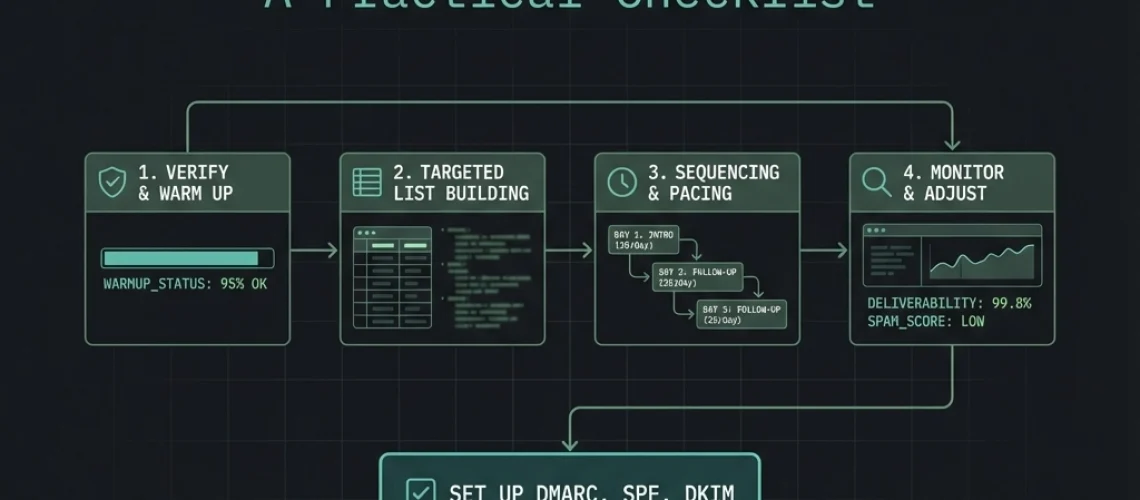
Start with authentication setup. Configure SPF, DKIM, and DMARC records properly. These technical foundations signal to email providers that you're a legitimate sender, not a spoofed domain.
Implement gradual volume ramping. Begin with 5-10 emails per day for the first week, then increase by 10-15 emails weekly until you reach your target volume. Going from zero to 200 emails on day one is a guaranteed way to trigger spam filters.
Build engagement history organically. Send emails to colleagues, existing customers, or warm contacts who will actually open and reply. Early positive engagement signals teach email providers that your domain sends wanted messages.
Use dedicated sending domains for outbound. Keep your primary business domain clean by setting up a subdomain specifically for sales outreach. If something goes wrong, your main domain stays protected.
Sending Limits: Less is Actually More
The biggest mistake founders make is equating volume with results. Email providers track sending patterns, and sudden spikes or consistently high volumes from new senders trigger automatic filtering.
Respect daily sending limits. Stay under 50 emails per day for new domains, scaling up gradually over 4-6 weeks. Established domains with good reputation can handle 100-200 per day, but monitor engagement closely.
Implement sending delays and randomization. Don't send all emails at 9 AM sharp. Spread sends across 8-12 hour windows with random intervals between messages. Real humans don't send emails every 30 seconds.
Monitor your sender score weekly. Use tools like MXToolbox or Sender Score to track your domain reputation. A score below 70 means you're heading for deliverability problems.

List Quality: Garbage In, Reputation Out
Using purchased lists or scraping emails is the fastest way to destroy your domain reputation. Email providers track bounce rates, spam complaints, and engagement levels, poor list quality kills all three metrics.
Source contacts organically only. Build lists from website visitors, content downloads, event attendees, or manual research. Yes, it's slower than buying a list of 50,000 "verified" emails, but it actually works.
Validate email addresses before sending. Use email validation tools to remove invalid addresses, catch-all domains, and role-based emails like info@ or sales@. A bounce rate above 3% triggers spam filters.
Segment by engagement level. Separate highly engaged prospects from cold outreach. Send your best content to engaged segments first: their positive interactions improve your overall sender reputation.
Clean your list regularly. Remove hard bounces immediately and unengaged contacts after 3-4 touchpoints. Continuing to email people who don't open or engage damages your reputation.
Personalization: Beyond First Name Variables
Generic templates scream automation and generate spam complaints. Real personalization requires research and relevance, not just mail merge fields.
Research each prospect individually. Spend 3-5 minutes understanding their company, role, and current challenges. This isn't scalable to thousands of contacts, but it's effective for the contacts that matter.
Reference specific company context. Mention recent funding rounds, product launches, or industry challenges they're facing. Generic pain points like "struggling with growth" don't differentiate you from the other 47 sales emails in their inbox.
Customize subject lines meaningfully. "Quick question about [Company Name]" is still generic. Try "Your Series A timing + pipeline question" or "[Specific challenge] at [Company]."
Vary your email templates significantly. Don't just change the company name and call it personalized. Write different versions for different personas, industries, and use cases.
Follow-Up Sequences: Persistence Without Pestering
Most deals happen in the follow-up, but most automation tools handle this poorly. The key is providing value at each touchpoint, not just restating your initial pitch.
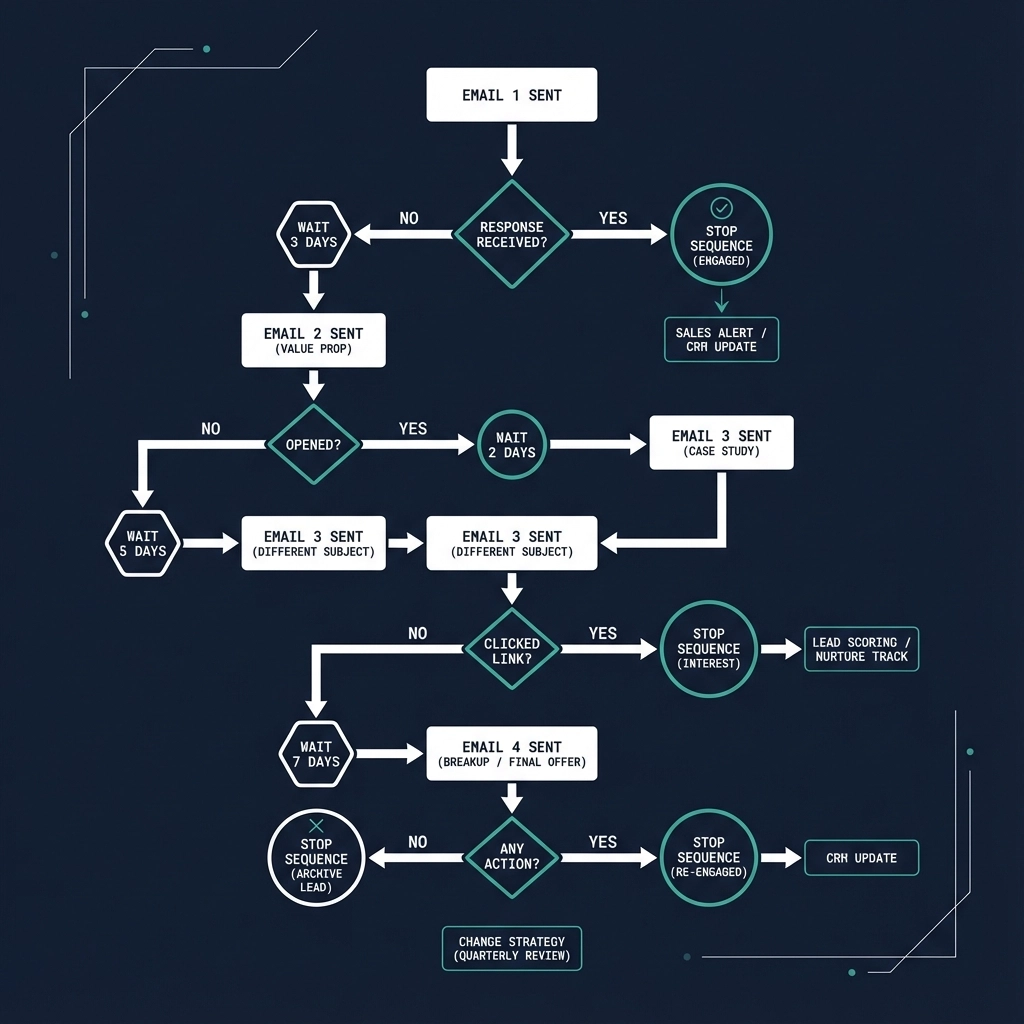
Space follow-ups appropriately. Wait 4-5 business days between touches. Following up daily feels desperate and increases unsubscribe rates.
Change your approach each time. Don't send the same message three times. Try different angles: industry insights, relevant case studies, or useful resources they might actually want.
Include clear exit conditions. If someone hasn't engaged after 3-4 touchpoints, stop. Continuing to email unresponsive prospects damages your reputation and wastes time.
Use breakup emails effectively. A well-crafted "last attempt" email often generates more responses than the initial outreach. Make it genuine, not manipulative.
Monitoring and Optimization: Data That Actually Matters
Most founders track the wrong metrics. Open rates and click-through rates don't matter if your emails aren't reaching the inbox. Focus on deliverability indicators and business outcomes.
Track delivery rates religiously. Your delivery rate (emails delivered vs. emails sent) should stay above 95%. If it drops, investigate bounce reasons and list quality immediately.
Monitor spam complaint rates. Spam complaints should stay below 0.1% of sent emails. Higher rates indicate your targeting or messaging needs work.
Watch engagement patterns closely. Sudden drops in open rates often indicate deliverability problems, not message quality issues. Check your sender reputation before tweaking subject lines.
Set up feedback loops with major providers. Gmail, Outlook, and Yahoo offer feedback loops that notify you when recipients mark your emails as spam. Use this data to improve targeting.
The Human-in-the-Loop Advantage
Here's where most automation platforms get it wrong: they optimize for volume, not quality. But quality control is what protects your domain reputation long-term.
Every outbound email should be reviewed by a human before sending. This isn't about slowing down your process: it's about ensuring each email meets your quality standards and maintains your reputation.
Real research on each prospect, not template personalization, is what generates responses. When someone takes time to understand your business and craft a relevant message, you notice. When someone clearly sent the same template to 500 other founders, you hit delete.
This is exactly why Ramen requires human approval for every email. You see each message before it sends, ensuring quality while maintaining automation efficiency. Your domain stays clean because every email meets your standards, not an algorithm's guess at personalization.
The math is simple: would you rather send 1,000 emails with a 0.5% reply rate or 100 emails with a 5% reply rate? Both generate five conversations, but only one protects your domain for the long term.