
You're burning Sundays writing cold emails. Your reply rates are stuck at 2%. You know you need a sales development rep for startup growth, but the math doesn't work: $80K base, plus benefits, plus 3 months to ramp, plus the risk they quit after 6 months.
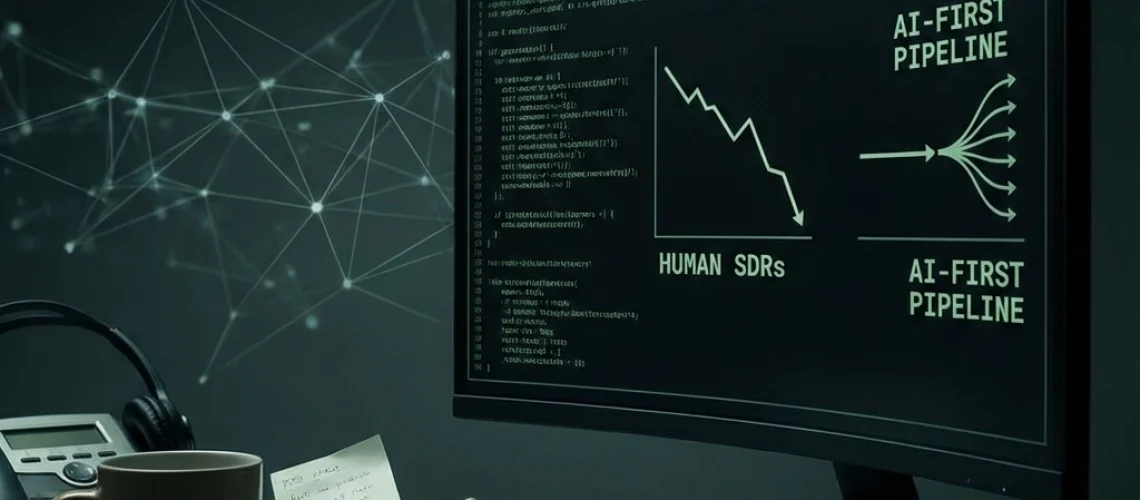
Meanwhile, SaaStr's Jason Lemkin just announced he replaced his entire 10-person sales team with 20 AI agents managed by 1.2 humans. His bold prediction? Most SDRs will be extinct within a year.
Here's what's actually happening in 2026, why the best AI SDR solutions are changing the game for cash-strapped founders, and whether you should finally stop trying to hire SDR talent you can't afford.
The $150K Problem Every Startup Founder Faces
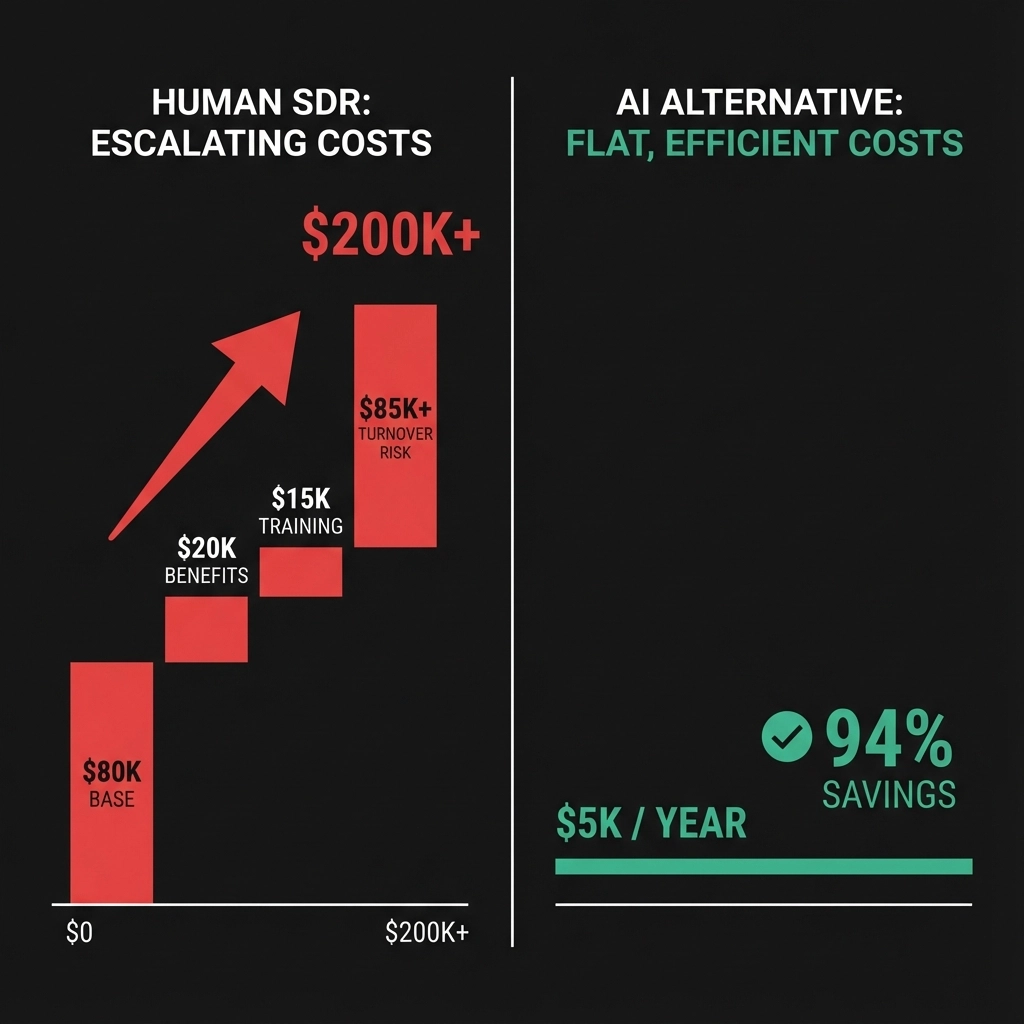
Lemkin's math is brutal but accurate. Junior SDRs now cost $150,000 per year when you factor in base salary, benefits, equity, and onboarding costs. For pre-seed founders bootstrapping growth, that's often 30-40% of your entire runway.
Even worse? Traditional SDR hiring means you're betting your company's future on someone who might generate zero pipeline for their first 90 days. You're paying for them to learn your product, your market, and how to write emails that don't sound like spam.
The cruel irony: you need pipeline to raise your next round, but you need funding to hire the person who builds your pipeline. Classic chicken-and-egg problem that's killed more startups than bad product-market fit.
What's Actually Happening in 2026
The transformation isn't gradual: it's happening right now. Companies using AI SDRs report 2-3x more booked meetings and shorter sales cycles compared to traditional human-only approaches.
But here's where most founders get it wrong: this isn't about replacing humans entirely. It's about economics and efficiency.
For startups with straightforward products and short sales cycles, AI can handle the entire SDR function. Think SaaS tools with self-serve demos, clear value props, and sub-$50K deal sizes. These companies are going AI-first because it works better than hiring someone to send 50 emails per day.
For complex enterprise sales, humans still matter. But even here, the math is changing. Instead of hiring 5 SDRs, you hire 2 and let AI handle the grunt work. Same pipeline output, 60% less cost.
The Nuanced Truth Most People Miss
Despite the headlines about SDR extinction, the reality is more complex. AI excels at the work that burns out most human SDRs:
- Lead research and list building
- Email personalization at scale
- Follow-up sequences that don't sound robotic
- Basic objection handling
- CRM data entry and pipeline management
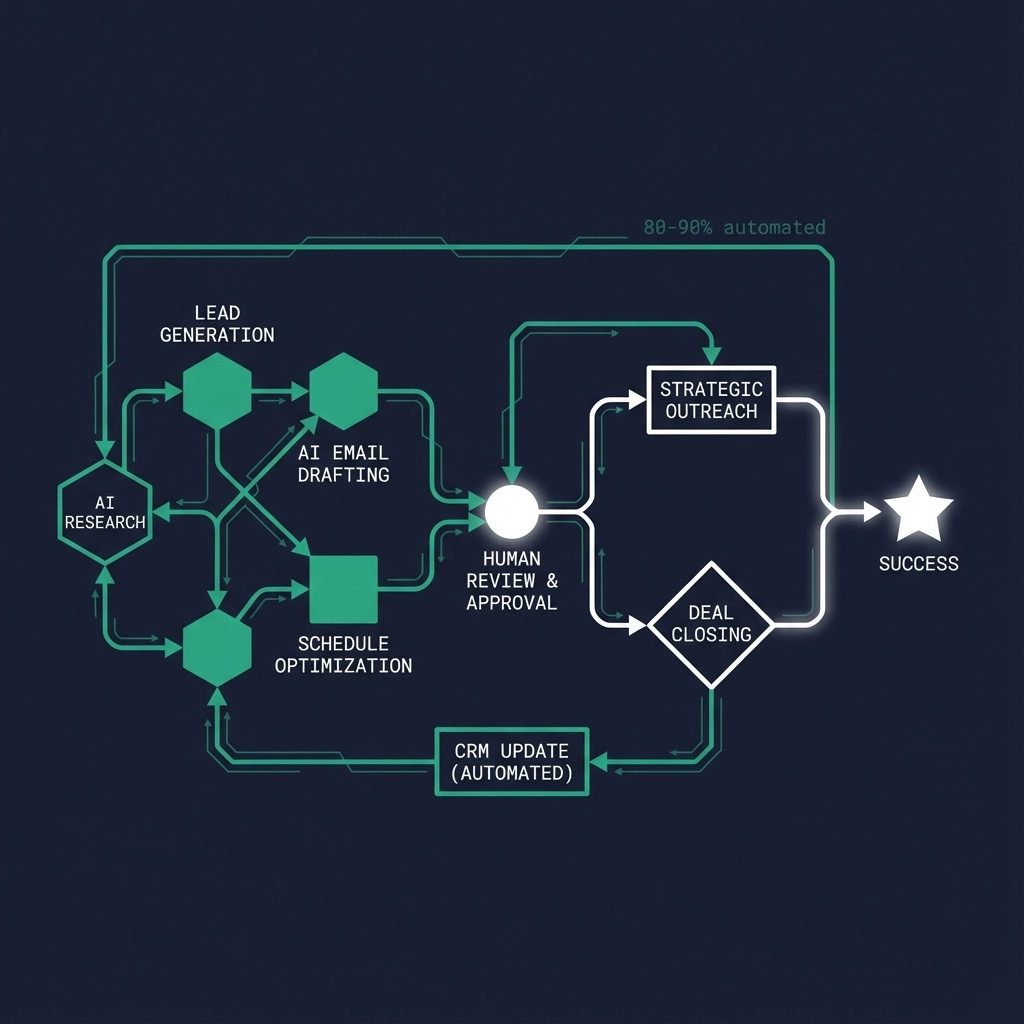
This represents 80-90% of traditional SDR work. The remaining 10-20%: complex objection handling, relationship building for six-figure deals, trust-building with enterprise buyers: still requires human touch.
But here's the key insight: if you're an early-stage founder, you probably don't need that remaining 10-20% yet. You need volume, consistency, and someone (or something) that doesn't take vacation days.
Addressing the Elephant: "But AI Emails Are Spam"
Every founder worries about this. You've seen the terrible AI-generated emails that scream "I'm a bot" from the subject line.
The difference between good AI SDR tools and spam bots comes down to three factors:
Human oversight: The best AI SDR platforms require you to approve every email before it sends. You're not handing your domain over to a black box: you're using AI to research prospects and draft emails, then adding your human judgment before hitting send.
Deep research vs. template blasting: Spam comes from generic templates sent to random lists. Quality AI SDR tools research each prospect individually, crafting emails that reference specific company news, recent hires, or industry challenges.
Your own infrastructure: When you bring your own API keys and email accounts, you control deliverability and sender reputation. You're not sharing an IP with 500 other companies sending questionable emails.
This is why domain health and inbox reputation matter more than ever. AI amplifies everything: including bad sending practices that burn your domain.
What Humans Still Do Better (For Now)
Let's be honest about AI limitations. Human SDRs excel at:
Complex objection handling: When a prospect says "we're happy with our current solution," a human can dig deeper, understand the pain points behind the objection, and position your solution accordingly.
Relationship building: Enterprise deals often require months of relationship nurturing. Humans excel at remembering personal details, following up on non-business conversations, and building genuine trust.
Reading between the lines: Human SDRs can sense when a prospect is genuinely interested but can't buy right now versus when they're just being polite.
Adapting mid-conversation: When a discovery call reveals the prospect has different needs than expected, humans pivot naturally. AI still struggles with major strategic shifts.
But here's the reality check: if you're a pre-seed founder selling a $5K annual subscription, you don't need these advanced human skills yet. You need someone to book 20 qualified demos per month consistently.
The Real Math for Startups
Let's break down the actual numbers:
Traditional SDR hire:
- $80K base + $40K benefits/equity = $120K annual cost
- 3 months to ramp = $30K with zero output
- 50% chance they quit within 12 months
- Best case: 15-20 qualified meetings per month
Best AI SDR approach:
- $500-2000 monthly software cost
- Your time for oversight: 5-10 hours per week
- Immediate output (no ramp period)
- Consistent 25-30 qualified meetings per month
- No turnover, no sick days, no salary negotiations
For cash-strapped founders, the choice is obvious. You get better results, faster ramp, and you keep that $120K in the bank for product development and marketing.
The 2026 Reality: AI-First, Human-Guided
The future isn't human SDRs going extinct. It's human SDRs becoming AI operators who manage multiple AI workflows simultaneously.
Forward-thinking startups are adopting AI-first approaches because the economics finally make sense. Instead of hoping your SDR hire works out, you can start generating pipeline immediately while you focus on building product and serving customers.
The key is finding an AI SDR platform that requires human oversight, uses deep research instead of templates, and lets you control your own sending infrastructure. You want AI that amplifies your judgment, not replaces it entirely.
Ready to skip the SDR hiring headache and start booking meetings this week? Ramen combines AI efficiency with human oversight: every email gets your approval before sending, but AI handles the research and drafting that normally eats your Sundays.