
You've seen the horror stories. Founders who set up AI outbound tools, only to watch their domains get blacklisted and their brand reputation torched by robotic, tone-deaf emails. The promise of automation is tempting, especially when you're doing outbound at 11 PM on Sundays, but the risk feels too high.
Here's the thing: full automation without human oversight is digital Russian roulette. But there's a middle path that gives you the efficiency of AI without the brand damage: human-in-the-loop AI SDRs.
What Human-in-the-Loop Actually Means (Beyond the Buzzword)
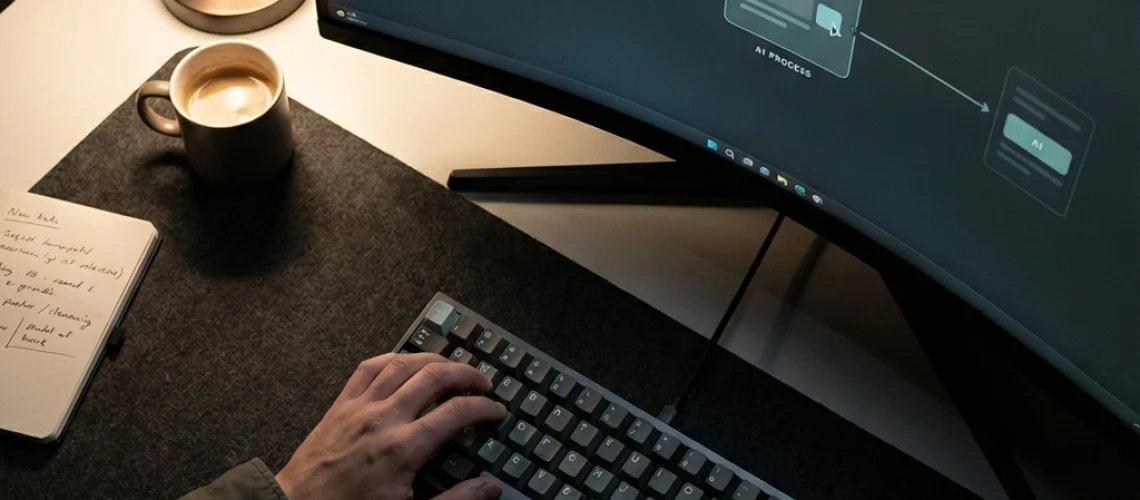
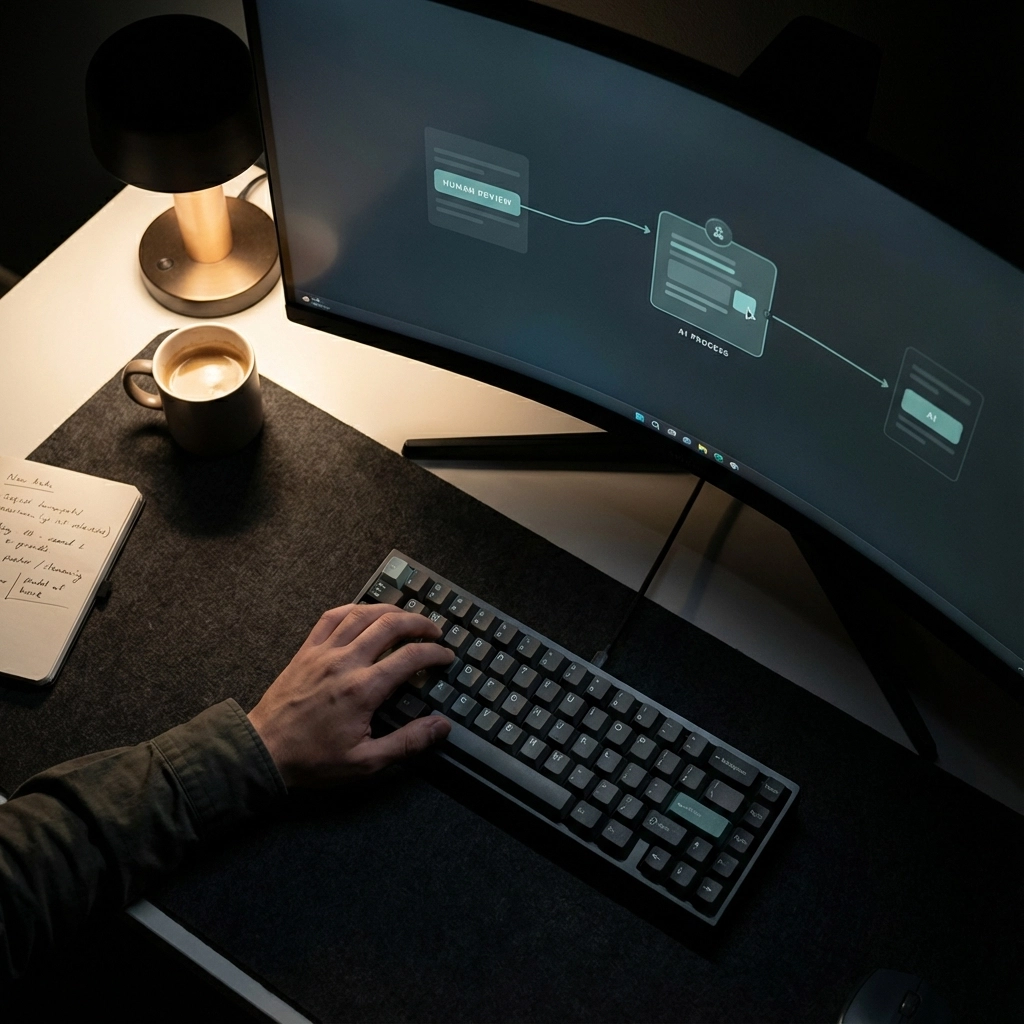
Human-in-the-loop AI SDRs aren't just automation with a human watching. It's a deliberate division of labor where AI handles the research-heavy, time-consuming tasks, while humans maintain control over anything that touches your brand directly.
The AI does the grunt work: finding prospects, researching their companies, identifying trigger events, and drafting personalized emails based on that research. But before any email hits an inbox, a human: usually you: reviews and approves it. Every single one.
This isn't about slowing down for the sake of it. It's about understanding that your early-stage startup can't survive a reputation hit from AI-generated spam. When you're pre-seed and every conversation matters, brand safety isn't optional.

The Brand Protection Framework
Deep Research Prevents Generic Outreach
The biggest brand killer isn't AI: it's shallow, templated outreach that screams "mass email." Human-in-the-loop AI SDRs solve this by diving deep into each prospect before crafting emails. The AI researches the prospect's company, recent LinkedIn posts, industry news, and potential pain points, then builds personalized emails around those insights.
When you approve an email that references a prospect's recent product launch or mentions a specific challenge their industry is facing, it doesn't feel like automation. It feels like genuine research and interest.
Quality Control at Every Touchpoint
With human oversight, you catch the AI mistakes that could damage your reputation. Maybe the AI misunderstood a company's business model, or it drafted something that's technically accurate but tonally off for your brand. These small errors compound into big reputation problems when they go unchecked.
Human approval also means you can adjust for context the AI might miss. If a prospect's company just had layoffs, you can modify or pause outreach. If there's industry news that changes the conversation, you adapt in real-time.
Maintaining Your Voice and Values
Your brand voice is your competitive advantage as an early-stage founder. It's often the only thing differentiating you from larger competitors. Human-in-the-loop ensures that voice stays consistent across every email.
The AI learns your preferences over time: which phrases you approve, which angles you reject, how you handle objections: but you're always the final decision maker on what represents your brand.
The Reality Check: Implementation Challenges
It's Slower Than Full Automation (And That's the Point)
Human-in-the-loop AI SDRs aren't as fast as fully automated systems. You might approve 50-100 emails per day instead of sending 500. But here's the math that matters: if your approval step increases reply rates from 2% to 8%, you're getting better results with fewer emails.
Early-stage founders often fall into the volume trap: thinking more emails equals more demos. But when you're selling a complex B2B product, one qualified conversation beats ten automated rejections.
You Still Need to Understand Your ICP
The AI is only as good as your ideal customer profile definition. If you don't know who you're selling to, human oversight won't save you from targeting the wrong people. The research and personalization only work when they're applied to prospects who actually have the problem you solve.
This means doing the hard work upfront: defining your ICP based on existing customers, understanding their pain points, and knowing what triggers buying decisions in your market.
Domain and Deliverability Still Matter
Human approval doesn't magically solve deliverability issues. You still need proper domain setup, authentication records, and volume management. The difference is that human oversight reduces the risk of spam complaints and poor engagement that tanks your sender reputation.
When every email is approved by a human, you're less likely to send poorly targeted emails that recipients mark as spam. Better engagement metrics mean better deliverability over time.

Addressing the Skeptics
"But AI Tools Already Have Safeguards"
Most AI outbound tools claim to have built-in brand protection through content filters and compliance checks. But these automated safeguards can't understand context, industry nuance, or your specific brand voice. They catch obvious spam triggers but miss the subtle mistakes that make your outreach feel automated.
Human oversight adds a layer of contextual intelligence that AI safeguards can't replicate. You understand your market, your prospects, and your brand better than any algorithm.
"Isn't This Just Expensive Manual Work?"
The economics work when you factor in the cost of mistakes. A burned domain costs thousands in lost deliverability. A reputation hit in your industry can kill deals for months. The "cost" of human approval is actually risk mitigation disguised as process overhead.
Plus, human-in-the-loop scales differently than pure manual outreach. The AI handles 90% of the research and writing work. You're just making the final call on quality and fit.
"What About Response Handling?"
Most human-in-the-loop systems handle responses differently based on complexity. Simple replies (like "not interested" or "call me Tuesday") can be automated or routed appropriately. Complex responses, objections, and sales conversations stay with humans.
The goal isn't to automate everything: it's to automate the time-consuming research and initial outreach while keeping human intelligence where it matters most.
When Human-in-the-Loop Makes Sense
This approach works best for founders who:
- Are selling complex B2B products with longer sales cycles
- Have a clear ICP and understand their market deeply
- Value brand reputation over volume metrics
- Have 30-60 minutes daily for email approval
- Are willing to trade speed for quality
It doesn't work for founders who want to "set and forget" their outbound, or those selling simple products where volume outweighs personalization.
The Implementation Reality
Setting up human-in-the-loop AI SDRs isn't about finding the perfect tool: it's about building a process that balances automation with control. You need clear triggers for AI research, quality thresholds for email approval, and response routing that keeps humans in complex conversations.
The best implementations start small. Approve 20-30 emails daily until you understand the AI's strengths and weaknesses. Build your feedback loops. Refine your ICP based on what the AI finds. Scale gradually as your approval process gets faster and more confident.
Moving Beyond the Fear
The fear of AI outbound isn't really about the technology: it's about losing control of your brand when you can't afford mistakes. Human-in-the-loop AI SDRs give you the efficiency gains of automation without the sleepless nights wondering if your AI just sent something embarrassing to a key prospect.
It's not perfect. It's not fully automated. But for early-stage founders who need to scale outbound without hiring an $80K SDR, it might be exactly what you need.
If you're ready to test human-in-the-loop outbound without the usual platform lock-in, book a demo to see how this approach works with your own API keys and your approval process.