


You found a "simple" AI SDR tutorial online. Three weeks later, you're $847 deeper into API costs with a bot that sends emails about "leveraging synergistic solutions." Your domain reputation is tanking, and you're manually rewriting every message anyway. Building your own AI SDR stack with your own API keys seemed like the smart, cost-effective move. Instead, you're debugging LangChain errors at 2 AM while your runway burns.
Here's how to actually set up an AI SDR stack that won't drain your bank account or destroy your brand, without the trial-and-error tax most founders pay.
Why Bring Your Own API Keys to Your AI SDR Stack
Most AI SDR platforms mark up their API costs by 300-500%. When you're paying $299-$999/month for an AI SDR tool, you're often getting $50-$100 worth of actual API usage wrapped in a pretty interface. For early-stage founders watching every dollar, that markup stings.
The bring-your-own-keys (BYOK) approach gives you transparent pricing and control. You pay OpenAI or Anthropic directly, usually $20-$80/month for serious outbound volume. No hidden markups, no arbitrary usage limits, no vendor lock-in threatening to 10x your costs once you're dependent.
But here's the catch: BYOK means you're responsible for everything that can go wrong. And plenty can go wrong.
The Core Components You Actually Need
Skip the over-engineered tutorials. Your AI SDR stack needs four pieces that work together without breaking your budget or your sanity.
Start with your foundation: the LLM and orchestration layer. Choose GPT-4 or Claude-3 for your language model, avoid the temptation to save money with GPT-3.5 or random open-source models. The cost difference is minimal, but the output quality gap is massive. For orchestration, LangChain or AutoGen handle the complex coordination between your AI agent and your tools, but expect a learning curve.
Add data storage and memory. Your AI needs to remember previous conversations and research. Vector databases like Pinecone or Weaviate store this context, but start simple, even a well-structured PostgreSQL database works for sub-1000 prospects. Don't over-engineer this piece early.
Connect to your existing tools. API integrations with your CRM, email platform, and data sources turn your AI from a chatbot into an actual SDR. HubSpot, Salesforce, and most email platforms have solid APIs, but budget 2-3 weeks just for integration debugging.
Build your safety net. Rate limiting, cost monitoring, and human approval workflows prevent your AI from sending 10,000 emails about "revolutionary blockchain solutions" while you sleep. This isn't optional, it's the difference between a useful tool and a $5,000 mistake.
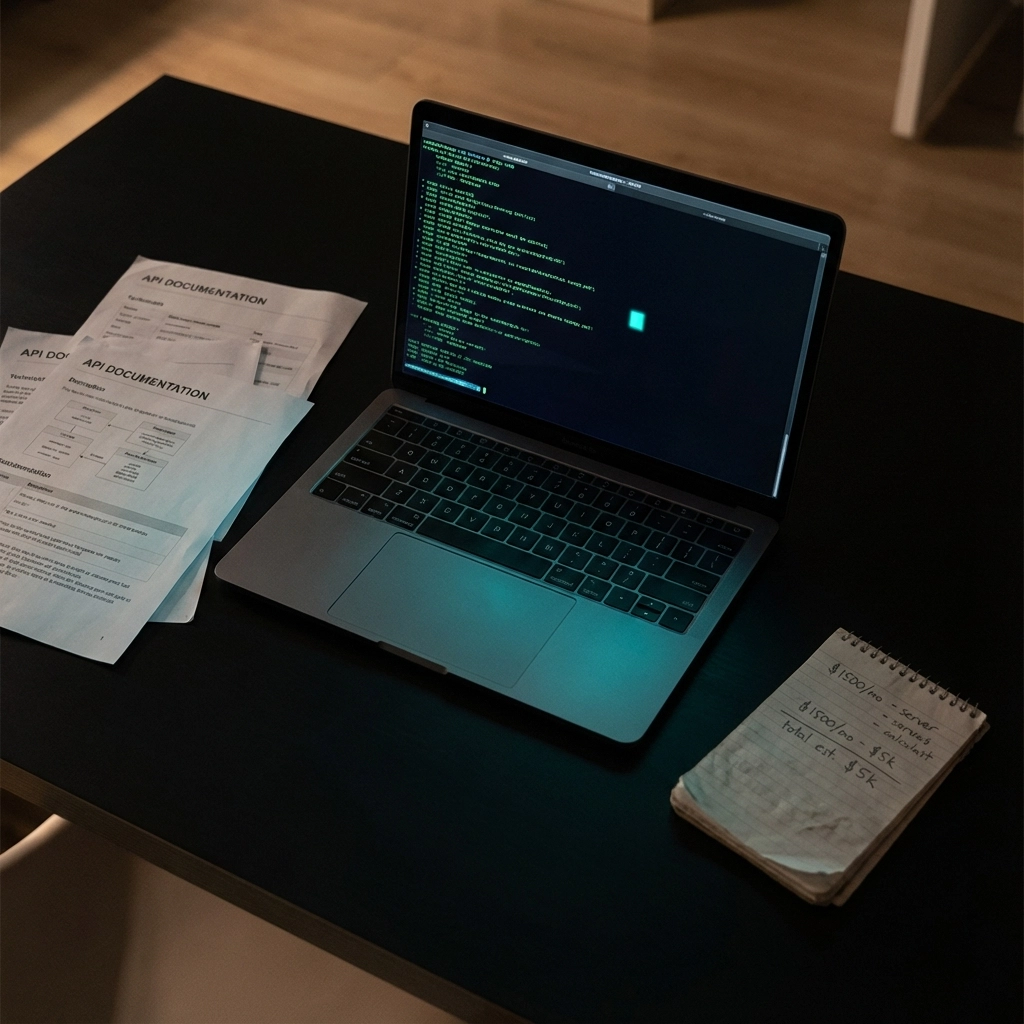
API Cost Management (Before You Get Burned)
The founders who get burned by BYOK make the same mistake: they focus on building features instead of building controls. Your first integration shouldn't be with your email platform, it should be with your billing dashboard.
Set hard spending limits at the API level. OpenAI and Anthropic let you cap monthly spending. Set yours to 2x what you plan to spend, not 10x. A misconfigured loop can burn through $500 in an hour if you're not careful.
Monitor token usage per conversation. A well-designed prompt uses 1,000-3,000 tokens per prospect research and email generation. If you're seeing 10,000+ tokens per prospect, your prompts are bloated or your AI is generating unnecessary content. Track this from day one.
Build kill switches before you need them. Create a simple endpoint that immediately stops all AI activity. When (not if) something goes wrong, you need to stop the bleeding instantly. This saved one founder I know from a $1,200 runaway cost when his AI got stuck in a feedback loop.
Most importantly, start small. Process 10 prospects per day for your first week, not 100. Better to validate your setup works correctly before scaling than to debug at volume.
Common Mistakes That Kill Results (And Domains)
The biggest mistake isn't technical, it's treating AI like a human SDR who happens to be software. AI agents need different constraints, different workflows, and different success metrics than humans.
Mistake #1: No human approval workflow. Every founder thinks they'll review emails manually "just for the first week." Three days later, you're auto-sending because manual review feels slow. Build approval into your workflow architecture, not as an afterthought. Make it easy to approve good emails and impossible to skip review entirely.
Mistake #2: Generic prospect research. Your AI will default to surface-level research unless you force specificity. "Research this company" generates fluff about "growth" and "innovation." "Find their latest product launch, recent funding news, or team hiring patterns" generates email-worthy insights. Your prompts determine research quality.
Mistake #3: Ignoring domain health. AI-generated emails that pass human review can still trigger spam filters if they follow patterns algorithms recognize. Vary your email structure, sending times, and even minor phrasing. Monitor your domain reputation weekly, not monthly.
Mistake #4: No conversation handoff rules. Define exactly when your AI passes conversations to humans. Interest signals, objections requiring nuance, or meeting requests should trigger immediate human involvement. Don't let AI handle complex sales conversations, it will lose deals you could have closed.
Handling the "AI Emails Are Spam" Problem
Your prospects can spot AI-generated outreach, and calling it "personalized" doesn't make it less obvious. The solution isn't perfect AI, it's transparent, valuable AI.
Focus on research quality over perfect prose. A well-researched email with slightly robotic phrasing beats a perfectly written template that mentions their "company growth." Prospects forgive AI-assisted outreach when it's genuinely relevant and useful.
Keep human oversight visible in your process. Many successful AI SDR users actually mention their approach: "I use AI to research companies like yours, but I personally review every outreach to ensure it's relevant." Transparency often works better than deception.
Most importantly, make every email valuable standalone. If someone replies with "please remove me from your list," they should still feel like they learned something useful about their business or industry. That's the difference between AI spam and AI-assisted value.
The Real Setup Timeline
Plan for 3-4 weeks of actual work, not the "weekend project" most tutorials promise. Week 1 is environment setup and basic integrations. Week 2 is prompt engineering and testing with fake data. Week 3 is real-world testing with 5-10 prospects per day. Week 4 is optimization and scaling.
Most founders underestimate prompt engineering time. Expect to rewrite your prompts 15-20 times before they consistently generate emails you'd send yourself. This isn't a sign of failure: it's the normal development process.
Budget debugging time for each integration. APIs break, rate limits surprise you, and data formatting issues emerge only with real prospect data. The founders who succeed build buffer time into every milestone.
Your Next Step
Building your own AI SDR stack with your own API keys gives you complete control over costs and quality: but only if you avoid the common pitfalls that burn most founders. Start small, build controls first, and focus on research quality over perfect automation.
If you want the BYOK benefits without the 3-4 week setup process, Ramen handles the technical complexity while letting you bring your own API keys. You get transparent pricing and human oversight built in, without debugging LangChain at 2 AM.