

You've been there. Sunday night at 11 PM, uploading another 500-contact CSV into your email tool. Same generic message. Same 2% reply rate. Same growing pile of unsubscribes and spam complaints. Traditional spray-and-pray outbound isn't just ineffective anymore: it's actively destroying your domain reputation and burning through your limited runway.
The shift is already happening. Forward-thinking founders are replacing mass email blasts with AI SDR systems that research every single prospect before hitting send. The result? 5-7x higher reply rates and pipeline generation that actually moves the needle on revenue.
Here's how research-first outbound with AI SDRs works, why it's crushing traditional approaches, and how you can build it without the typical startup mistakes.
Why Spray-and-Pray Finally Hit a Wall
Mass outreach worked when inboxes were less crowded and buyers had patience for generic pitches. That world ended around 2019. Today's B2B buyers receive 100+ sales emails per week. They can spot a template from the subject line.
But the real killer isn't buyer fatigue: it's deliverability. Email providers like Gmail and Outlook now use AI to detect mass sends. Send the same message to 200 people from a new domain, and you'll land in spam folders within days. Your domain reputation takes months to rebuild, assuming you can save it at all.
The math doesn't work either. If you're getting 2% reply rates on spray-and-pray, you need to email 500 people to get 10 responses. Maybe 2-3 turn into demos. That's 500 prospects burned for 2-3 conversations: and most of those conversations are low-quality because the prospect doesn't understand why you're reaching out.
Traditional SDRs don't solve this problem. They're trained to hit volume metrics, not to do deep research. A typical SDR spends only 28% of their time actually selling. The rest goes to data entry, list building, and surface-level research that barely personalizes beyond "I saw you work at [Company Name]."
How AI SDRs Flip the Script to Research-First
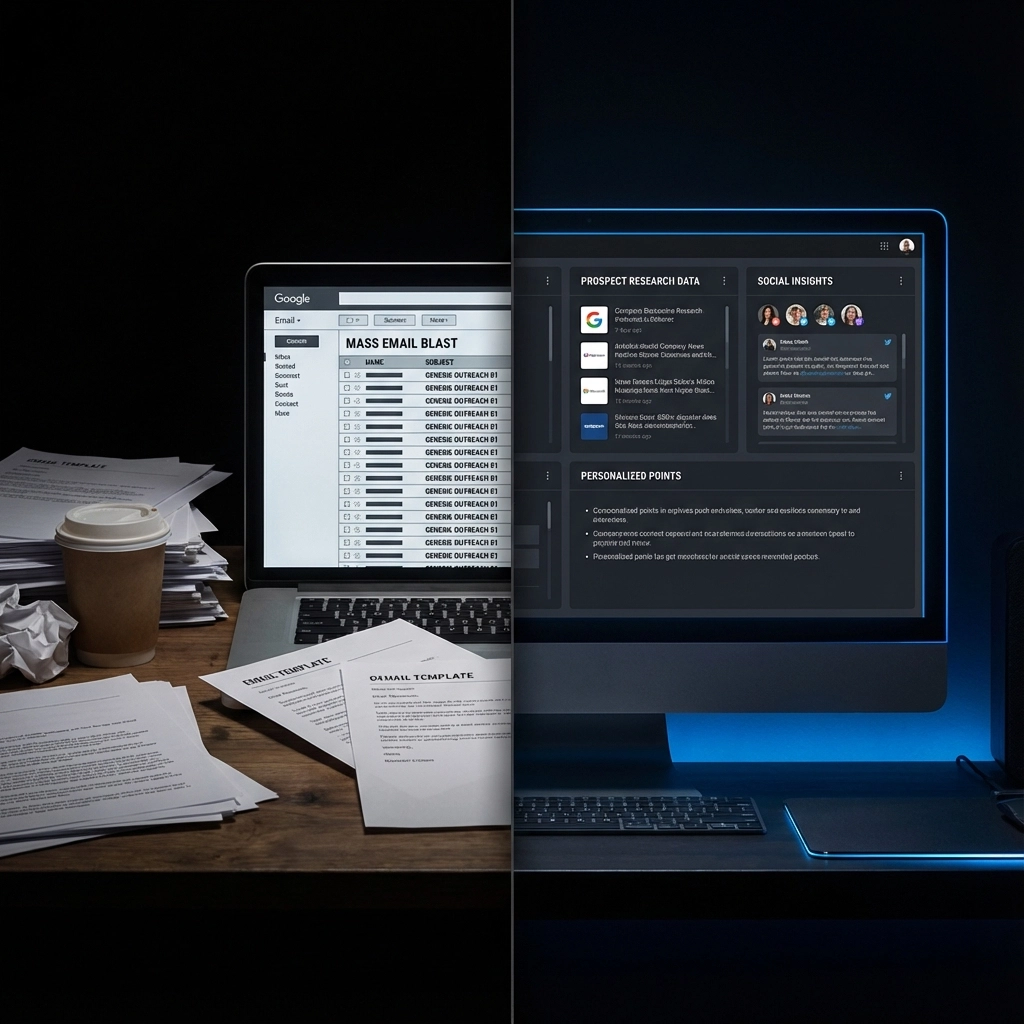
AI SDRs start with the opposite approach: deep research before any outreach. While traditional tools blast identical messages to large lists, AI systems gather account-specific intelligence on every prospect. They analyze company news, recent market moves, social media activity, and competitive landscape before crafting a single personalized message.
This isn't just LinkedIn profile scraping. Modern AI SDRs conduct lead enrichment by pulling data from dozens of sources: news articles mentioning the prospect's company, industry trend reports, competitor funding announcements, and behavioral signals like recent job changes or technology adoptions.
The research happens in seconds, not hours. An AI SDR can analyze a 100-person target list and create individualized talking points for each prospect in the time it takes a human SDR to research three accounts. But unlike human research, AI research is exhaustive and consistent: every prospect gets the same depth of analysis.
The result is outreach that feels like a warm introduction, not a cold email. Instead of "I noticed you work in SaaS and thought you might be interested in our solution," you get "I saw [Company] just raised Series A and is expanding into enterprise. Based on your recent posts about scaling challenges, here's how similar companies solved this specific problem."
The Performance Data That Proves Research-First Works
The numbers tell the story. Companies using AI-driven outbound automation report 10-20% boosts in sales ROI through better targeting and personalization. Early adopters consistently see those 5-7x higher reply rates compared to traditional outreach.
But the most telling metric isn't reply rates: it's quality of conversations. Salesforce found that 83% of sales teams using AI have seen revenue growth, significantly higher than teams not using AI. When you lead with research, prospects respond because they understand why you're reaching out and how you can help their specific situation.
One company we tracked had to pause their AI SDR outreach because their sales team couldn't keep up with the volume of qualified leads. They went from struggling to book 10 demos per month to having a waitlist of prospects wanting to speak with them.
The efficiency gains compound over time. AI SDRs treat outbound as a continuous learning process, fine-tuning messaging, timing, and targeting based on real-time results. Each campaign gets smarter. Traditional spray-and-pray stays static until someone manually updates the template.
Handling the Obvious Objections: "But Won't AI Just Create More Spam?"
The spam concern is valid but misses how research-first AI SDR actually works. AI doesn't eliminate human judgment: it enhances it. The best AI SDR systems use a human-in-the-loop approach where you approve every message before it sends.
This isn't about removing humans from sales. It's about removing humans from the research bottleneck that prevents personalized outreach at scale. You still control messaging, targeting, and timing. The AI handles the time-intensive research that would otherwise make personalized outreach impossible for a small team.
Domain risk is another real concern, but research-first outbound actually reduces it. When every email is personalized and relevant, you get higher engagement rates and fewer spam reports. Email providers reward relevance with better deliverability. Generic mass emails trigger spam filters; researched, personalized emails land in primary inboxes.
The volume also changes. Instead of emailing 500 prospects to get 10 responses, research-first outbound emails 100 highly researched prospects to get 25-30 responses. Lower volume, higher quality, better deliverability.
Building Your Research-First AI SDR Stack
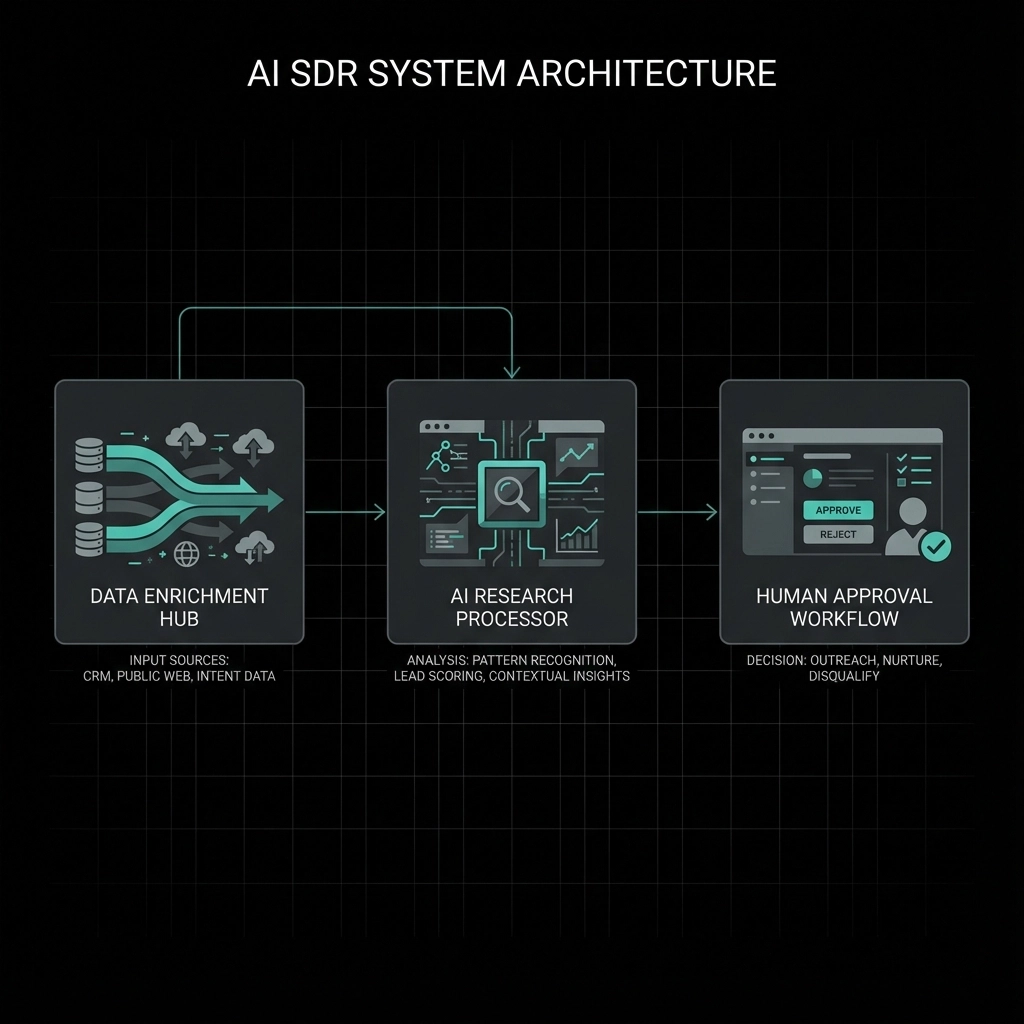
Setting up research-first outbound requires three core components: data enrichment, AI research capabilities, and human oversight workflows.
Start with data enrichment tools that go beyond basic contact information. You need systems that can pull company news, technology stack changes, recent hires, funding announcements, and competitive intel. This data becomes the foundation for AI research.
Next, implement AI research automation that analyzes enriched data and identifies personalization opportunities. Look for systems that can connect data points across multiple sources and generate specific talking points, not generic observations.
Finally, build human approval workflows where you review and approve AI-generated messages before they send. This maintains quality control while capturing the efficiency gains of automated research.
The key is controlling your own API keys and data rather than relying on black-box platforms. When you bring your own keys, you control costs and can adjust research depth based on your target market and deal size.
From Research to Revenue: The Practical Playbook
Implementation starts with defining your ideal customer profile in detail: not just company size and industry, but specific situations where prospects need your solution. The AI research should identify these trigger events and situations automatically.
Build email sequences that reference specific research findings, not generic pain points. If the AI finds that a prospect's company just expanded into a new market, your sequence should address expansion challenges, not general growth problems.
Test messaging across small segments before scaling. Research-first outreach performs better, but messaging still needs optimization based on your specific market and value proposition. Start with 20-30 highly researched prospects, measure results, refine messaging, then scale.
Monitor deliverability closely as you increase volume. Even with research-first personalization, rapid volume increases can trigger spam filters. Gradually ramp sending volume while maintaining engagement rates above 15-20%.
The Future Is Already Here
Research-first outbound with AI SDRs isn't experimental anymore. It's table stakes for founders who need pipeline but can't afford the time or money for traditional SDR teams. The companies winning early-stage outbound are those who moved beyond spray-and-pray first.
The choice isn't between AI and human SDRs: it's between research-first personalization and mass template blasting. One builds pipeline and protects your domain. The other burns prospects and destroys deliverability.
Ready to see how research-first outbound works for your specific market? Book a demo and we'll show you the exact research and personalization our AI conducts on your target prospects( before you send a single email.)