
You’ve seen the demos. AI agents sending thousands of emails in seconds, booking meetings while you sleep, and promising a "hands-off" pipeline. It looks like magic until you realize they’re burning through your carefully curated lead list with generic garbage.
If you're a founder, you know the feeling. You spent months identifying your Ideal Customer Profile (ICP), only to have an autonomous bot blast them with "I saw you were the CEO of [Company Name] and thought we could help."
You’re not scaling sales; you’re scaling noise. And in 2026, noise is the fastest way to get your domain blacklisted and your brand ignored.
The promise of the best AI SDR isn't about how many emails it can send without you; it’s about how many high-quality, research-backed conversations it can start with your guidance. This is why "human-in-the-loop" (HITL) isn't just a safety feature: it's the only way to win at outbound today.
Why Personalization Without Research is Just Spam
In the early days of AI outbound, "personalization" meant dynamic tags. You’d pull a name, a company, and maybe a city from a database. Prospects saw right through it. Today, the bar is astronomically higher.
Most AI SDR tools on the market claim to be "personalized," but they are actually just sophisticated template-fillers. They scan a LinkedIn profile, grab a random snippet from the 'About' section, and hope for the best.

True personalization requires deep research. The best AI SDR doesn't just look at a profile; it looks at the company’s recent earnings calls, its job postings, its competitors' recent failures, and its tech stack. It finds a legitimate "why now" for the outreach.
At Ramen, we believe in research-first outbound. Our AI agents don't just guess; they perform a deep-dive on every prospect before they even think about drafting a sentence. They look for the context that actually matters to a buyer. If the AI can’t find a compelling reason to reach out, it shouldn't.
The "Black Box" AI Trap
The biggest mistake founders make when choosing an AI SDR is opting for a "black box" solution. These are autonomous agents that operate in the background, scraping data and sending emails without any human oversight.
It sounds efficient until you realize the AI is hallucinating facts about your product or, worse, pitching your biggest competitor. Once an email is sent, you can't take it back. One bad run can ruin your reputation with a key account forever.
By keeping a human in the loop, you ensure that every piece of outreach reflects your brand’s voice and technical accuracy. You are the expert on your product; the AI is the expert on the grunt work.
The Power of Human Oversight in AI Workflows
The goal of an AI SDR is to give you back your weekends, not to replace your judgment. The most effective sales organizations in 2026 use an 80/20 model: AI handles 80% of the heavy lifting (researching, list building, drafting), while humans handle the final 20% (reviewing, refining, and approving).

This is the core of the human-in-the-loop AI SDR approach. Here is what that workflow actually looks like in practice:
- Deep Research: The AI agent spends hours scouring the web for intent signals and specific pain points for your target lead.
- Strategic Drafting: The AI writes a highly personalized email based on that research: not a template.
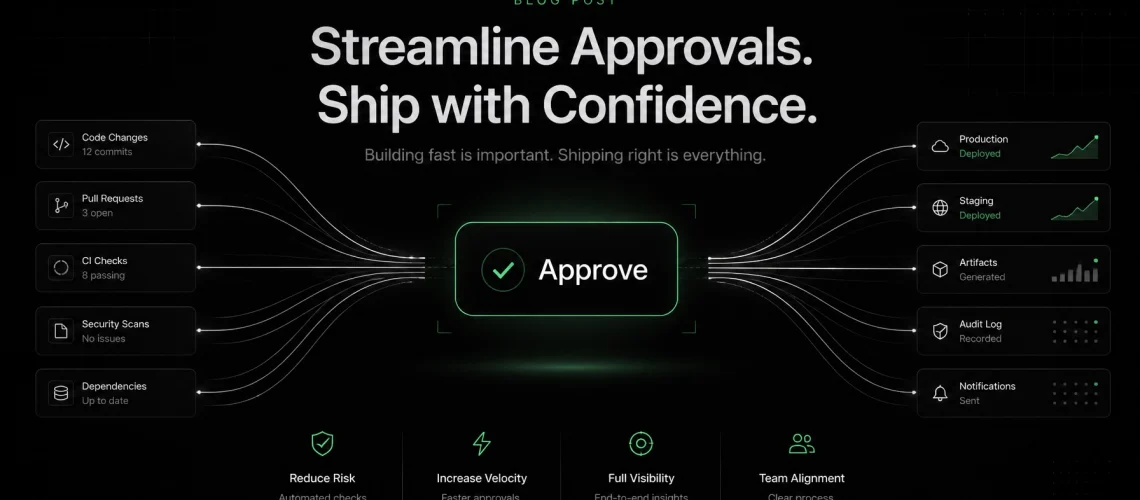
- Human Review: You (the founder or a rep) get a notification. You glance at the research and the draft. You can hit 'Approve' in one click or make a quick edit to the phrasing.
- Send & Sync: The approved email is sent through your actual mailbox, and the data is synced to your CRM.
Protecting Your Domain and Your Brand
Email providers have become incredibly sophisticated at detecting automated patterns. If an autonomous bot sends 500 emails that get marked as spam because they’re generic, your entire domain's deliverability will tank.
When you review drafts, you ensure that every email is relevant. Relevant emails get replies; they don't get reported. This is the only way to scale outbound without agencies who might burn your reputation to hit their "volume" KPIs.

Doesn't Human Approval Slow Down the Process?
This is the most common objection we hear. "I want AI so I don't have to work on sales."
The reality is that spending 15 minutes a morning approving 50 high-quality, research-backed emails is infinitely more productive than spending 0 minutes sending 5,000 spam emails.
It’s about quality-at-scale, not just raw speed.
If you use a tool like Ramen, the AI does 99% of the work. It presents you with the research it found so you don't have to go looking for it. You aren't "doing the work"; you are the editor-in-chief of your sales machine.
This human oversight allows you to pivot your messaging instantly. If you notice a specific value prop isn't landing with a certain persona, you can tweak the next batch of approvals immediately. You can't do that with a black-box agent that’s already queued up 2,000 sends.
The Math: $80,000 vs. $499
When you’re a solo founder or a pre-seed team, hiring an SDR is a massive risk. Between the $60k-$80k base salary, benefits, overhead, and the 3-month ramp time, you’re looking at a $100k+ investment before you see a single booked meeting.
Choosing an AI SDR over a human hire isn't just about saving money: it's about capital efficiency.

With Ramen, you pay $499/month for unlimited configurable AI agents. More importantly, we operate on a Bring Your Own Key (BYOK) model. You bring your own AI API keys (OpenAI, Anthropic, etc.), so you control your own costs. You aren't paying a massive markup on the "intelligence" layer; you're paying for the platform that makes that intelligence useful.
How to Evaluate the Best AI SDR for Your Team
If you're currently comparing the best AI SDR tools, don't get distracted by the flashiest UI or the most aggressive "autonomous" claims. Ask these three questions instead:
- Does it do deep research? Can it tell you why it wrote what it wrote? If it can't show you the source of its personalization, it's just guessing.
- Is there a built-in approval flow? Can you gate the sends so your domain stays safe?
- Do you own the data and the costs? Avoid platforms that lock you into high per-email fees or hide the AI costs behind a massive subscription.
For early-stage founders, your time is your most valuable asset. You need to spend it on building your product and closing deals, not on manual prospecting or babysitting a rogue AI.
The best AI SDR is the one that acts as your partner, doing the research and the writing while letting you stay in the driver's seat. It's time to stop wasting your Sundays on cold emails and start building a pipeline you can actually trust.
Ready to see how human-in-the-loop AI can scale your outbound? Experience the best AI SDR at Ramen.so.